
Lieferung heute & morgen

Qualitätsgarantie

Willkommens-Angebote freischalten: KOSTENLOSE Lieferung | Bis zu 80 % RABATT | Kostenlose 30-Tage-JoyPlus-Testphase
App herunterladen
A high-quality table is often the centerpiece of a home—whether it's a solid wood dining table or a modern desk with a matte lacquer finish. To preserve these valuable surfaces from scratches, stains, and daily wear and tear, a transparent table protector is a go-to solution. However, making the right purchase isn't as simple as it seems. Many products fail to live up to their promises, leading to disappointment and unnecessary expense.
As your Joybuy Product Recommendation Officer, I'm here to help you navigate the common pitfalls. We'll examine the features that truly matter, so you can make an informed decision and maintain the aesthetic of your furniture for the long term.
Before you invest in a protective film, you should be aware of the most common issues that often only become apparent after unboxing.
To avoid these mistakes, focus on three objective criteria. These will help you find the right PVC protective film for tables.
The thickness of the film is not a marketing gimmick but a crucial quality indicator.
The most important rule is: match the film to your table's surface.
Calling a table film heat-resistant requires a clear definition. Most PVC films offer heat resistance up to 80°C (176°F). This means:
Care should be straightforward. A high-quality film is waterproof and can be easily wiped clean with a damp cloth, making it an ideal washable table protector.
Here are some product recommendations tailored to different use cases that meet the quality criteria mentioned above.

Why This Fits Their Persona: Ideal for the family dining table. The 2mm thickness withstands the bumps and scratches of hectic daily life, while the beveled edges minimize the risk of injury for children and provide greater comfort when resting your arms on the table.
The robust 2mm thickness bypasses the trap of flimsy, thin films. The product description also warns against use on high-gloss surfaces, thus preventing the air bubble problem.
The 45° beveled edge is a clear safety and comfort feature. Additionally, the PVC is certified as food-safe, which is a significant benefit in kitchens and dining rooms.
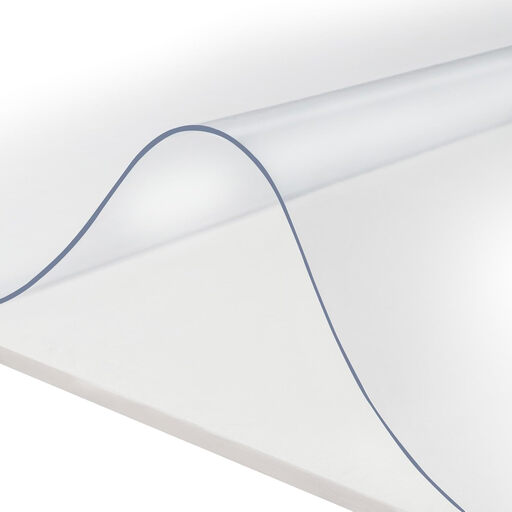
Why This Fits Their Persona: Perfect as a transparent desk protector. It shields high-end wood or matte lacquer desks from abrasion caused by keyboards, mice, and coffee mugs, without obscuring the tabletop's premium look. The high transparency preserves the furniture's design.
The product description clearly states that the film is designed for matte or textured surfaces to prevent air bubbles (avoids Trap 1). The 2mm thickness ensures durability (avoids Trap 2).
The high material density ensures it lies flat and holds its shape. The film is also water- and oil-repellent, making cleanup after a spill incredibly easy.
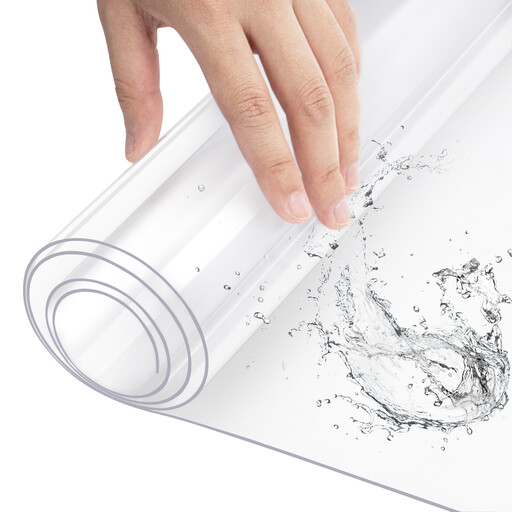
Why This Fits Their Persona: A functional and cost-effective solution for side tables, craft tables, or less frequently used dining areas. The 1mm thickness provides solid basic protection against scratches and liquids without breaking the bank.
Although it's a 1mm film, the manufacturer states it is more robust than standard films. The warning not to use it on high-gloss surfaces is also crucial, saving the buyer from a bad purchase.
Excellent value for money for basic protection. The film is described as odor-free and can be easily cut to custom dimensions if needed.
We have compiled a complete, up-to-date list of products that fully meet these strict selection criteria and German safety regulations.
1. How do I get the table protector to lie flat after unrolling it? Since the films are delivered rolled, they may be wavy at first. The easiest method is to spread the film out on the table and weigh it down with heavy books on the corners and in the middle for 24-48 hours. Alternatively, you can roll it in the opposite direction or gently warm it with a hairdryer on a low setting to help it flatten faster.
2. Can I use a transparent table protector on a high-gloss table? Using a standard smooth, transparent film on high-gloss, glass, or lacquered tables is not recommended, as it will most likely create unsightly air bubbles. For such surfaces, you should choose a film with a slightly matted underside or use a very thin fabric tablecloth as a separating layer.
3. Is a table film truly heat-resistant? Yes, but within a defined limit. Most PVC protective films are heat-resistant up to about 80°C (176°F). This is sufficient for hot plates, mugs, or bowls from the microwave. However, a pot or casserole dish coming directly from the oven or stove can damage the film. A separate trivet is still necessary for this.