
Lieferung heute & morgen

Qualitätsgarantie

Willkommens-Angebote freischalten: KOSTENLOSE Lieferung | Bis zu 80 % RABATT | Kostenlose 30-Tage-JoyPlus-Testphase
App herunterladen
A transport trolley can make it much easier to move shopping, tools, boxes or components. But choosing the right one involves more than looking at its stated load capacity. For households, DIY enthusiasts, people helping with a move, tradespeople, and warehouse and workshop operators, the design, wheel type, storage space and folded dimensions all matter.
A figure such as 25 kg or 150 kg initially describes the maximum load under the specified conditions. It doesn’t automatically tell you how easy the trolley will be to move over uneven floors, kerbs or longer distances. Unevenly distributed loads can also affect stability.
So, check the following:
A shopping trolley with a 25 kg capacity is suited to different tasks from a 150 kg sack truck. If you regularly move toolboxes or building materials, you’ll usually need a sturdier design with a larger loading platform and suitable securing features.
A foldable transport trolley can be handy if you need to store it in your car, cellar or cupboard. However, the folded dimensions are what really matter. Despite their folding design, some models still take up a lot of depth or can only be partially folded.
Before buying, check:
A trolley on castors is easy to manoeuvre indoors. But when carrying heavier loads, the castor mounts, frame and brakes all need to work well together. Small swivel castors are suited to smooth floors, but may struggle with thresholds or rough surfaces.
So, with a platform trolley or heavy-duty trolley, it’s not just the number of wheels that matters. Wheel diameter, bearings, parking brakes and frame material are important too.
The trolley’s load capacity should always exceed the weight you expect to carry regularly. This leaves a sensible margin for the extra forces involved when starting, stopping or moving over small bumps. Place heavy items as low and centrally on the platform as possible.
If you’re choosing a storage trolley with multiple shelves, check the load capacity of each shelf too. The total load capacity alone isn’t enough to assess its suitability.
Plastic containers made from PP or PE are lightweight and easy to clean. Steel or aluminium frames are designed to handle heavier loads, but stability also depends on the screw joints, braces and base plate.
Look for:
A workshop trolley needs different features from a compact folding trolley for shopping. Open compartments and lockable castors are useful for tools, while a container trolley is better for keeping loose items together.
Large wheels can handle uneven surfaces more easily than small furniture castors. Ball bearings help the wheels run smoothly, but they’re no substitute for loading the trolley correctly. For heavy or tall loads, tie-down straps, non-slip surfaces and an ergonomic handle are especially useful.
With a 150 kg sack truck, the load should rest against the back and be secured with straps. An adjustable telescopic handle can make it easier to adapt the trolley to different users. Vehicles have different requirements: a car wheel dolly needs to be suitable for the tyre width, vehicle weight and intended use.
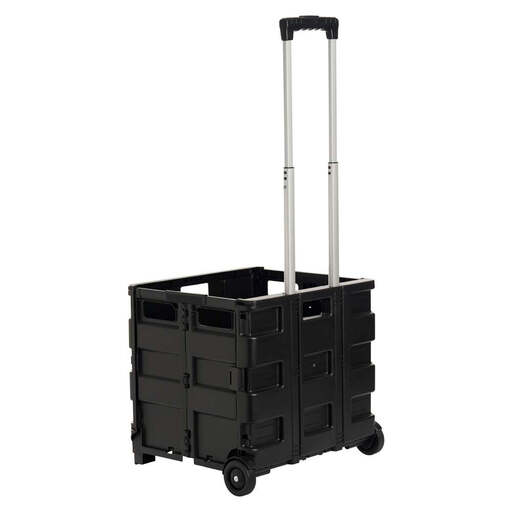
Why it suits this profile: This compact shopping trolley has a 42.5-litre capacity and folds away neatly for storage at home or use when shopping or moving smaller items.
Its folded dimensions of 45.5 × 45.5 × 8 cm make it easy to see how much space you’ll save. Just make sure not to exceed the maximum load of 25 kg.
A 42.5-litre capacity, a 97.5 cm telescopic handle and a low net weight of 2.65 kg.
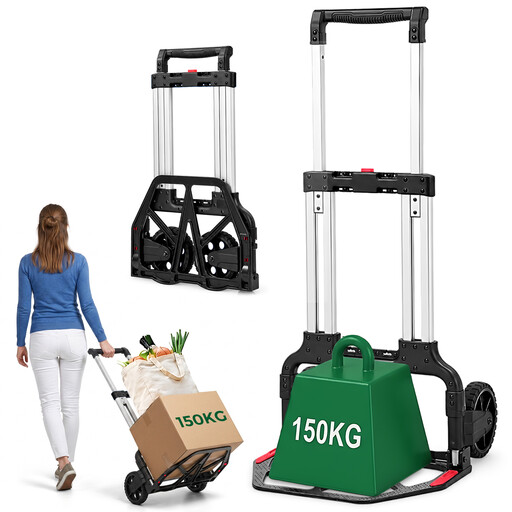
Why it suits this profile: This folding sack truck is designed for heavier loads when moving house, working in the garden or warehouse, or carrying items around a building site.
The stated 150 kg load capacity, XXL loading platform and two included bungee cords help you secure heavy items with confidence.
Reinforced aluminium frame, TPR wheels with ball bearings, and two handle heights of 77 and 107 cm.
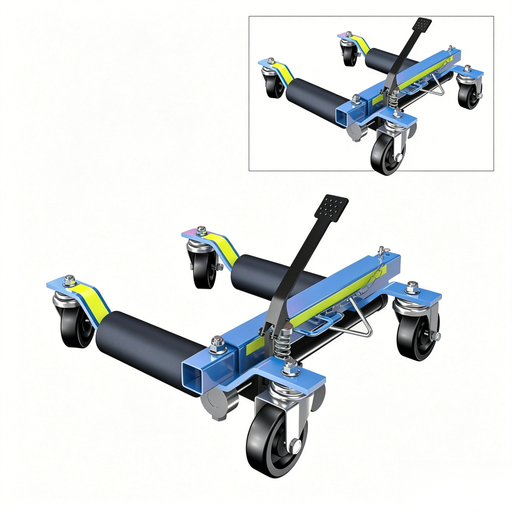
Why it suits this profile: This car wheel dolly is designed for vehicle owners, workshops and automotive professionals who need to position vehicles for repairs or manoeuvring.
Its suitability is clearly specified, with support for tyres up to 12 inches wide, a safety pin and pedal operation — more detail than you’d get with a general-purpose trolley.
Carbon steel frame, 360-degree swivel castors and a stated load capacity of 1,500 lbs per dolly.
We’ve put together a comprehensive, regularly updated list of products that meet these strict selection criteria and fully comply with the safety regulations in force in the EU.
A capacity of 25 kg is often enough for shopping and light household items. For boxes, tools or garden materials, a model with a higher load capacity is a sensible choice. Allow for an extra margin and distribute the load evenly.
That depends on the wheel diameter and material, as well as the frame design. A folding trolley with small wheels is generally designed for smooth indoor surfaces. Larger wheels and a sturdy loading platform are more practical for a yard, garden or building site. Check the manufacturer’s guidance on suitable surfaces.
Regularly wipe off dirt with a damp cloth and check the wheels, screw joints and locking mechanisms. After using the trolley outdoors, store it somewhere dry. Don’t force the folding mechanism on foldable models.