
Lieferung heute & morgen

Qualitätsgarantie

Willkommens-Angebote freischalten: KOSTENLOSE Lieferung | Bis zu 80 % RABATT | Kostenlose 30-Tage-JoyPlus-Testphase
App herunterladen
A new roof is on the agenda for the garden shed, carport, or tool shed. A trapezoidal metal sheet set seems like the ideal solution: cost-effective, durable, and manageable for DIY enthusiasts. However, the market is flooded with offers that look attractive at first glance but can quickly turn into a poor investment. Before you make a decision, it's crucial to know the most common pitfalls that lead to unexpected costs and problems.
Many buyers focus solely on the price per square metre, overlooking critical details. These oversights can unnecessarily complicate and increase the cost of a project.
To make an informed purchasing decision, you should focus on three core aspects. These define the quality and real-world performance of a trapezoidal sheet set for your project.
The foundation of any durable roof is the material. Galvanised steel is the standard for trapezoidal sheets for a garden shed and carport, as the zinc layer provides effective corrosion protection. Pay close attention to the material thickness. A thickness of 0.25 mm is generally sufficient for smaller outbuildings like tool sheds or shelters where extreme snow loads are not expected. For larger structures or regions with heavy snowfall, thicker sheets should be considered. An additional protective film, which prevents scratches during transport and assembly, is a sign of a well-thought-out product.
Before buying, check exactly what is included in the set. Purchasing a complete roofing package means you receive not only the sheets but also the matching fastening screws and sealing washers. Sealing washers are essential to prevent water from penetrating at the screw points, thus ensuring the longevity of the entire structure. A complete set saves time, money, and ensures that all components are perfectly matched.
The shape of the trapezoidal profile is not just a matter of aesthetics. The height and form of the "ribs" determine the roof's stability and its ability to drain water. Look for integrated water channels or capillary grooves at the longitudinal overlaps. These small channels prevent water from being forced under the overlap by crosswinds—a critical factor for watertightness, especially on low-pitched roofs, as is often the case with a corrugated sheet for a carport.
Based on the criteria above, we have identified products that are well-suited for specific DIYer profiles.
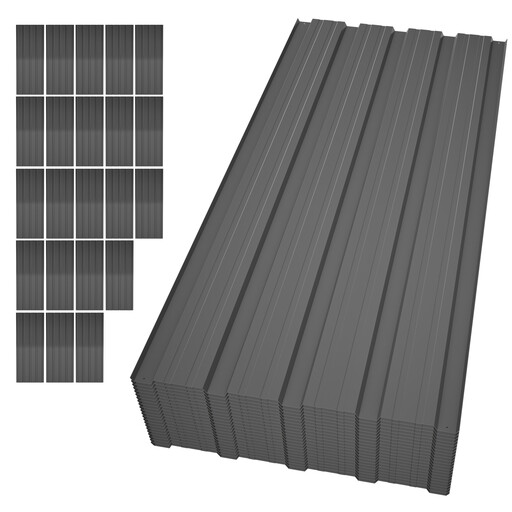
Why this product is a great fit: Ideal for users seeking a functional and understated solution for classic garden sheds or outbuildings. The neutral grey tone blends harmoniously into most gardens, offering a clean, durable look without being visually dominant.
This set bypasses the trap of incomplete deliveries. It includes the sheets, matching assembly screws, and sealing washers, so no separate purchasing is necessary.
All-in-one package: Everything needed for installation is included. Thoughtful design: Integrated water channels at the longitudinal joints ensure enhanced water resistance.
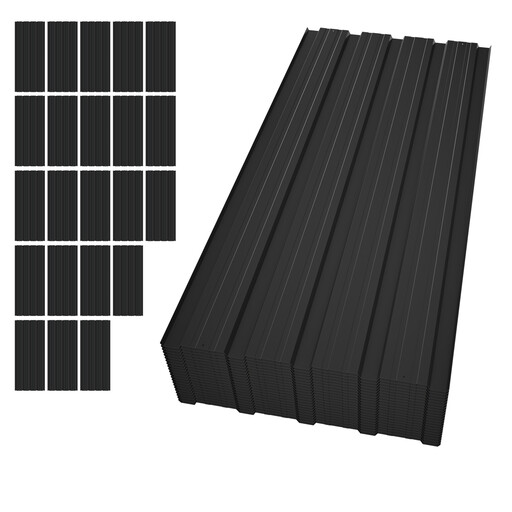
Why this product is a great fit: Perfect for builders who value a modern aesthetic. The black finish gives carports, contemporary sheds, or privacy screens an elegant and sophisticated look that stands out from the crowd.
The pitfall of poor installation prep is avoided thanks to pre-drilled holes. This greatly simplifies alignment and installation, reducing the margin for error and ensuring a clean final result.
Easy to install: Pre-drilled holes save time and ensure precise assembly. Weather-resistant: The galvanised steel sheet with a protective film offers reliable protection against corrosion and the elements.
We have compiled a comprehensive, up-to-date list of products that meet these strict selection criteria.
Yes, installing trapezoidal sheets is generally manageable for experienced DIYers. The key is to have the right safety gear (especially cut-resistant gloves), suitable tools, and a stable substructure. A trapezoidal sheet set that includes pre-drilled holes and all fastening materials makes the job much easier. Always follow the manufacturer's safety and installation instructions.
To determine your needs, measure the length and width of your roof area. It's important not to calculate based on the raw panel dimensions, but to use the effective coverage width. This is less than the total width of the panel because a longitudinal overlap of one "rib" is required to ensure watertightness. Also, plan for a transverse overlap and an overhang at the eaves and verge. Add about 5-10% as an allowance for cuts and waste.
Both terms are often used interchangeably, but they describe different profile shapes. Trapezoidal sheeting, as the name suggests, has a trapezoidal profile with flat sections between the high ribs. This gives it high rigidity and load-bearing capacity. Corrugated sheeting has a sinusoidal, or round, wavy profile. Due to their higher stability at the same material thickness, trapezoidal sheets are often the preferred choice for roofing with larger spans or in areas with heavy snowfall.