
Lieferung heute & morgen

Qualitätsgarantie

Willkommens-Angebote freischalten: KOSTENLOSE Lieferung | Bis zu 80 % RABATT | Kostenlose 30-Tage-JoyPlus-Testphase
App herunterladen
A travel bottle set should hold shampoo, conditioner, lotion or hand sanitiser in a space-saving way while reliably protecting the contents. In practice, however, problems often arise not from the concept itself, but from unsuitable sizes, inappropriate closures or shapes that are difficult to clean. This applies to holidays as well as business trips, commuting and visits to the gym.
The term leak-proof travel bottles is only useful when the closure, seal and intended use work well together. A screw cap may be suitable for thick shampoo, while a pump is more convenient for frequent use. If a pump is accidentally pressed inside a suitcase, liquid may still escape. Before buying, make sure you know whether the bottle uses a seal, flip-top lid, screw cap or pump mechanism.
For travel bottles for hand luggage, the set’s total capacity is not the only consideration. At many European airports, liquids must still be carried in individual containers with a maximum capacity of 100 ml. The exact rules may vary depending on the airport and security screening. A 250 ml container is therefore not automatically suitable for hand luggage, even if it is only partially filled.
Transparent travel bottles make it easier to check the contents. However, they do not solve the problem of missing labels. Shampoo, conditioner and lotion can look very similar. Small labels or colour coding can help prevent mix-ups. The material should also be suitable for the products: according to the product information, for example, the 5Five set of three bottles is not intended for corrosive or highly acidic liquids.
For a short stay, 30 to 60 ml per product is often enough. If you are travelling for several weeks or use a lot of shampoo every day, larger containers may be more suitable for your suitcase. When choosing cosmetic bottles for travel, users should therefore distinguish between three types of use:
PET and PP are lightweight plastics suitable for toiletries and liquids. Silicone bottles can often be squeezed down and stored to save space. Glass is transparent and odourless, but its risk of breaking makes it less practical for hand luggage. The BJ Seasoning Bottle Set listed in the product data, for example, is made of glass and holds 250 ml per container. It is described as a kitchen set and is therefore not an obvious choice for shampoo bottles for travel.
Also pay attention to the care instructions. Reusable travel bottles should be cleaned thoroughly with warm soapy water before first use and after every use, then dried completely. Otherwise, residue can cause odours, discolouration or make the dispenser difficult to operate.
With a Travel Bottle Set, tightly closing caps, silicone seals or suitable pump closures are important features. Do not fill bottles right to the top, so that the contents do not press directly against the closure when temperature or pressure changes occur. A sealable bag is also recommended for suitcases. Even a set supplied with a pouch cannot automatically prevent every leak if a lid is misaligned or damaged.
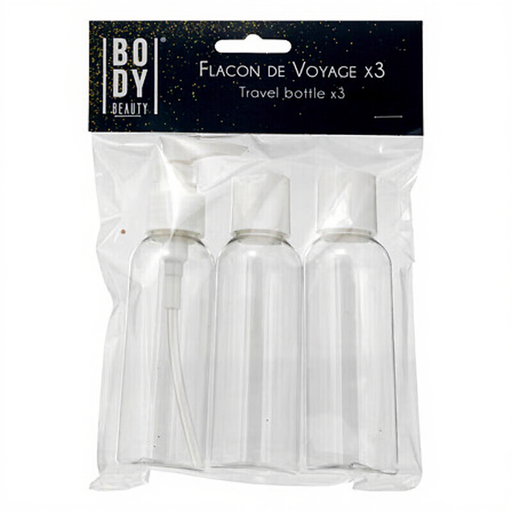
Why this product suits this profile: The set of three is ideal for short trips, a sports bag or the daily commute when you only need to take a few personal-care products with you.
The small number of containers helps avoid unnecessary overpacking. According to the product information, silicone seals and secure closures help protect the contents during transport; highly acidic or corrosive liquids are not suitable.
Three small bottles made from PET/PP plastic; suitable for shampoo, conditioner, cleansing products, lotion or hand sanitiser.
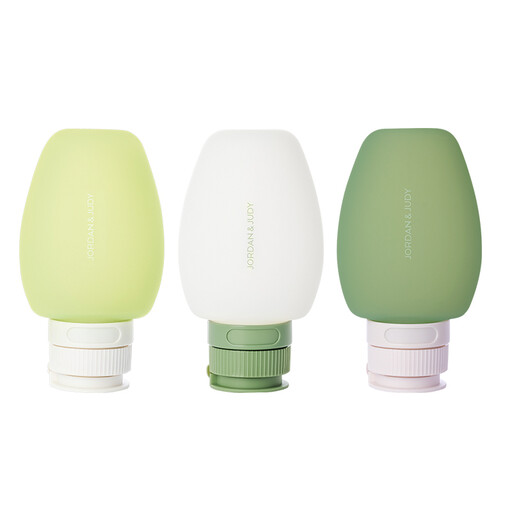
Why this product suits this profile: Three 60 ml containers are sized for hand luggage, a wash bag and regular short trips, provided the applicable transport rules are followed.
The stated silicone construction and closure described as leak-proof address common leakage problems. Even so, each lid should be checked individually before packing.
60 ml per bottle; silicone material according to the product name; refillable design for shampoo and cosmetics.
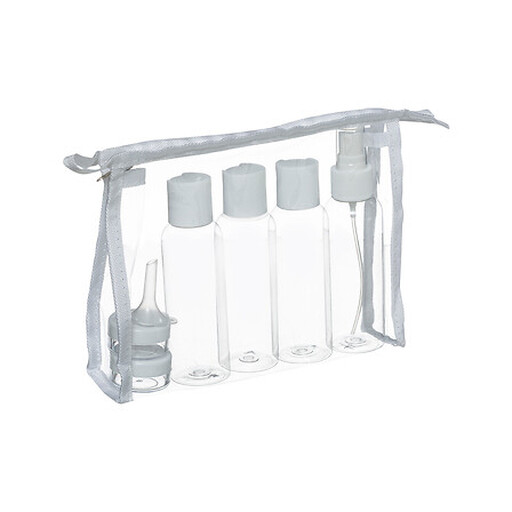
Why this product suits this profile: This seven-piece travel toiletry set is designed for people who want to carry several liquids, creams or gels separately.
The supplied pouch keeps the containers together and reduces loose accessories in your luggage. According to the product information, a funnel makes filling easier; the lids must still be closed securely.
Seven containers; transparent design; pouch and materials made from PP, PET and PVC according to the product information.
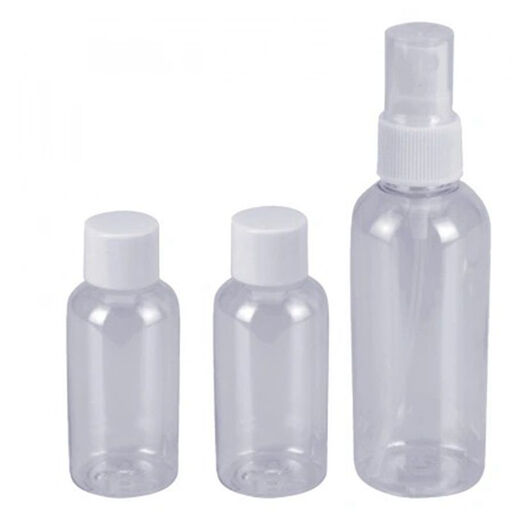
Why this product suits this profile: This lightweight PET/PP set is intended for shampoo, conditioner, lotion, hand sanitiser and other liquid cosmetics, making it suitable for changing travel routines.
According to the product information, PP screw caps and pumps, together with the transparent design, make safe transport and checking the contents easier. Check whether it is suitable for hand luggage against the latest airport rules before departure.
Lightweight PET/PP material; transparent containers; refillable and easy to clean with warm soapy water.
We have put together a complete, regularly updated list of products that fully meet these strict selection criteria and the safety regulations applicable in the EU.
After every trip, empty and rinse the containers, then dry them with the closures open. Particularly thick products can collect around the thread or pump. Before using them again, check:
Replace bottles or seals if they are damaged. For air travel, the bottles should also be placed in a transparent, resealable bag if required by the relevant security screening.
In many cases, individual containers may hold no more than 100 ml. The decisive factor is the container’s capacity, not the amount of liquid inside it. As airport procedures and requirements can vary, travellers should check the guidance provided by their departure airport.
There is no fixed service life. It depends on the material, cleaning routine and closure. As soon as a bottle develops cracks, deformation, odours or a damaged seal, it should no longer be used for transporting liquids.
That depends on how they are used. Silicone can be suitable for squeezable, space-saving containers. PET and PP are lightweight and widely used in many travel bottle sets. Capacity, closure, cleaning and suitability for the intended contents are what matter most – not the material name alone.