
Lieferung heute & morgen

Qualitätsgarantie

Willkommens-Angebote freischalten: KOSTENLOSE Lieferung | Bis zu 80 % RABATT | Kostenlose 30-Tage-JoyPlus-Testphase
App herunterladen
A travel bottles set is designed to store shampoo, shower gel, cream or lotion in your luggage without taking up too much space. In practice, though, problems often arise: lids come open, bottles are difficult to clean, or the capacity doesn't meet hand luggage liquid restrictions. Making a sensible choice based on material, volume and closure will help you avoid unnecessary repeat purchases.
The term leakproof travel bottles alone doesn't tell you much. What really matters is a tightly sealing lid, a suitable gasket, and a closure that won't accidentally open inside your wash bag. Even a correctly screwed-on lid won't provide reliable protection if the gasket has shifted or the bottle is overfilled.
Before you pack, make sure all lids are firmly closed and briefly test each bottle for leaks over a sink. For extra peace of mind, use a sealable wash bag.
For flights within the EU, there are specific rules about liquids in hand luggage. Individual liquid containers are often limited to a maximum of 100 ml and must be carried in a transparent, resealable bag. The exact requirements can vary depending on the airport and destination, so you should always check the regulations for both your departure and arrival airports.
A large set isn't automatically practical if the bottles take up too much room or the fill volumes aren't clearly marked. Transparent liquid containers for air travel make security checks easier and help you quickly identify what's inside.
Not every bottle is suitable for every toiletry product. Certain strongly acidic, solvent-based or particularly aggressive liquids can damage plastics and seals. So always check the product information before filling.
After each trip, clean the bottles with warm water and soap. Then let all parts dry completely. Moisture trapped in the closure or a silicone seal can lead to unpleasant odours and hygiene issues.
For shampoo, conditioner and shower gel, soft squeeze bottles are practical, while creams and thicker lotions are better stored in small pots. A 7-piece travel set with a variety of bottle shapes can be useful if you need to carry several different product types.
Look for:
Commonly used materials include PP, PET, PVC or silicone. PP and PET are lightweight plastics used with many cosmetic products. Silicone bottles can often be squeezed, so they take up less space as the contents decrease. However, the material alone isn't proof of a specific level of leak resistance or durability.
When choosing cosmetic bottles for travel, follow the manufacturer's guidance on suitable liquids, temperature ranges and cleaning methods. Containers not intended for food should not be used for drinks.
A good closure is about more than just the lid. The thread, silicone ring and, where fitted, an inner protective cap all affect how leakproof the bottle is. A funnel or pump can make filling easier and help prevent spills.
A bag is also handy: cosmetic bottles with a bag stay neatly together and can be packed separately from your clothes. The bag itself should be sealable and easy to clean.
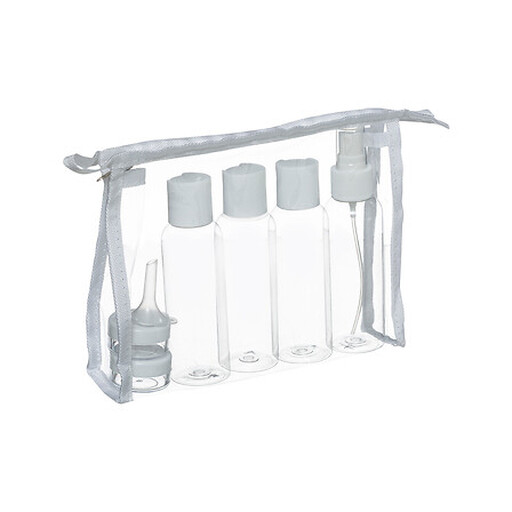
Why this product suits the profile: This set combines several small bottles and pots with a storage bag. With a stated weight of 0.108 kg and dimensions of 16 × 4.8 × 27 cm, it's ideal for short trips and keeping your luggage organised.
The transparent design makes it easy to check the contents. A funnel is included to help with clean filling; make sure all closures are fully tightened before travelling.
7 pieces, bag, funnel and materials made from PP, PET and PVC according to the product description.
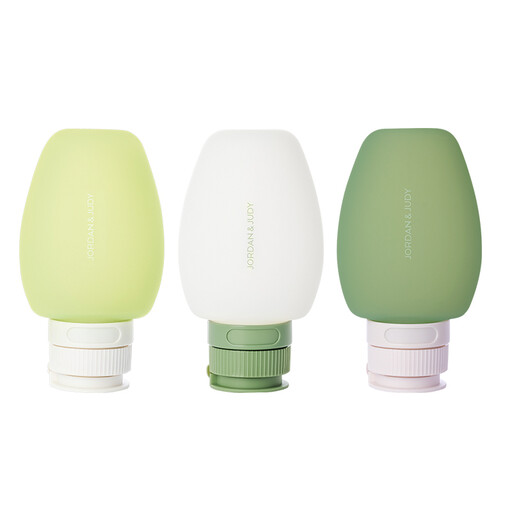
Why this product suits the profile: The three refillable silicone bottles, each holding 60 ml, are designed for shampoo, conditioner and other liquid toiletries. Their small individual capacity meets many hand luggage requirements.
The clearly stated volume reduces the risk of packing bottles that are too large for air travel. Still, check the lids and seals separately before you leave.
Silicone construction, 60 ml per bottle and a 3-pack for keeping your toiletries separate.
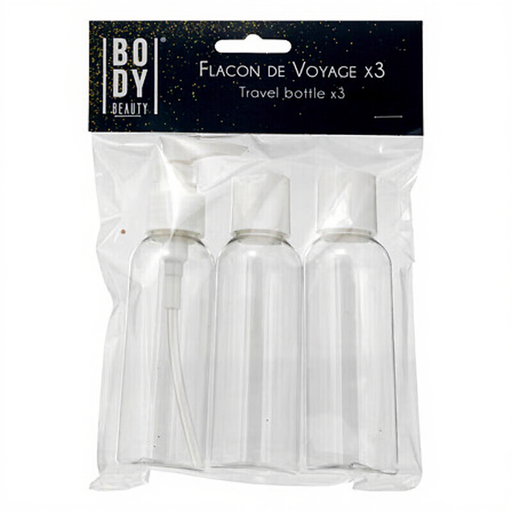
Why this product suits the profile: This compact trio is intended for shampoo, lotion, cleaning product or hand sanitiser. It's a great fit for commuters, business travellers and anyone who wants to take just a few products with them.
The limited number of bottles prevents unnecessary bulk in your luggage. According to the product description, these bottles are not suitable for corrosive or strongly acidic liquids.
PET and PP plastic, silicone seals according to the product information, and a lightweight format for a bag, gym bag or suitcase.
We've put together a full, regularly updated list of products that meet these strict selection criteria and the safety regulations in force across the EU.
Don't fill the bottles right to the top. Leaving a small gap can be helpful when pressure changes during a flight. For liquid toiletries, bottles with a narrow opening work well; thick creams are usually easier to transfer into pots.
Label the bottles if several products look similar. A small note about the contents is especially useful with transparent travel bottles. After your trip, empty, clean and thoroughly dry the bottles. Cracks, brittle seals or damaged threads are reasons to stop using a particular container.
For many flights within the EU, individual liquid containers are limited to 100 ml. All containers are usually carried in a transparent, resealable bag. Because security rules can change, check the regulations at your specific airport before you fly.
Fill the bottles only to the recommended level, clean the threads and seals, and close each lid fully. A quick leak test before packing, plus an extra bag inside your wash bag, provides another layer of protection.
Without a manufacturer's specification, it's impossible to give a fixed lifespan. How long they last depends on the material, how you clean them and how often you use them. If you notice deformation, cracks, sticky surfaces, odours or damaged seals, replace the bottle in question.