
Lieferung heute & morgen

Qualitätsgarantie

Willkommens-Angebote freischalten: KOSTENLOSE Lieferung | Bis zu 80 % RABATT | Kostenlose 30-Tage-JoyPlus-Testphase
App herunterladen
A travel buggy should take up little space in the boot, fold down quickly on the go, and still offer your child enough comfort. In practice, however, some marketing claims can lead to the wrong purchase. A particularly small folded size does not automatically mean the buggy is accepted as hand luggage. Likewise, a low weight can come with less storage space, smaller wheels or a restricted reclining position.
This guide shows which specifications really matter when buying a lightweight pushchair, and which models suit different everyday situations.
A compact buggy may have dimensions that are accepted by many airlines. However, only the individual airline can give a binding confirmation. Dimensions, weight limits and whether you can take the pushchair to the gate all vary depending on the airline and fare.
So check before you fly:
A buggy with one-hand folding can be folded with one hand. This does not necessarily mean the mechanism is motorised or automatic. With an automatic system, a single button press is usually enough, whereas other models require a manual movement.
It is also important whether the folded pushchair stands up on its own, and whether the mechanism can be operated with one hand when the other hand is not free.
For a travel buggy suitable from birth, the manufacturer must explicitly state that it can be used from birth. An adjustable backrest alone is not enough to judge. Look at the age approval, the permitted reclining position, and whether a carrycot or separate bassinet is required.
An ultra-lightweight pushchair makes it easier to carry at train stations, airports and on stairs. However, stability also matters for everyday use. The weight stated in the product data should be compared with the weight of the accessories.
The folded size determines whether the buggy will fit in the boot, a cupboard or possibly in the cabin. Measure the available storage space at home and compare the length, width and height of the folded model.
A pushchair with a reclining position is handy for nap times on the go. However, when using it from birth, the manufacturer’s instructions must be followed. Models approved up to 22 kg will often accompany a child until around the age of four, provided the size, seat width and developmental stage are still suitable.
A higher maximum weight alone does not tell you anything about seat comfort. Also check:
Small, swivelling front wheels make it easier to turn in shops and narrow aisles. Suspension can be helpful on different surfaces, but it does not replace off-road wheels. For cobblestones, gravel paths or longer walks, the wheel material and size should influence your choice.
A buggy with a sun canopy should provide adequate shade for your child. Details such as water-repellent material or UV protection must come from the manufacturer’s product information. A ventilation opening can improve air circulation. For changing weather, an included rain cover is practical, but it should not be left permanently over the canopy.
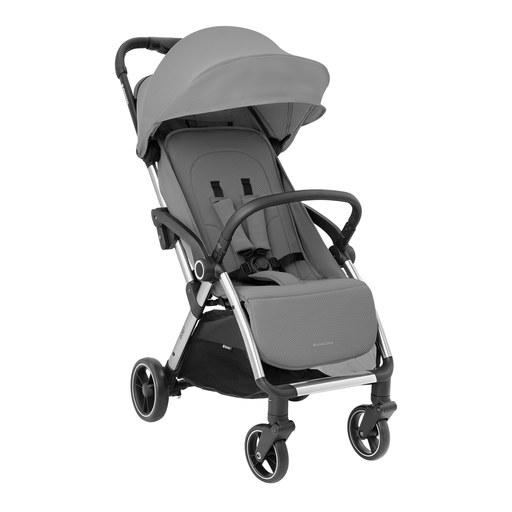
Why this product suits the profile: This folding pushchair is of interest to families looking for a buggy from birth up to a body weight of 22 kg, who value automatic one-hand folding.
The product data states use from birth, four backrest positions and a maximum load of 22 kg. This makes it easier to verify compared to pure marketing claims.
7.8 kg product weight, 360° swivelling front wheels, suspension, sun canopy with visor and rain cover.

Why this product suits the profile: At 5.5 kg and with folded dimensions of 59 × 21.5 × 46.5 cm, this compact buggy is aimed at parents who want to save weight when flying and in city traffic.
The stated folded size and weight are clearly specified. However, you must still check with the airline before each trip whether it can be taken as hand luggage.
One-hand folding, stepless backrest adjustment, transport rucksack and water-repellent canopy with UV protection 50+.
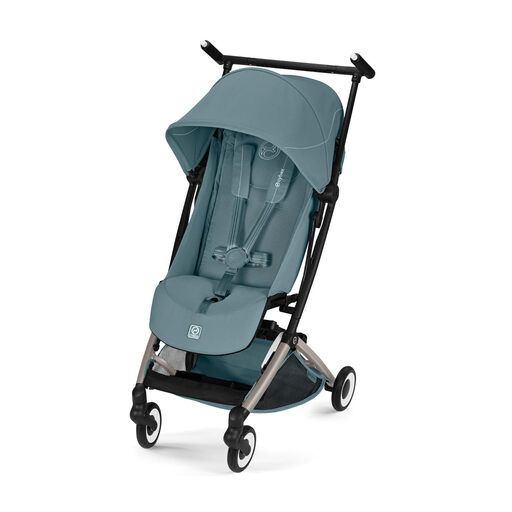
Why this product suits the profile: This pushchair as hand luggage is of interest to families who fly frequently and want a low weight and a format that is explicitly suitable for cabin baggage.
According to the product information, the age approval starts from around six months. This makes it clear that this model should not be planned as a travel buggy from birth.
6 kg weight, use up to 22 kg, one-hand harness system, sun canopy and included belly bag.
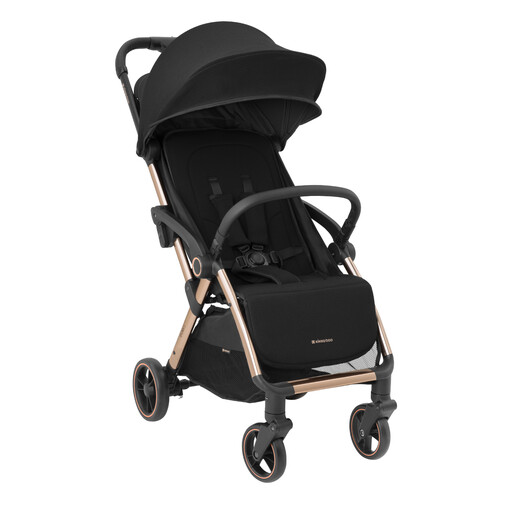
Why this product suits the profile: For daily journeys, travel and changing surfaces, this lightweight pushchair offers automatic folding, a reclining position and a shopping basket.
The product description mentions a flat reclining position from birth, a 5-point harness system and a weight limit of 22 kg.
7.8 kg product weight, folded dimensions of 47 × 30 × 77 cm, suspension and 360° swivelling front wheels.
We have put together a complete, regularly updated list of products that fully meet these strict selection criteria and the safety regulations in force in the EU.
Before every journey, check the harness system, brakes, locks and wheels. The maximum permitted load must not be exceeded. Heavy bags should go in the shopping basket and not on the handlebar, as this can affect stability.
Sand and small stones can impair the folding mechanism. Clean the frame and wheels regularly and follow the manufacturer’s care instructions for polyester covers and faux leather parts.
Only if the manufacturer explicitly approves use from birth and a suitable reclining position is available. Models with an age recommendation from around six months are not intended for newborns.
This depends on the airline, the fare and the available storage space. Even with a very small folded size, you should check the current regulations of the airline. Some airlines accept buggies at the gate, while others require them to be checked in at the desk.
Many models are designed for a body weight of up to 22 kg, which can roughly correspond to the period from birth to around the age of four. The specific age approval, the child’s height and the safe use of the harness system are also decisive factors.