Photographers shooting in changing light
You want to expose bright stretches of water and shaded canal banks deliberately, and may want to edit your images afterwards.


For a city walk, a compact camera with a fixed zoom is a good place to start if you want to switch between canal views and details without changing lenses. If choosing lenses and editing RAW files matter more to you in changing light, compare system cameras with the lens you’d use; in rainy weather, the protection ratings for the camera body and lens need to match.
You want to expose bright stretches of water and shaded canal banks deliberately, and may want to edit your images afterwards.
You want to keep your luggage to a minimum on longer walks and choose your framing without changing lenses all the time.
You can’t change your position for every subject, so you want to check the camera’s optical reach before buying.
Start by thinking about the subjects and conditions that will shape your camera purchase: changing light, travelling light, distant details, reflections or rain.
| Buying priority | What to check | Who is this particularly important to? |
|---|---|---|
| Exposure in changing light | RAW support, exposure controls, maximum aperture at your preferred angle of view, and stabilisation for the specific kit. | When photographing bright stretches of water beside shaded banks, I want to control exposure and any subsequent editing to suit the scene. For around 31 % of consumers, this issue of light and exposure comes first. |
| Portability on a walk | Weight with battery and card; for system cameras, also include the weight of the lenses you need. | On longer walks, I want to carry as little as possible and avoid constantly changing lenses. This is the main buying priority for around 25 % of consumers. |
| Angle of view for scenes and details | Full-frame equivalent focal length at the wide and telephoto ends; for system cameras, the actual lens you plan to use. | When I want to capture distant bridges or canal details from wherever I can stand, the right framing matters. Around 19 % of consumers put reach for distant subjects first. |
| Reflections on the water | Decide whether you want to keep or reduce reflections in the image; if using a filter, check that it’s compatible with the lens. | I want to decide whether reflections are part of the subject or should be toned down. For around 13 % of consumers, managing reflections on water is the most important buying priority. |
| Taking photos in the rain | Protection ratings for the exact camera body and attached lens, as well as the conditions for using them. | If I want to take photos in the rain, I need to consider the protection offered by the complete camera-and-lens combination. Around 12 % of consumers put this priority first. |
Distant details call for a different reach from nearby canal architecture, where a wide angle of view can be useful. Sony lists a 24–200 mm full-frame equivalent range for the RX100 VII; Panasonic gives a 24–720 mm full-frame equivalent range for the LUMIX DC-TZ99.
Compare the full-frame equivalent focal lengths at the wide and telephoto ends with the places you’ll actually be taking photos from.
With a system camera, the lens adds to the weight of the body. Canon lists the black EOS R50 body at around 375 g with battery and card; that isn’t the weight of a complete camera kit.
Compare what’s included and the total weight of the combination you’d take on your walk.
OM SYSTEM describes the OM-5 Mark II body as IP53-rated and lists weather-sealed lenses separately.
Before planning to take photos in the rain, check the protection ratings and conditions of use for both the body and the attached lens.
A polarising filter can reduce reflections, but it also cuts out light. That may not be what you want if the reflection itself is part of the subject.
First decide how you want the water to look. Then check whether a suitable filter fits the lens; the camera’s height can also change how a reflection appears.
The RX100 VII is designed for travellers looking for a built-in zoom with an angle-of-view range equivalent to 24–200 mm.
The LUMIX DC-TZ99 is aimed at travellers who need a long optical zoom range in a compact camera.
The X-S20 is an APS-C system camera for photographers who want to choose their lenses and edit RAW files.
The EOS R50 is an APS-C system camera for buyers who want to choose their angle of view with compatible RF or RF-S lenses.
The OM-5 Mark II is a system camera for travellers who value a lightweight body and documented weather protection.
The Joybuy product options below include cameras for taking photos on the go. Before buying, make sure the angle of view and type of zoom suit the subjects you want to photograph.
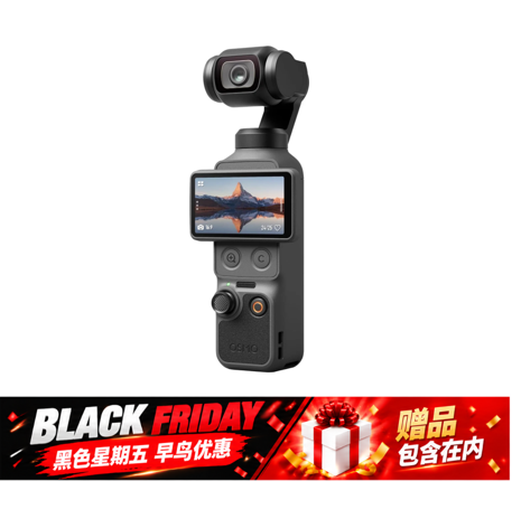 No image available
A pocket camera for photos and videos; the title mentions a rotating screen.
1″ CMOS sensor, 4K/240fps, 3-axis stabilisation, 2× lossless zoom, 107GB of built-in storage and a 2″ rotating screen.
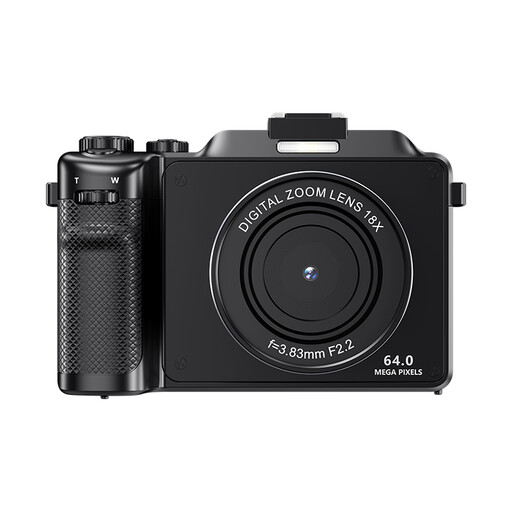 No image available
A digital camera with autofocus and a flash; before buying, check that the stated type of zoom suits the subjects you want to photograph.
64 MP, 4K, autofocus, 18x zoom, flash and anti-shake feature.
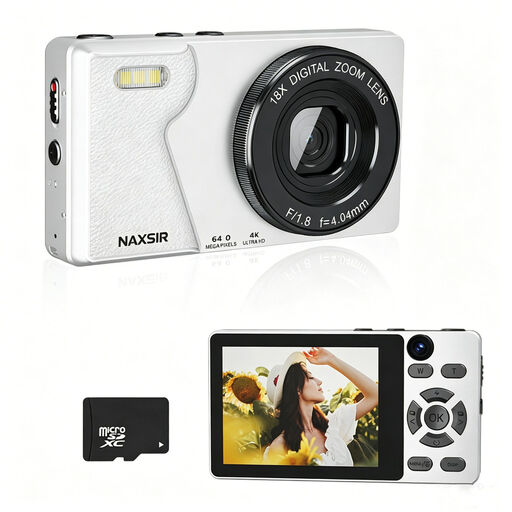 No image available
For taking photos on the go, the product title mentions autofocus and an included memory card.
4K, 64 MP, 18x digital zoom, autofocus and 32 GB memory card. For distant details, check whether digital zoom will give you the framing you want.
 No image available
A portable camera for travel photography; check that the zoom meets your needs for distant canal subjects.
4K, 80 MP and 18x digital zoom.
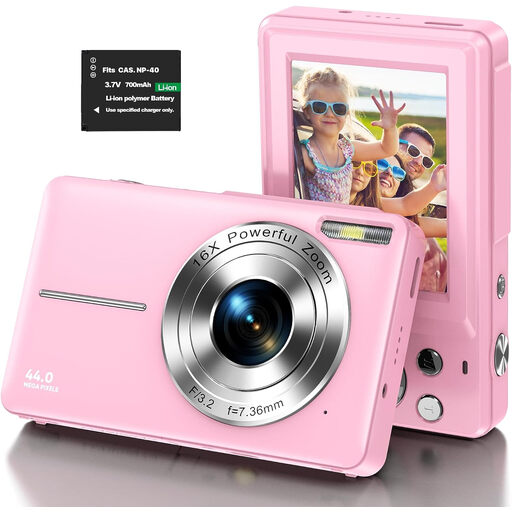 No image available
A pocket camera for taking photos and videos on the go; for distant subjects, check whether the stated digital zoom is enough.
4K, 64 MP, autofocus and 16x digital zoom.
Choose a shutter speed to achieve the effect you want. For longer exposures, Nikon Germany recommends using a stable setup; image stabilisation won’t stop moving water.
No. A polarising filter can reduce reflections on the water, but Nikon Germany’s filter guide notes that it also cuts out light. If the reflection is your subject, adjust your angle of view and camera height first.
According to the City of Augsburg, filming in public spaces with a shoulder-mounted camera or tripod generally doesn’t require a permit, provided no structures or barriers are set up. You’ll need the owner’s permission to film on private property; check separately if you plan special structures or to affect traffic. The city’s guidance covers filming and isn’t a blanket guarantee for every filming location.
Under § 22 of the German Act on Copyright in Works of Art and Photography, consent is generally required to distribute or publicly display images of people. § 23 sets out limited exceptions, for example where people are merely incidental to a location; legitimate interests remain protected. Check the specific circumstances in which the image was taken and will be published. Freedom of panorama for permanent works doesn’t remove the need to consider personality rights or data protection.
No. Under § 59 of the German Copyright Act, freedom of panorama applies, subject to certain conditions, to permanent works located on public paths, roads or squares; for buildings, it applies only to their exterior. On 23 October 2024, the Federal Court of Justice ruled that the drone photographs of protected works considered in that case weren’t covered by freedom of panorama. This doesn’t amount to either general permission or a blanket ban on flying drones in Augsburg.