What should you look for when choosing?
Mirrorless camera with a wide-angle lens
A good fit if: You want to capture as much of a façade as possible from a confined spot, then use another lens for details.
Bear in mind: The body, lens and other accessories all add to the total weight. A wide-angle lens won’t automatically straighten converging verticals.
Compact camera with a zoom
A good fit if: You want to switch between a full view and details higher up on a building during a walk, without changing lenses. Sony lists the RX100 VII’s built-in zoom range as 24–200 mm equivalent.
Bear in mind: Its wide-angle end isn’t as wide as a suitable ultra-wide-angle lens. According to Sony, the RX100 VII’s maximum aperture ranges from F2,8 at the wide end to F4,5 at the telephoto end.
Compact camera with a prime lens
A good fit if: You like to compose your shots by choosing your position and want to photograph without an optical zoom. Ricoh lists the GR IV’s fixed focal length as approximately 28 mm equivalent.
Bear in mind: You can’t change the angle of view with a zoom to bring a distant gable detail closer.
The right choice depends on your main priority: framing the entire façade, getting steady handheld shots, keeping your kit light or bringing distant details closer.
| Buying criteria |
What to check |
Who is it important to? |
| Entire façades and straight lines |
Angle of view for the complete camera and lens combination; space to get the perspective you want. |
If I want to fit the entire façade into the frame in a narrow alley and carefully align the lines, I first look for the right angle of view. Around 33% of consumers put this framing requirement first. |
| Handheld photos in low light |
Whether the specific combination offers image stabilisation for stills, and whether it’s built into the camera body or the lens. |
If I’m taking photos in the evening without a tripod, I want to know where the stabilisation in my setup is and whether it works for stills. Around 27% of consumers prioritise this need for handheld photography. |
| How easy the kit is to carry |
The weight of the camera body and the lens you’ll actually take with you; what’s included in the kit. |
If I’m out all day, I want to carry a manageable kit without changing lenses for every subject. Around 20% of consumers prioritise packing light for the day. |
| Distant façade details |
The telephoto end of a built-in zoom or the lenses you’ll actually take with you. |
If I want to photograph brickwork high up or details on a gable without changing position, I need a suitably tighter frame. Around 20% of consumers prioritise these kinds of details. |
Camera options at Joybuy
This selection at Joybuy includes compact camera options for travel and a range of ways to frame façades. Pay particular attention to the actual angle of view, type of zoom and stabilisation for stills.
 No image available
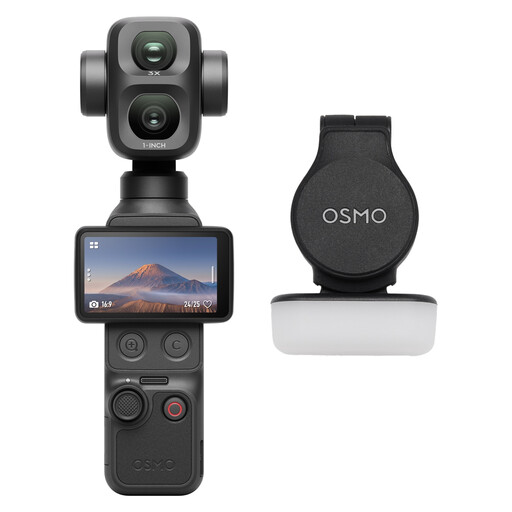
Osmo Pocket 4P Standard Combo, Black
If you’re looking for a camera to take on the go, check whether its angle of view is wide enough to capture entire façades from your usual shooting position.
The product title specifies the Standard Combo version.
Joybuy
 No image available
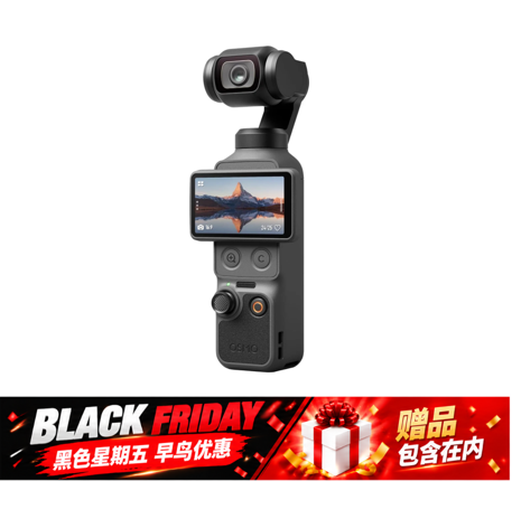
DJI Osmo Pocket 4 Standard Combo
If you want to switch between views of façades and details while you’re out and about, check that the stated zoom and stabilisation suit the photos you want to take.
The product title lists a 1″ CMOS sensor, 3-axis stabilisation, 2× Lossless Zoom and 107 GB of built-in storage. Check whether the stabilisation specification applies to stills or video.
Joybuy
 No image available
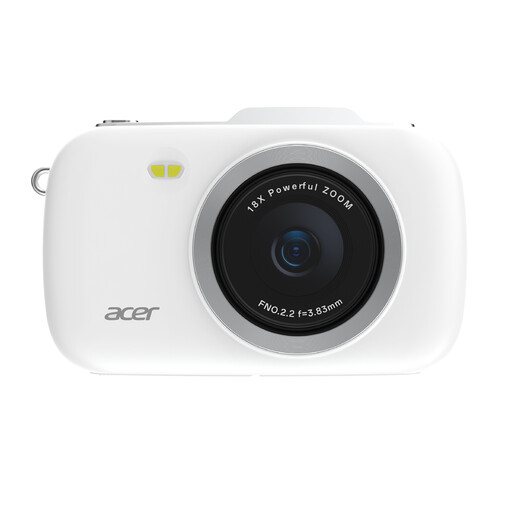
Komery G7-A Digital Camera, 4K, 80 MP, 18X Zoom
If you want tighter framing of façades when you’re out and about, check how the stated zoom works and whether it gives you the composition you want.
The product title lists 4K, 80 MP and 18X Zoom.
Joybuy
 No image available
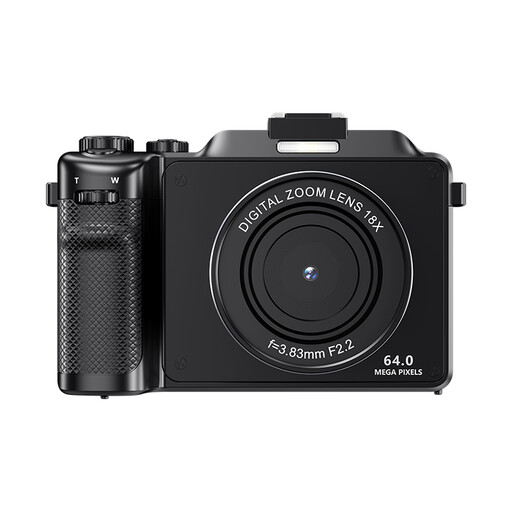
KOMERY X9 Digital Camera, 4K, 64 MP, 18x Zoom
If you want to capture details on a façade, compare the framing you want with the actual zoom range and check whether stabilisation applies to stills.
The product title lists 4K, 64 MP, autofocus, 18x Zoom and flash.
Joybuy
 No image available
Songdian Digital Camera, 8× Optical Zoom, 5K, 64 MP
If tighter framing of distant façade details matters to you, check the angle of view at the wide end as well as the telephoto end.
The product title lists 8× optical zoom, 5K, 64 MP and a dual-lens design.
Joybuy
Frequently asked questions
How can I avoid façades looking crooked when shooting handheld?
Take care to line up the camera and check the frame edges and gables before pressing the shutter. According to Canon, the EOS R50 can display grid lines, but your position and perspective still matter. Correcting the image later is an additional editing choice, not an automatic feature of a wide-angle lens.
Is image stabilisation enough for evening photography?
Image stabilisation can reduce camera shake, but it can’t guarantee sharp shots at every shutter speed. Check whether the specific combination offers stabilisation for stills, and whether it’s built into the camera body or the lens. Nikon lists no in-body stabilisation for the Z 30, while Canon lists optical image stabilisation for the RF-S 10–18 mm.
What should I check before buying, and what if there’s a fault?
Before buying, check whether the offer includes the camera, the lens you want and any accessories you need. If a product is faulty, distinguish your statutory rights against the seller from a voluntary manufacturer’s guarantee. Online purchases in Germany generally come with a 14-day right to cancel; the Verbraucherzentrale explains that the conditions and scope depend on the specific purchase.
Can I photograph brick façades from the street and publish the images?
Under certain conditions, § 59 UrhG permits the photography and public reproduction of works permanently located on public paths, streets or squares; for buildings, this applies only to their exterior. This doesn’t answer every question about the specific place where you take a photo. If identifiable people appear in an image, you must also consider their right to their own image when publishing it: § 22 KunstUrhG generally requires consent, while § 23 sets out exceptions. The legislation is published on the German Federal Ministry of Justice and Federal Office of Justice’s “Gesetze im Internet” portal.


