For façade photographers
If you want to frame building edges, brick patterns and the whole street with care, field of view, shooting position and camera angle are key considerations.


Choose a lens based on the field of view you need to capture the brick façade from a spot you can actually access; Sony Germany points out that tilting a camera upwards can make vertical lines converge. To keep passers-by sharp, you’ll need tracking autofocus and a suitably fast shutter speed. Nikon Germany explains that faster shutter speeds are more likely to freeze movement, while image stabilisation compensates for camera shake. A fixed zoom saves you changing lenses, while an interchangeable-lens system offers more choice of field of view but means selecting and carrying a suitable lens.
If you want to frame building edges, brick patterns and the whole street with care, field of view, shooting position and camera angle are key considerations.
If you want to capture people walking past alongside the architecture at just the right moment, consider tracking autofocus and shutter speed.
On longer city walks, the weight of your complete kit matters. A built-in zoom and an interchangeable-lens system differ in how much choice and extra equipment you’ll need to carry.
A good fit if: you want to switch between wide views of façades and more distant details on a city walk without changing lenses.
The trade-off: You can’t extend the built-in lens’s field-of-view range by adding a different lens later. Whether a wide-angle lens is wide enough for a narrow street also depends on how far away you can stand.
A good fit if: you want to choose a lens to suit your distance from façades and the framing you’re after, and need autofocus for people.
The trade-off: The camera body alone won’t solve the problem of limited space in narrow streets. You’ll need to choose and carry the right lens too.
A good fit if: you’re considering a full-frame system with a range of shooting and editing options, and are happy to carry a suitable lens.
The trade-off: Consider the weight and size of the complete kit, not just the camera body. A higher stated resolution won’t necessarily keep building edges straight or passers-by sharp.
A good fit if: you’re out and about in changeable weather and want to change lenses to capture different framings.
The trade-off: Weather-sealing claims for the camera body don’t automatically apply to every lens attached to it. Shutter speed remains important when photographing people on the move.
| What matters | What to check when buying | Who should consider this? |
|---|---|---|
| Field of view and perspective | Compare the field of view of the lens you’ve actually chosen, and check that the distance and position available will let you capture the façade as you want. Sony Germany recommends keeping the camera as level as possible if straight vertical lines matter. | If I want to capture the whole façade, including the frame I’m after, from a spot I can access, I pay particular attention to field of view and camera position. Around 31 % of consumers put this kind of façade composition first. |
| People on the move | Check for tracking autofocus, the option to set the shutter speed, and the lens you’ll be using. Nikon Germany explains that a faster shutter speed is more likely to freeze movement, while image stabilisation compensates for camera shake. | If I want to capture passers-by as sharply as possible in front of the architecture, I need the right focus and shutter speed. Around 31 % of consumers prioritise moving subjects. |
| Weight of your travel kit | Compare the weight and packed size of the camera body and the lens you’ve actually chosen, not just the body. A fixed zoom means you don’t need to change lenses; an interchangeable-lens mount gives you more lens options. | On longer city walks, I want a kit that suits my luggage without planning for unnecessary lens changes. Around 25 % of consumers prioritise travelling light during the day. |
| Weather protection | Check the protection ratings for the specific camera body and lens separately, and follow the relevant manufacturer guidance. OM SYSTEM gives the OM-5 body an IP53 rating. | If I want to take photos in changeable weather, I need to know which parts of my kit are specifically protected. Around 13 % of consumers put weather protection first. |
With an interchangeable-lens camera, the sensor format and the lens you choose together determine the framing you can achieve. The distance you can shoot from may be limited in a street.
Before buying, decide whether you want to photograph the whole façade or just individual details from a spot you can actually access, then compare complete kits.
Camera shake and a person’s movement are different causes of blur. Stabilisation compensates for camera movement, but it won’t automatically freeze a moving subject.
Choose a suitable shutter speed for passers-by, and also consider the autofocus and the maximum aperture of the lens you’re using.
A protection rating for the camera body doesn’t automatically tell you how well the complete body-and-lens combination is protected.
Check the manufacturer’s information for each specific component you’ve chosen.
Sony offers both a compact camera with a built-in zoom and a full-frame camera with an interchangeable-lens mount for this kind of choice.
The X-S20 is an APS-C interchangeable-lens model for travellers who want to choose the field of view by selecting a lens.
The OM-5 is a compact Micro Four Thirds interchangeable-lens model for travellers who also want to consider weather protection.
The EOS R50 is an APS-C interchangeable-lens model for travellers who want to combine lens choice with autofocus for people.
The selection below includes pocket gimbals, digital compact cameras and action cameras. For façades and people on the move, check that the field of view, autofocus and controls suit the place you’ll be shooting.
 No image available
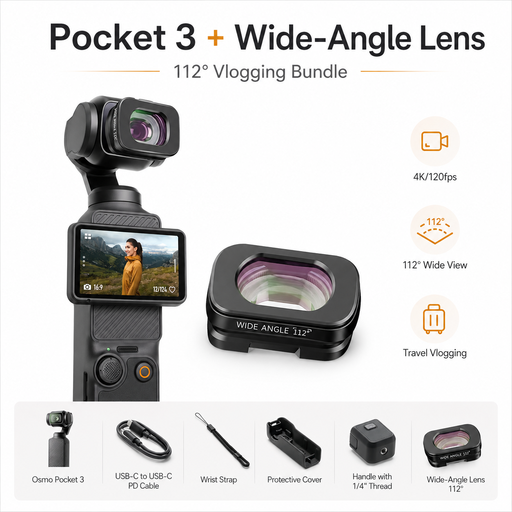
The pocket gimbal format may appeal to travellers looking for a compact camera with a wide-angle lens. Before buying, check that the field of view and autofocus suit the façades and people you want to photograph.
The product description lists a 1-inch CMOS sensor, 4K/120fps and a 3-axis gimbal.
 No image available
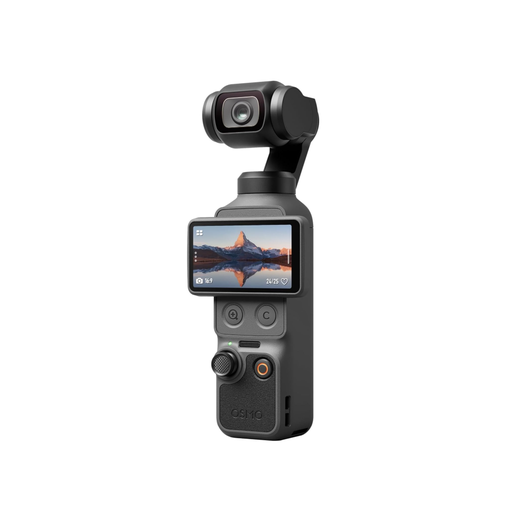
The pocket gimbal format may suit you when you’re out and about. Before choosing, check the manufacturer’s information against the fields of view you need and how well it focuses on people walking past.
The product description lists a 1-inch CMOS sensor, 4K/240fps, 3-axis stabilisation, 2× lossless zoom, 107GB of built-in storage and a 2-inch rotating screen.
 No image available
If you want to cover different framings with a zoom, check that its field of view is wide enough for your distance from the façade and that the autofocus suits your subjects.
The product description lists 12× optical zoom, 4K video, Wi-Fi and 64MP photos.
 No image available
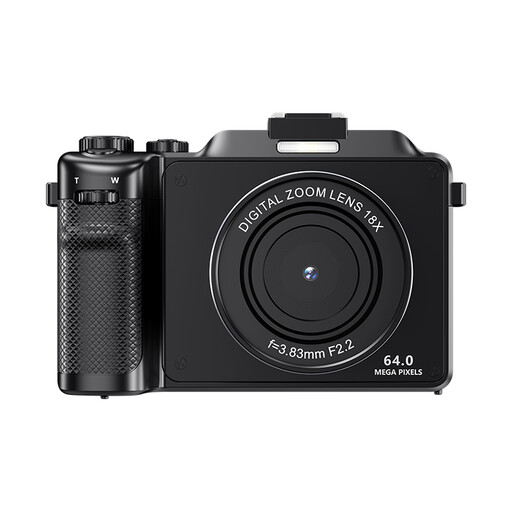
If you need zoom and autofocus for different framings, check in advance that the camera can focus on people in motion in a way that suits how you plan to use it.
The product description lists 64 MP, autofocus, 18× zoom and flash.
 No image available
As this model is described as an action camera, check that its field of view, controls and autofocus suit photographing architecture and people walking past before choosing it.
The product description lists 6-axis gyro stabilisation, a 480-minute battery, day and night lenses, 4K/30fps and two displays.
Image stabilisation helps to counter movement of the camera you’re holding, but it won’t freeze people walking past. For that, choose a suitable shutter speed. Faster speeds are more likely to freeze movement, and also affect exposure.
Keep the camera as level as possible and, if you can, choose a spot further away. If you need to tilt the camera upwards, leave space around the edges of the frame for perspective correction later, and check first that the field of view will capture the façade.
Before you travel, check that the lens mount and camera body are compatible, and that the field of view suits your shooting distance. If bad weather is a possibility, check the protection ratings for the body and the specific lens separately, and follow the manufacturers’ care instructions.
Under certain conditions, § 59 UrhG allows images of the exterior of permanent works from public roads, streets or squares. As a general rule, § 22 KunstUrhG applies to distributing or publicly displaying recognisable people; § 23 sets out limited exceptions, such as people appearing as incidental background details, and takes legitimate interests into account. The rule for façades is not blanket permission to publish every image of people. Each case, and data protection law where relevant, must be considered separately. This information is based on legislation published by the Federal Ministry of Justice.
Your statutory rights relating to defective goods are separate from a voluntary manufacturer’s guarantee. According to the Verbraucherzentrale, online orders generally come with a right to cancel, usually within 14 days of receiving the goods. Exceptions and the terms of the specific purchase should also be considered.