Photographers working in changing light
If you want to expose for bright skies and dark castle walls, and may edit your photos afterwards, exposure controls and a suitable lens are important things to consider.


Start with your biggest constraint: a compact camera with a fixed zoom is easier to carry on long walks, a bridge camera gives you plenty of reach without changing lenses, and a system camera lets you choose a lens and focal length to suit panoramas, details or changing light. Then check the focal-length range of the specific kit, its exposure controls, and the weight and weather protection of the complete set-up – not just the camera body.
If you want to expose for bright skies and dark castle walls, and may edit your photos afterwards, exposure controls and a suitable lens are important things to consider.
For castles photographed from a viewpoint or from the valley, check the telephoto framing offered by the specific camera model and the lens actually included in the kit.
If you want to switch between wide views and details on longer walks without carrying several lenses, a built-in zoom can be useful. However, it limits your choice of lenses later on.
A good fit if: You want to switch between views of a castle and distant details on long photo walks without changing lenses.
Trade-off: You can’t extend the focal-length range by fitting a different lens.
A good fit if: You want to fill the frame with a castle from further away without carrying interchangeable lenses.
Trade-off: A wide zoom range alone doesn’t guarantee good results in low light.
A good fit if: You want to choose lenses and shooting techniques to suit landscapes, distant façades or changing light.
Trade-off: Reach and stabilisation depend on the lens or kit you buy; extra lenses add to your luggage.
| What matters | What to check before buying | Who it matters most to |
|---|---|---|
| Exposure in changing light | Check exposure compensation, bracketing and the available image format on the specific model. Stabilisation won’t balance the difference in brightness between the sky and a building. | If I want to expose deliberately for bright skies and shaded walls, and edit my photos afterwards if needed, control over exposure matters to me. This is the top priority for around 36% of consumers. |
| Distant views of castles | Compare full-frame equivalent focal lengths on a like-for-like basis. For system cameras, check the exact kit name, not just the camera model. | If I want to photograph a castle from a viewpoint or from the valley, I need a suitable telephoto frame. Around 29% of consumers prioritise distant views. |
| Luggage on photo walks | Compare the weight of the camera ready to use, including the lens you plan to take. Body weights aren’t always quoted on the same basis. | If I’m walking longer distances and don’t want to carry several lenses, the weight of the complete set-up is crucial. Around 21% of consumers focus primarily on portability. |
| Protection in changeable weather | Check the documented protection ratings for the body and chosen lens, as well as the conditions at the place you plan to visit. | If I want to take photos outdoors in poor weather, I need to know the protection ratings for the exact combination I’ll be using. Around 14% of consumers put weather protection first. |
With a system camera, the lens determines how much of the scene you can capture. The specifically named Nikon Z50II Double Zoom Kit includes two lenses, both of which you’ll need to carry if you want to use them.
Compare complete kits and check that they actually include the lens you need for your subjects.
The zoom range tells you what kinds of framing are possible, but it doesn’t on its own tell you how a camera performs as the light fades. Panasonic lists an 18.1-MP MOS sensor and F2.8–5.9 for the Lumix FZ82D.
Consider your telephoto needs and requirements for changing light separately, rather than choosing solely by the highest focal-length figure.
The IP53 rating given by OM SYSTEM for the OM-5 Mark II doesn’t automatically apply to every lens that can be used with it.
Check the protection ratings for the specific camera-and-lens combination.
The conditions for taking exterior views under § 59 UrhG and the visitor rules for a specific site relate to different shooting situations.
Before taking photos on the grounds, check the visitor rules in force there and follow the signs.
The RX100 VIIA is a compact camera with a fixed zoom, designed for switching between different framings without changing lenses.
The EOS R50 is an entry point into Canon’s RF/RF-S interchangeable-lens system; your choice of lens determines the framing you can achieve.
The Z50II is particularly relevant for castle photography as a double zoom kit, if you’re planning to capture both wide views and distant details.
The OM-5 Mark II is a system camera for travellers who want to consider a documented weather-protection rating for outdoor use.
The Lumix FZ82D is an example of a bridge camera with a fixed zoom range for shooting from different distances.
The product options below cover cameras for different types of photography. Before buying, make sure the zoom, lens and weather protection suit your subjects and photo walks.
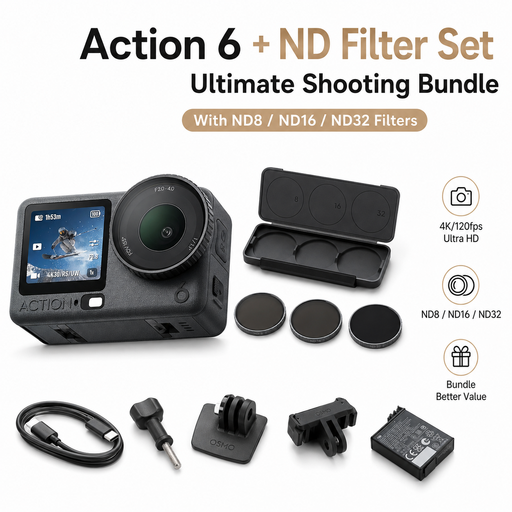 No image available
This set is described as an action camera for travel and outdoor activities; check whether this style of camera suits the castle photos you have in mind.
The product name lists 8K and 4K/120fps video, as well as an ND filter set.
 No image available
The kit on offer includes a 16–50-mm power zoom lens for flexible framing; check whether its focal-length range suits your distant views.
The product name describes the camera as an APS-C model.
The product description states that the camera isn’t water-resistant and warns against exposure to moisture.
 No image available
The product name describes this as a pocket camera; before buying, check whether this compact style meets your needs for photographing castles.
The product name lists a 1″ CMOS sensor, 4K/240fps, 3-axis stabilisation and 2× lossless zoom.
The product description states that the camera isn’t waterproof.
 No image available
The product name lists 12× optical zoom; compare the framing with the distance to the subjects you plan to photograph.
The product name also lists 4K video and 64 MP photos.
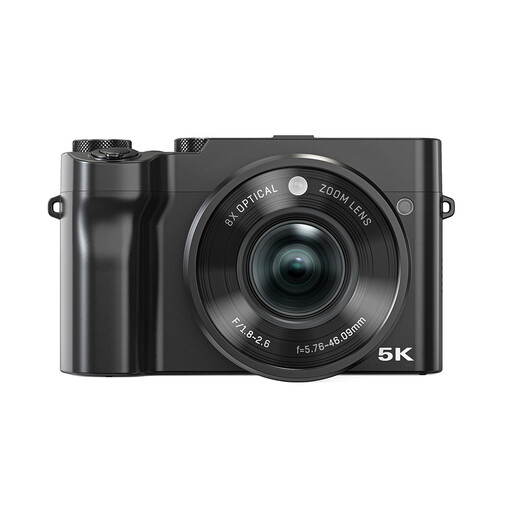 No image available
The product name lists an 8× optical zoom lens for different types of framing; check that it offers enough reach for the distance to the castles you want to photograph.
The product description warns against exposing the camera to liquids or damp environments.
If a single photo doesn’t capture the bright and dark areas as you’d like, you can take shots at different exposures and combine them later, if your camera supports it. Exposure bracketing is a shooting technique, not a guarantee that every subject will work without further editing.
It depends on the kit you buy. Nikon’s specifically named Z50II Double Zoom Kit includes a 50–250-mm VR lens as well as a 16–50-mm lens; for other offers, check exactly what’s included.
No, the rating for the body doesn’t automatically apply to the lens. OM SYSTEM lists IP53 for the OM-5 Mark II; also check the protection ratings for the specific lens you choose and take the relevant shooting conditions into account.
Under certain conditions, § 59 UrhG allows photos of works permanently located on public paths, roads or squares, and their distribution and public display. For buildings, this applies only to the exterior; it doesn’t give blanket permission to take photos inside a site.
No. According to the visitor rules for Königstein Fortress, photography and filming outdoors and in permanent exhibitions are permitted for private use only. Commercial photography requires permission, and signs take precedence in special exhibitions. These site-specific conditions don’t automatically apply to other castles in Saxony.