For exterior shots of collieries, the right travel camera depends on whether you mainly want to capture entire sites, distant details or travel with as little kit as possible. A mirrorless camera can be adapted to different compositions with the right lenses, a fixed-lens camera keeps your luggage light, and a compact camera with a zoom lets you change your composition without changing lenses. In changing light, easy-to-use exposure compensation and a suitable way to check your images are important. Also check which lens is actually included and what rules apply at your chosen location.
Who are the different types of camera best suited to?
Photographers dealing with changing light
When photographing dark industrial structures against a bright sky, you’ll want to check the exposure and adjust it if necessary. Canon UK explains how exposure compensation can be used in unusually bright or dark scenes, while Nikon highlights the changing role of light and shadow in urban photography.
Photographers capturing entire sites
If you want to fit the buildings and headgear into the frame from your available vantage point, the angle of view of the specific lens matters. So compare the focal length in 35mm equivalent and consider how much space you have at the location.
Photography fans travelling light
If you want to carry as little as possible on longer walks, consider the weight of your complete kit, not just the camera body. Also think about whether the fixed angle of view of a prime lens will suit you, or whether you need a built-in or interchangeable zoom.
What should you consider when choosing?
First, decide on the composition you need from an accessible vantage point. Then weigh up exposure controls, lens options and travel weight according to what matters most to you.
| Priority |
What to check before buying |
Who is it important to? |
| Exposure in changing light |
Check whether you can adjust the exposure precisely on the model you’re considering, and how you can review the effect on your images. Canon UK describes exposure compensation as a way to adjust shots in unusually bright or dark scenes. |
When bright sky and dark parts of a building appear in the same frame, you’ll want to judge the brightness yourself and make adjustments if needed. Around 36 % of consumers put exposure in changing daylight first. |
| Fitting entire sites into the frame |
Compare the angle of view of the supplied lens in 35mm equivalent: Canon gives 29–72 mm for the RF-S 18–45 mm on the EOS R50, Ricoh gives approximately 28 mm for the GR IV and 40 mm for the GR IIIx. |
If you want to capture the headgear and buildings together from your chosen position, you need an angle of view that suits the available distance. Around 29 % of consumers prioritise a complete view of the site. |
| Travelling with less kit |
Weigh the camera and the lenses you need together. Canon gives the weight of the black EOS R50 body as approximately 375 g with battery and memory card; the lens adds extra weight. |
If you’re covering longer distances, you won’t want to carry more lenses than your subjects require. Around 21 % of consumers prioritise travelling light, even if that means accepting a less flexible angle of view. |
| Capturing distant details |
Check the optical zoom range and what’s included in the specific kit: Sony gives the RX100 VII a 24–200 mm 35mm-equivalent range, while Nikon includes an additional 50–250-mm VR lens with the Z50II dual-zoom kit. |
If you want to bring components closer in the frame from a greater distance, the reach of the built-in zoom or an included telephoto lens is key. Around 14 % of consumers put distant details first. |
Which assumptions should you avoid?
-
Comparing only the body weight or camera name
The weight of a camera body doesn’t automatically include the lens and other accessories. Canon gives the EOS R50’s weight as approximately 375 g with battery and memory card; the kit lens adds extra weight. With a fixed-lens camera, the lens determines the angle of view.
Compare the total weight of the combination you’d actually take on your trip.
-
Assuming every kit has a wide enough angle for close-up views of the whole site
According to Canon, the RF-S 18–45 mm kit lens on the Canon EOS R50 starts at a 29 mm 35mm-equivalent focal length. From a cramped vantage point, that angle of view may not be wide enough to capture the whole site.
Plan your composition from the accessible shooting position and check the angle of view of the supplied lens before choosing a kit.
-
Assuming permission for private photography applies to other uses or locations
Stiftung Zollverein has different rules depending on the purpose and use of the images; separate requirements apply to drones and commercial photography. Restricted areas must not be entered. These site rules don’t automatically apply to other collieries.
Check the rules at your chosen location and clarify how you intend to use the images in advance, especially for drone, editorial or commercial photography.
Key brands for different types of camera
Canon
The EOS R50 with the RF-S 18–45 mm kit is an entry-level interchangeable-lens option with a standard zoom.
- Canon gives the weight of the black body as approximately 375 g with battery and memory card. According to Canon, the kit lens offers a 29–72 mm 35mm-equivalent angle of view.
- The body doesn’t have in-body sensor-shift stabilisation; in the kit mentioned, the lens provides optical stabilisation. The quoted weight doesn’t include the lens.
Nikon
The Z50II dual-zoom kit combines a 16–50 mm lens with a 50–250 mm lens for different compositions.
- Nikon specifies stabilisation in both kit lenses and an exposure preview in the electronic viewfinder.
- You’ll need to carry both lenses and change them when you want to switch between the two angles of view. Nikon doesn’t list a charger as included with this kit.
Sony
The RX100 VII is a compact camera with a zoom, while the α6700 is a separate APS-C interchangeable-lens camera.
- Sony specifies a built-in zoom with a 24–200 mm 35mm-equivalent range and a 1.0-inch sensor for the RX100 VII. The α6700 has an APS-C sensor and E-mount, according to Sony.
- The lens on the RX100 VII can’t be changed. The specifications for the RX100 VII and α6700 relate to different models, so they don’t allow for a general comparison of quality.
Ricoh
The GR IV and GR IIIx are compact APS-C cameras with different fixed angles of view.
- Ricoh gives a 35mm-equivalent focal length of approximately 28 mm for the GR IV and 40 mm for the GR IIIx.
- The built-in lens determines the angle of view, so these models don’t offer a choice of zoom focal lengths.
Joybuy products related to this topic
A selection of Joybuy products related to this topic.
 No image available
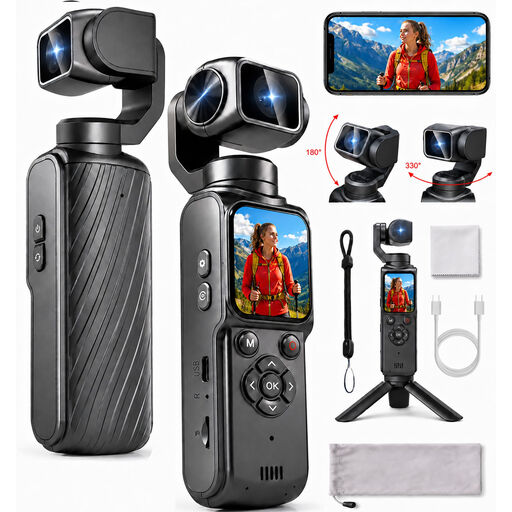
4K action camera with 330° rotating lens
The title describes a compact travel camera for photography and video; for shots of collieries, you should also check whether its angle of view suits your location.
The title lists a 330° rotating lens, a 1.72-inch touchscreen and wireless transfer. The product description specifies photos of up to 64 MP and 4K video.
View on Joybuy
 No image available
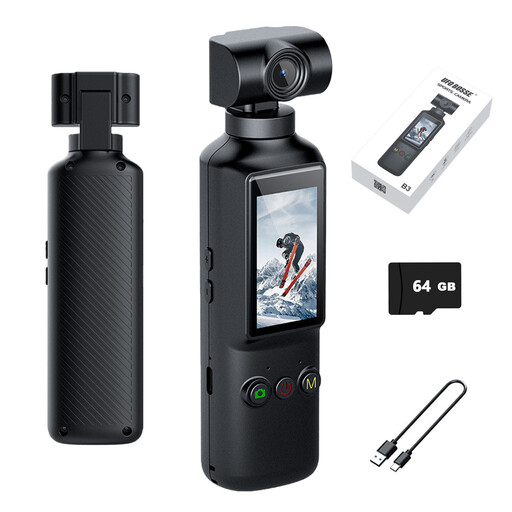
KINSI Mini Pocket Camera, 270°, 16 MP
Described as a mini pocket camera for travel, it’s aimed at anyone looking for a compact design; check that the angle of view suits your architectural photography.
The title lists 16 MP, 4K video at 30 frames per second, a 5.1-cm HD display, Wi-Fi, a 1000-mAh battery and a USB-C port.
View on Joybuy
 No image available
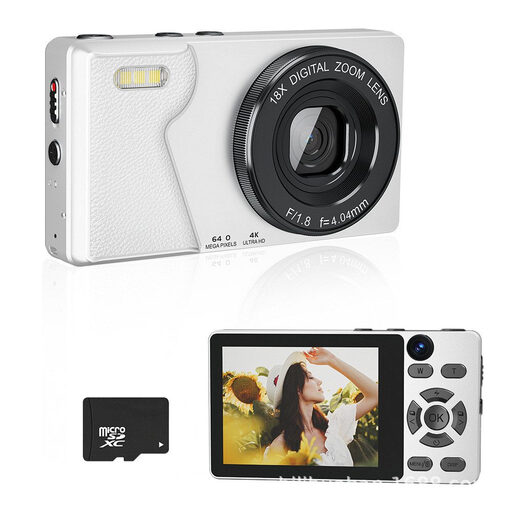
KINSI Retro digital camera, 64 MP
The title describes a compact travel camera with front and rear cameras; before choosing it, check whether its field of view suits your needs for capturing entire sites or details.
Features listed include autofocus, image stabilisation, a 2.8-inch display, 20 filters and a 2000-mAh battery.
View on Joybuy
 No image available
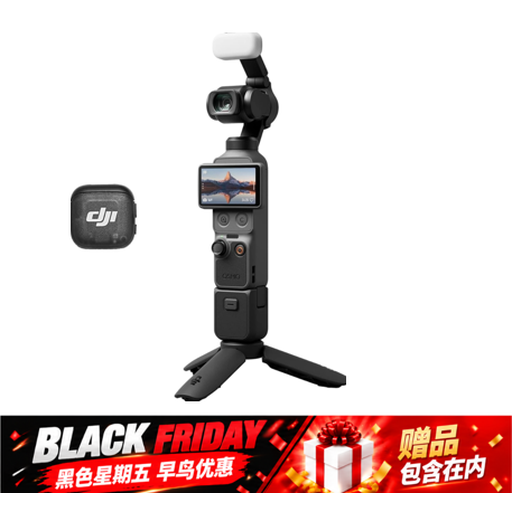
DJI Osmo Pocket 4 Creator Combo
The pocket-sized design is made for a compact camera setup; for a variety of colliery subjects, check whether the zoom and angle of view cover the compositions you have in mind.
The title lists a 1-inch CMOS sensor, 4K/240 fps, 3-axis stabilisation, 2× lossless zoom, 14 stops of dynamic range, 107 GB of built-in storage and a 1/4-inch threaded handle.
View on Joybuy
 No image available
DJI Osmo Pocket 4 Standard Combo
The compact design could be useful on the go; for compositions with subjects at varying distances, check that the stated zoom range is enough.
The title lists a 1-inch CMOS sensor, 4K/240 fps, 3-axis stabilisation, 2× lossless zoom, 107 GB of built-in storage and a rotating 2-inch screen.
View on Joybuy
Frequently asked questions
What can I do when dark colliery buildings are against a bright sky?
Check the brightness of your image and adjust the exposure compensation if needed. Canon UK explains that automatic metering can render unusually bright or dark scenes differently from the way you intended; the right adjustment depends on the specific subject.
Can I take private photographs on the Zollverein site?
Under Stiftung Zollverein’s rules, private photography in outdoor areas is generally free and doesn’t require permission. Exceptions include wedding shoots and productions requiring significant technical equipment or personnel. Restricted areas must not be entered. These site-specific rules don’t grant permission to photograph at other collieries in the Ruhr region.
Does permission for private photography at Zollverein also cover drones or commercial photography?
No. Stiftung Zollverein prohibits private drone photography and requires permission for images intended for commercial publication. It has a separate arrangement for editorial work in freely accessible outdoor areas, asking photographers to register in advance. So be sure to clarify how you intend to use the images beforehand.
What should I check before my first trip and if a fault develops later?
Check what’s included with the specific kit, particularly the lenses and charger. Nikon explicitly states that a charger isn’t included with the Z50II dual-zoom kit. If a fault develops, remember that your statutory rights against the seller are separate from any voluntary guarantee, as explained by the consumer advice centre.


