Photographing in changing light
If you’re photographing the same bridge in sunshine, cloud or against the light, you’ll want to assess and adjust the exposure. Canon Academy explains how shutter speed and ISO affect your shot.


Choose your camera based on whether you mainly want to photograph entire bridges, distant details or both without changing lenses. A built-in zoom makes it easier to switch between compositions, while a mirrorless camera with compatible lenses gives you more flexibility to adapt later. Also check how you can adjust the exposure and exactly what’s included in the kit. Image stabilisation compensates for camera shake, but it won’t give you the right angle of view or replace careful exposure settings when there are big differences in brightness.
If you’re photographing the same bridge in sunshine, cloud or against the light, you’ll want to assess and adjust the exposure. Canon Academy explains how shutter speed and ISO affect your shot.
For arches, riverbanks and the surrounding area, the angle of view of the lens you’re actually using is what matters. Canon Deutschland, Ricoh Imaging Europe and Canon Academy describe angle of view and lenses as important considerations for architectural photography.
If you want to capture struts or other structural details at a larger scale from accessible vantage points, you’ll need sufficient optical zoom or a suitable interchangeable lens. Sony Deutschland and Nikon Deutschland list relevant lens specifications for the models covered here.
First decide which subjects you want to photograph from the locations you can reach. Then compare the specific lens and exposure options, rather than just the type of camera.
A good fit if: you want to switch between wide views and distant struts on a walk without changing lenses. Sony lists a zoom range equivalent to 24–200 mm in 35 mm format for the RX100 VII.
Bear in mind: the lens is built in. Sony lists a maximum aperture of F2.8 at the wide end and F4.5 at the telephoto end.
A good fit if: you’d like to adjust the angle of view later by switching to another lens. Canon lists the RF-S 18–45 mm on the EOS R50 as equivalent to 29–72 mm in 35 mm format; Nikon offers a Z50II kit with a stabilised 16–50 mm zoom.
Bear in mind: the angle of view depends on the lens supplied, and you may need to factor in additional lenses and their weight. Canon Deutschland does not list sensor-shift stabilisation for the EOS R50.
A good fit if: you mainly want to compose shots of entire buildings from suitable vantage points and don’t need optical zoom. Ricoh lists the GR IV as having an angle of view equivalent to approximately 28 mm in 35 mm format.
Bear in mind: you can’t bring distant details closer with optical zoom, and the fixed focal length limits your choice of angle of view.
| Buying priority | What to check | Who will find this especially important? |
|---|---|---|
| Exposure in changing daylight | Check that exposure compensation and shutter speed are easy to adjust. If you want to use them, confirm that RAW or exposure bracketing is available on the specific model. | If you want to balance the brightness of the sky and bridge in sunshine, shifting cloud or backlight, exposure control should be your main priority. Around 33% of consumers put this first. |
| Angle of view for entire bridges | Compare the full-frame equivalent focal length at the wide end of the supplied lens. Canon lists 29 mm for the RF-S 18–45 mm, Sony 24 mm for the RX100 VII and Ricoh approximately 28 mm for the GR IV. | If you want to fit a long bridge and its surroundings into the frame from an accessible vantage point, pay particular attention to the angle of view. Around 27% of consumers prioritise wide views. |
| Reach for distant details | Check the optical zoom range and, for mirrorless cameras, the lens actually included. Sony lists the RX100 VII as equivalent to 24–200 mm in 35 mm format; Nikon’s Z50II kit covered here includes a 16–50 mm lens. | If you want to capture struts or joints at a larger scale from a fixed or more distant vantage point, reach for detail is key. Around 20% of consumers put this first. |
| Portability and ease of use | Compare the weight and what’s included in the complete set-up. Canon’s figure of around 375 g for the black EOS R50 includes the battery and memory card, but not a lens. Also check what charging accessories you’ll need. | If you want to carry less on a city walk and move between locations without too much fuss, the complete set-up matters. Around 20% of consumers prioritise something that’s easy to carry and take with them. |
With a mirrorless camera, the lens you attach also determines the angle of view. So the stated weight of a camera body isn’t the same as the weight of the complete camera-and-lens combination.
Compare the exact kit name, the angle of view of the included lens and the weight of the complete set-up.
For the Sony RX100 VII, Sony lists a maximum aperture of F4.5 at the telephoto end and F2.8 at the wide end. Telephoto reach alone therefore doesn’t tell you what aperture will be available when photographing distant subjects.
Check the maximum aperture listed at the focal lengths you expect to use as the light fades.
A stabiliser compensates for camera shake. Shutter speed and ISO are still separate decisions, and a stabiliser won’t automatically resolve strong differences in brightness within a scene.
Choose a shutter speed that suits your subject and check the result when shooting against the light, rather than relying on the stabilisation specification alone.
Nikon notes that the Z50II kit covered here doesn’t include a charger. You can’t assume that other offers include the same items.
Check the exact kit name and contents before buying.
Depending on the offer, you may need to budget separately for charging accessories.
The EOS R50 with an RF or RF-S interchangeable lens is worth considering if you’d like to adjust the angle of view later.
The RX100 VII has a built-in zoom, making it easy to switch between wide views and more distant details without changing lenses.
The Z50II kit with the NIKKOR Z DX 16–50 mm VR is an interchangeable-lens option with a standard zoom.
The GR IV is a compact camera with a fixed wide-angle lens, designed for carefully composed views.
This Joybuy selection includes cameras with zoom and wide-angle options for different compositions on a city walk. For each camera, check that the stated type of zoom and features suit the bridge scenes you want to photograph.
 No image available
The zoom lens is a good option if you want to switch between compositions as you walk.
Listed in the product title: 16–50 mm power zoom lens, autofocus and tilting screen.
 No image available
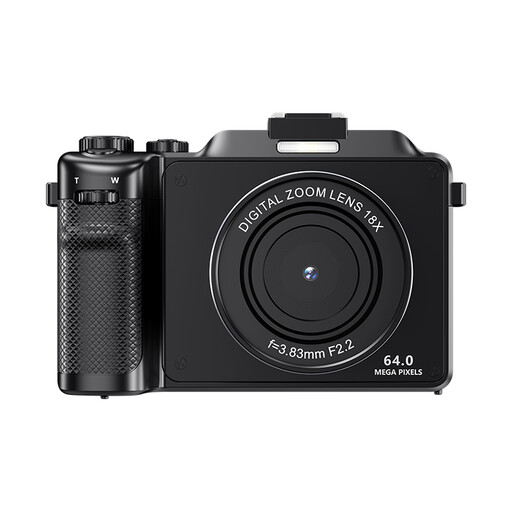
The zoom listed in the title is useful for switching between compositions. Before buying, check that the type of zoom is suitable for the distant bridge details you want to photograph.
Listed in the product title: 64 MP, autofocus and 18x zoom.
 No image available
The optical zoom listed in the product title may be useful for switching between compositions. Compare its reach with the distance from which you’ll be taking photos.
Listed in the product title: 8x optical zoom, 5K, 64 MP and two lenses.
 No image available
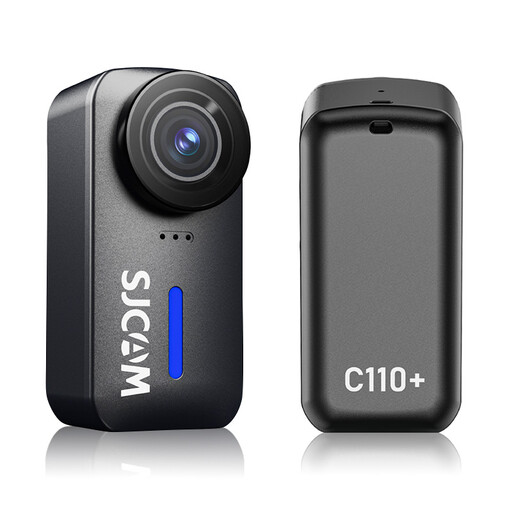
The ultra-wide angle listed in the title may suit wide views. Check that this angle of view works for the composition you have in mind.
Listed in the product title: 170° ultra-wide angle, f/1.8, gyro stabilisation and 20 MP photos.
 No image available
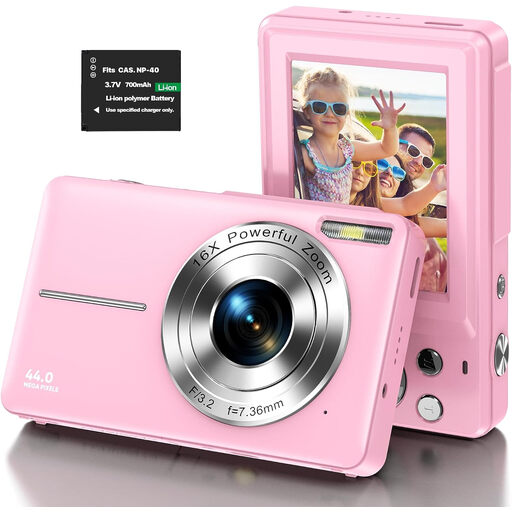
This pocket camera is described as a compact option for photos and videos. The stated digital zoom isn’t optical zoom for capturing distant details.
Listed in the product title: 4K, 64 MP, autofocus and 16x digital zoom.
With a mirrorless camera, the lens you attach also determines the angle of view. So check the exact kit name and the full-frame equivalent focal length at the wide end. For the RF-S 18–45 mm on the EOS R50, Canon Deutschland lists a range of 29–72 mm.
Check the image and adjust the exposure to get the balance you want between brighter and darker areas. Aperture, shutter speed and ISO all affect the shot. Exposure bracketing may be another option for scenes with big differences in brightness, provided the specific model supports it.
Image stabilisation is designed to compensate for camera shake. For moving subjects, you’ll also need to choose a suitable shutter speed. A stabilised camera or lens alone doesn’t guarantee sharp shots of moving subjects.
Check the contents of the specific offer, including the lens and charging options. Nikon notes that its Z50II kit with 16–50 mm VR doesn’t include a charger; you can’t assume that other kits include the same items.
Under certain conditions, § 59 UrhG allows the photographic reproduction and public display of works that are permanently situated on public paths, roads or squares. For buildings, this applies only to the exterior view. If people are recognisable in your photos, you must also consider the rules in §§ 22 and 23 KunstUrhG on publishing images of people. This isn’t blanket permission for every location or every photo of people.