Which option is right for you?

Backlight photographers

You want to retain detail in bright skies and darker dunes, and are happy to edit RAW photos or exposure-bracketed shots afterwards. Nikon Germany explains that RAW files offer more flexibility during post-processing, while exposure bracketing can capture different brightness levels.

Dune walkers with changing subjects

You want to photograph both wide landscapes and distant details from accessible paths. Consider whether a fixed angle of view will do, or whether you’d like to change lenses. In the Wadden Sea National Park, photography is intended to take place in authorised, marked areas and on designated paths.

Photographers in coastal winds

You’ll be out in sand and changeable weather, and want to consider the protection ratings for the camera and lens together. Sony recommends changing interchangeable lenses in a clean environment, preferably indoors.

What should you look for when buying?

Compact camera with a fixed focal length

A good fit if: You mainly take wide shots of dunes and want to carry as little as possible. Ricoh says the GR IV has a fixed angle of view equivalent to around 28 mm in 35 mm format.

Bear in mind: You can’t change the angle of view to capture distant details by swapping lenses. Its fixed-lens design doesn’t mean it’s protected against sand or salt water.

APS-C mirrorless camera

A good fit if: You want to switch between wide views and individual dune features. Fujifilm lists RAW and the X mount for the X-S20; Sony lists RAW and the E-mount for the α6100.

Bear in mind: You’ll need to pack a lens and accessories. Sony recommends changing lenses in a clean environment, preferably indoors.

Weather-sealed mirrorless camera

A good fit if: You take photos in changeable coastal weather and want to check the protection ratings of your equipment carefully. OM SYSTEM lists IP53 for the OM-5 Mark II body.

Bear in mind: The body rating doesn’t automatically cover the lens or the complete camera-and-lens combination, and it doesn’t mean the camera can be immersed or used in salt water.

Compact full-frame mirrorless camera

A good fit if: You’re considering a full-frame system with a choice of lenses. Canon lists a 24.2 MP sensor and HDR options for the EOS R8.

Bear in mind: Canon’s stated weight of 461 g includes the battery and memory card, but not a lens. So compare the weight of the combination you actually plan to use.

What matters when buying What to check Who is this especially important for?
Light and shadow Check that the specific model offers RAW, exposure compensation and, if needed, exposure bracketing. If I want to retain detail in bright skies and shadowy dunes, I’ll factor in exposure and possible post-processing. Consumers who prioritise controlling backlight are likely to account for around 36% of camera shoppers.
Angle of view from permitted locations Match the angle of view of the included or planned lens to your subjects and the paths you can access. If I want to shoot both wide dune scenes and distant details from one spot, choosing the right framing is essential. Consumers who prioritise flexibility in their angle of view are likely to account for around 29% of camera shoppers.
Dealing with sand and weather Check the protection ratings for the body and lens separately, and plan to change lenses in a clean environment wherever possible. If I’m taking photos on a windy beach, I want to know how to handle contact with sand and changing lenses. Consumers who put protection against coastal conditions first are likely to account for around 21% of camera shoppers.
Weight of the complete kit Compare the body, battery, memory card, lens and any accessories you’ll carry on a like-for-like basis. If I’m walking longer distances, the weight of all my photography gear matters, not just the camera body. Consumers who prioritise keeping carry weight to a minimum are likely to account for around 14% of camera shoppers.

Common camera-buying mistakes

  • Assuming the body’s protection rating covers the whole kit

    OM SYSTEM’s IP53 rating applies to the OM-5 Mark II body. Weather-sealing information for lenses should be checked separately.

    Check the protection rating of the specific lens you plan to use, and don’t assume the body rating means it’s suitable for salt water or immersion.

    Depending on the conditions, you may need a suitable lens or protective accessories.

  • Comparing camera body weights alone

    OM SYSTEM’s weight for the OM-5 Mark II and Canon’s for the EOS R8 include the battery and memory card, but not a lens.

    Compare the complete kit you plan to use on a like-for-like basis, including the lens you intend to take.

  • Choosing a fixed wide-angle camera for distant details

    According to the manufacturer, the Ricoh GR IV has a fixed angle of view equivalent to around 28 mm in 35 mm format. An interchangeable-lens system lets you choose between lenses.

    Before buying, think about what you want to photograph from permitted locations and whether a fixed angle of view will be suitable.

A guide to key camera brands

OM SYSTEM

The OM-5 Mark II is an option for travellers looking for a compact interchangeable-lens camera body with a clearly stated protection rating.

  • OM SYSTEM lists IP53 for the body and a weight of 418 g with battery and SD card.
  • Check the protection rating and weight of your chosen lens separately; the body rating doesn’t describe the whole kit.

Fujifilm

The X-S20 is an APS-C mirrorless camera with an X mount, designed to pair with compatible lenses.

  • Fujifilm lists a 26.1 MP APS-C sensor and RAW for the X-S20.
  • The stated stabilisation performance is based on specific CIPA conditions and a particular lens, so it won’t apply in every situation.

Canon

The EOS R8 offers a full-frame mirrorless camera system with a choice of RF lenses.

  • Canon lists 24.2 MP, HDR options and a weight of 461 g with battery and memory card for this model.
  • The lens adds to the stated weight, and the body rating alone doesn’t tell you how well the complete kit is protected.

Ricoh

The GR IV is a compact camera with a fixed wide-angle view, suited to spontaneous landscape shots.

  • Ricoh lists an APS-C sensor and a fixed angle of view equivalent to around 28 mm in 35 mm format.
  • You can’t change the angle of view by swapping lenses, and its compact design doesn’t guarantee protection against sand or salt water.

Sony

The α6100 is an APS-C mirrorless camera with an E-mount. One Sony kit pairs it with a 16–50-mm power zoom lens.

  • Sony lists RAW and 24.2 effective megapixels for the α6100.
  • Check whether the offer you’re looking at includes the kit you want. Sony recommends changing lenses in a clean environment.

Related products from Joybuy

This selection from Joybuy features action cameras. Before buying, check that each camera’s design and field of view are suitable for the dune photos you have in mind.
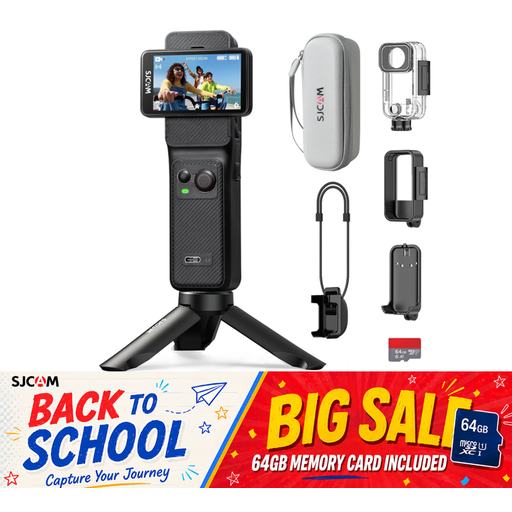
SJCAM C400 4K action camera with accessory kit and 64 GB card

SJCAM C400 4K action camera with 64 GB card

Described as an action camera; check whether its field of view and controls are suitable for landscape photography.

The product title lists 4K, a 7-hour battery life, a dual touchscreen and a 64 GB card.

The stated waterproof depth of up to 30 m applies when used with the waterproof housing, according to the product information.

View at Joybuy
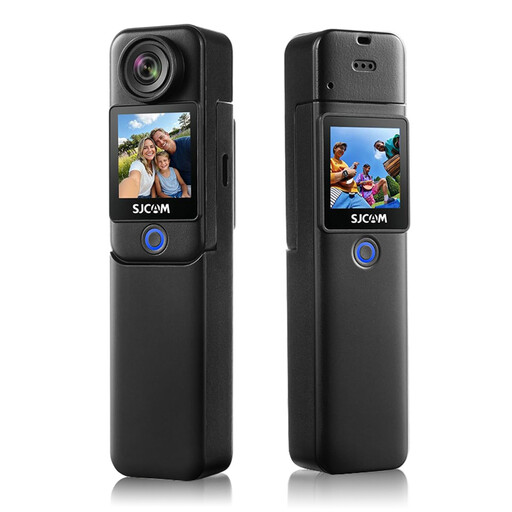
SJCAM C300 4K action camera with 20 MP photo function

SJCAM C300 4K action camera, 20 MP

Described as an action camera; check whether its field of view and controls are suitable for landscape photography.

The product title lists 4K, 20 MP photos and a battery life of up to 460 minutes.

The stated waterproof depth of up to 30 m applies when used with the waterproof housing.

View at Joybuy

Frequently asked questions

How should I start when photographing dunes against a very bright sky?

First, check your exposure and shoot in RAW if you plan to edit the photo later. If a single exposure can’t capture both the bright and dark areas, you can take several shots at different exposures with a suitable camera and combine them afterwards. Nikon Germany describes this technique as exposure bracketing.

Where should I change a lens when it’s windy?

Sony recommends changing lenses on interchangeable-lens cameras in a clean environment, preferably indoors. Have your next lens ready so the mount is exposed for as little time as possible.

What additional costs and rights should I consider when buying a camera?

When looking at a mirrorless camera offer, check which lens and accessories are included, as the body’s weight doesn’t represent the complete kit. If you’re buying in Germany, distinguish between the statutory legal guarantee and a voluntary manufacturer’s warranty. The consumer advice centre explains that new goods are generally covered by a two-year legal guarantee against the seller.

Can I leave the paths to take a dune photo in the Wadden Sea National Park?

No, not just to take a photo. The Wadden Sea National Park administration explains that protected areas may only be entered in authorised, marked areas and on designated paths. Local signs show which paths are permitted at your chosen location; the Lower Saxony Wadden Sea National Park administration advises using marked paths and dune crossings in the dunes.