Photographers in narrow streets
If you can’t step back far enough to fit an entire half-timbered house in the frame, a sufficiently wide angle of view is essential. A standard kit zoom may not be wide enough.


If you want to capture an entire half-timbered façade from a narrow street, a wide-angle lens that suits your camera system matters more than a high megapixel count. Canon states that the RF-S 10–18 mm offers a full-frame equivalent range of 16–29 mm on APS-C cameras. For handheld shots in low light, check the stabilisation offered by the specific camera and lens combination, and compare the weight of the complete kit. A wide angle of view alone won’t guarantee straight building edges or a distortion-free image.
If you can’t step back far enough to fit an entire half-timbered house in the frame, a sufficiently wide angle of view is essential. A standard kit zoom may not be wide enough.
If you’re shooting in shady streets without a tripod, check what stabilisation your specific camera and lens combination offers. Don’t assume a manufacturer’s figure applies to a different setup.
For longer city walks, consider the weight of the camera together with the wide-angle lens you actually need, not just the weight of the body.
First check whether the angle of view is wide enough for the space available, then compare the stabilisation and weight of the complete kit. For a well-composed façade, your position and camera alignment matter too.
| Priority | What to check before buying | Who is this important to? |
|---|---|---|
| Fitting the whole house into a narrow street | Check the sensor format, mount and full-frame equivalent focal-length range of the lens you plan to use. | If I want to capture the entire façade from where I’m standing, I need a sufficiently wide angle of view. Around 36% of consumers put angle of view first. |
| Handheld shots in the shade | Check whether stabilisation is in the camera body, the lens or both, and what conditions apply to any quoted number of stops. | If I’m taking photos in a shady street without a tripod, I want to minimise camera shake. Around 29% of consumers prioritise handheld performance in low light. |
| A portable kit for city walks | Compare the body and the lens you need together, and check what is included in each weight figure. | If I’m carrying my camera on longer walks, the weight of the complete kit matters to me. Around 21% of consumers focus mainly on portability. |
| Carefully composed half-timbered details | Check how easy the viewfinder or screen is to use, and choose your position and alignment carefully when taking the shot. | If I want to capture half-timbered patterns and building edges precisely, I pay attention to how I can check the image and compose the frame. Around 14% of consumers prioritise precise composition. |
Weight figures may refer to the body alone or to the body with a battery and memory card. You may also need a compatible wide-angle lens to frame the whole façade.
A wide-angle lens may need to be packed alongside the camera body.
Compare the camera with the lens you’d actually take to photograph façades.
Stabilisation may be in the camera body or the lens. According to Canon, the EOS R50 doesn’t have in-body image stabilisation (IBIS), so a combined figure for body and lens stabilisation can’t simply be applied to this model. Lens figures may also depend on specific test conditions.
Check which camera, lens and conditions each quoted number of stops refers to.
A wide angle of view helps when you have little room between you and the façade, but it can’t replace choosing the right position or checking lines and frame edges.
Align the camera carefully and, if necessary, allow for perspective correction afterwards.
The EOS R50 paired with the RF-S 10–18 mm is worth considering as a lightweight APS-C kit for narrow streets.
The X-S20 with the XF10–24 mm F4 R OIS WR is an APS-C option if you’re looking for a body with IBIS and a versatile wide-angle lens for architecture.
The α6700 with the E PZ 10–20 mm F4 G is an APS-C option with in-camera stabilisation and a suitable wide angle. The α7C II is a separate full-frame option.
The OM-5 Mark II with the M.Zuiko 9–18 mm II is a compact Micro Four Thirds option for travelling.
The Z50II is worth considering as a DX body with the NIKKOR Z DX 12–28 mm PZ VR for a wide field of view.
The Joybuy products below are cameras related to this topic. For each model, check that its angle of view and controls suit your façade subjects.
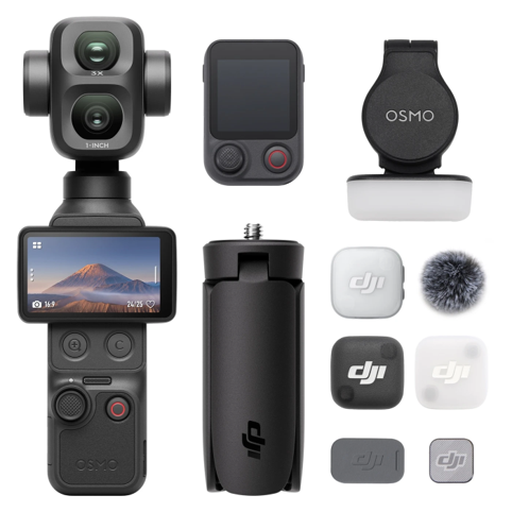 No image available
The product title describes this model as a Vlog Combo. Before buying, check that its angle of view and controls suit your façade photography.
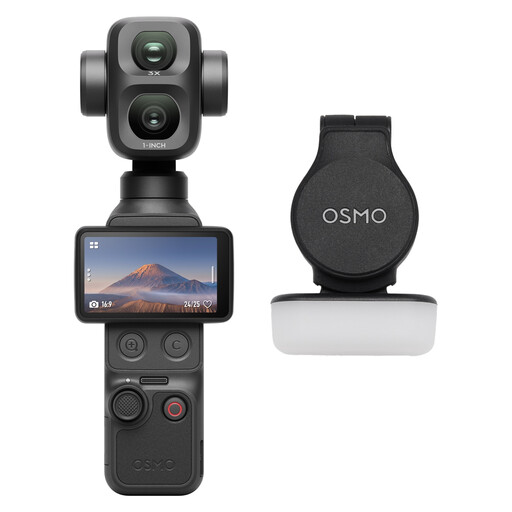 No image available
The product title identifies this version as the Standard Combo. Before buying, check whether the frame is wide enough for the space available between you and the façade.
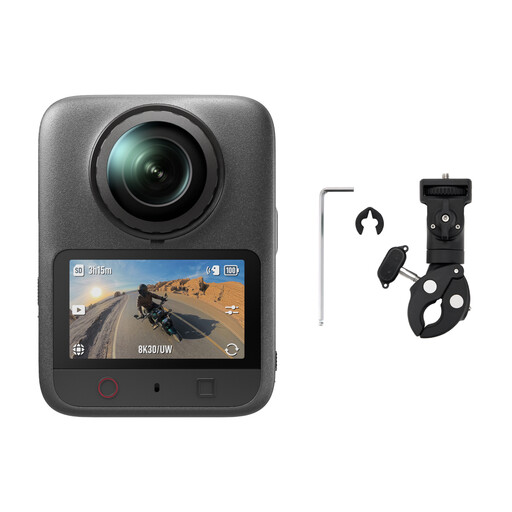 No image available
The product title describes a Riding Combo. Check that the camera on offer and its controls suit the façade shots you have in mind.
 No image available
The product title lists a 16–50 mm power zoom lens. Check whether its wide-angle range is enough to capture the whole façade from where you’ll be standing.
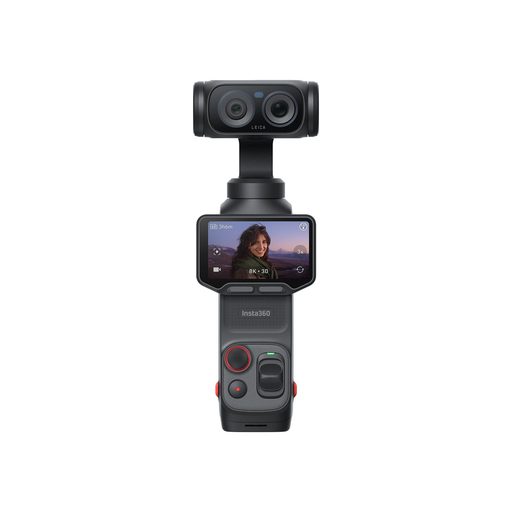 No image available
The product title describes this model as a Standard Bundle. Before buying, check that its angle of view and shooting controls meet your needs for photographing façades.
Not if the angle of view is too narrow from where you’re standing. First, look for a wide-angle lens that fits your camera’s sensor format and mount. For example, Canon describes the RF-S 10–18 mm as designed for EOS R cameras with an APS-C sensor.
Check what stabilisation your specific camera and lens combination offers, and review your shots for sharpness. A number of stops quoted from a manufacturer’s test doesn’t guarantee a particular handheld shutter speed.
Check the lens you have attached, the usable field of view, and how easy it is to use the viewfinder or screen. For half-timbered details, Nikon’s guide to architectural photography recommends looking for patterns and symmetry.
Under certain conditions, Section 59 of the German Copyright Act (UrhG) allows the reproduction, distribution and public display of works permanently situated on public paths, streets or squares, but only as seen from the outside. If people are recognisable in the images, this must be considered separately: Section 22 of the German Art Copyright Act (KunstUrhG) generally requires consent for distribution or public display. Both provisions are published on the Laws Online website.