Architecture and city photographers
If you want to capture the full entrance to an arcade despite having limited space, first check the angle of view of the lens on your camera.


Start by checking the lens’s angle of view on the camera you’ll actually be using, then consider the stabilisation of the complete setup. Full-frame, APS-C and Micro Four Thirds combinations are all options for shaded arcades, but none can compensate for choosing the wrong framing. Sony lists different angles of view for selected lenses depending on sensor format; OM SYSTEM gives an equivalent full-frame range of 18–36 mm for its 9–18 mm lens. The camera body’s weight alone won’t tell you how light the complete setup is, and stabilisation doesn’t guarantee sharp images of people in motion.
If you want to capture the full entrance to an arcade despite having limited space, first check the angle of view of the lens on your camera.
For shaded passages without a tripod, the stabilisation of your specific camera-and-lens combination and the shutter speed both matter. Moving people may still look blurred, even with a stabilised setup.
If you’re visiting several arcades on foot, compare the weight of the ready-to-use camera and wide-angle lens together, rather than looking at the camera weight alone.
A good fit if: You often move between bright streets and shaded entrances, and want to take a suitable wide-angle lens with you.
Things to weigh up: Compare the weight and cost of the complete setup. Stabilisation doesn’t guarantee sharp images at every shutter speed or of people in motion.
A good fit if: You want a compact interchangeable-lens system and can choose the angle of view specifically for the APS-C sensor.
Things to weigh up: Sony gives the FE 16–25 mm on APS-C an equivalent full-frame angle of view of 24–37.5 mm, so check the specific camera-and-lens combination.
A good fit if: You’re looking for a portable setup for longer walks. OM SYSTEM lists the OM-5 Mark II at 418 g with battery and memory card.
Things to weigh up: The OM SYSTEM 9–18 mm lens in question has a maximum aperture of F4 to F5.6. Consider the complete setup for darker scenes, not just the camera body.
A good fit if: You want to put together a lightweight full-frame body with a suitable lens. Canon lists the EOS R8 at 461 g with battery and memory card.
Things to weigh up: Canon specifically advertises in-body stabilisation for the EOS R8 Mark II. For the original EOS R8, check the stabilisation offered by the lens you choose.
| Priority | What to check before buying | Who is this especially relevant to? |
|---|---|---|
| Capturing the whole entrance | Check the focal length, sensor format and angle of view of the lens on the specific camera. | If I want to fit as much of the entrance as possible into the frame from where I’m standing, choosing the right angle of view comes first. Around 31% of consumers say framing is their top priority. |
| Handheld shooting in changing light | Check the stabilisation of the specific combination, as well as the maximum aperture and usable shutter speed. | In shaded passages, I want to take photos without a tripod while keeping an eye on the shutter speed. Around 31% of consumers put low-light photography first, but stabilisation can’t compensate for movement in the subject. |
| A portable camera setup | Compare the camera body and lens weights on a like-for-like basis. | If I’m visiting several arcades on foot, I want to carry the complete wide-angle setup comfortably. Around 23% of consumers rank portability as their top buying priority. |
| Total cost and lens requirements | Check whether you’re buying a body or a kit, and which lens and accessories are included. | Before buying, I want to know which parts I’ll actually get for the framing I want, and which I’ll still need. Around 15% of consumers put the overall cost of the setup first. |
A lens’s angle of view also depends on the sensor format. On APS-C, Sony gives the FE 16–25 mm an equivalent full-frame angle of view of 24–37.5 mm, rather than retaining the full-frame framing.
Compare the angle of view on the exact camera you plan to use, and check whether you can fit the entrance into the frame from where you’ll be standing.
Depending on the framing you want, you may need a different wide-angle lens.
The camera body and lens are separate items. If an offer is for the body only, a suitable wide-angle lens won’t automatically be included.
Check what’s in the box and compare the weights of all the parts in your intended setup on the same basis.
A lens you need to buy separately will add to the weight you have to carry and may mean an additional purchase.
Stabilisation helps counter camera movement. If a person moves during the exposure, they may still appear blurred.
Try a shot at the shutter speed you intend to use, especially if people will be walking through the entrance.
Canon specifically advertises in-body stabilisation for the EOS R8 Mark II. The RF 16–28 mm F2.8 IS STM is listed as having optical stabilisation for the original EOS R8.
Check the full model name and the stabilisation of the specific lens before comparing setups.
If you want to use the original EOS R8 with a stabilised lens, make sure to include that lens in your setup plans.
Worth considering if you’re comparing a compact full-frame interchangeable-lens system with an APS-C alternative that offers in-body stabilisation.
Worth considering if you’re looking at a stabilised full-frame camera or a DX camera with a suitable kit lens.
Worth considering if you’re looking for an APS-C system camera with interchangeable lenses and in-body stabilisation.
Worth considering if you want to compare a portable Micro Four Thirds setup with a wide-angle lens.
Worth considering if you want to pair a lightweight full-frame body with a suitable RF wide-angle lens.
The Joybuy products below include a pocket camera, an APS-C kit, and action and 360° cameras. For architectural photography, check that the angle of view, handling and shooting mode suit the way you plan to use the camera.
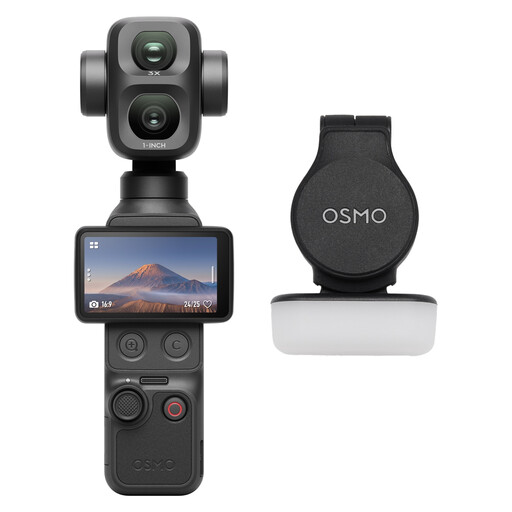 No image available
The stated 20 mm lens may be useful for a wide composition; check whether it captures the entire entrance from where you’ll be standing.
20 mm, F2.0; 1-inch sensor; 4K recording. According to the product description, 4K at 240 fps is limited to slow-motion mode.
 No image available
The included zoom lens gives you different focal lengths to work with; check whether the wide-angle setting is wide enough for the space available.
APS-C camera with 16–50 mm lens, optical image stabilisation and a stated camera weight of 396 g. The sensor is listed as 24.2 MP; the screen tilts.
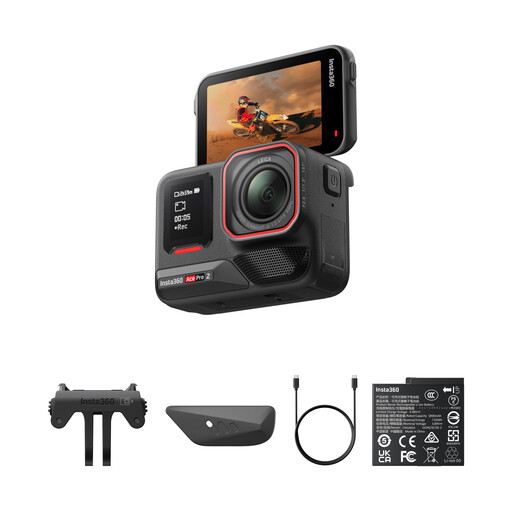 No image available
The stated 157° lens may be useful for an especially wide composition; check the perspective for the architectural shot you have in mind.
1/1.3-inch sensor; 8K recording; FlowState stabilisation. This bundle is described as a Dual Battery version.
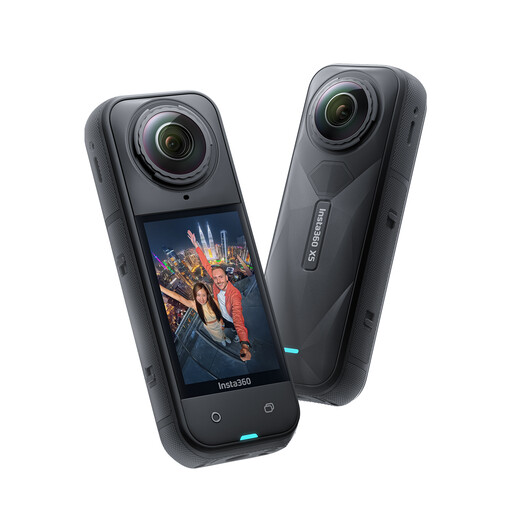 No image available
The 360° recording captures the area all around the camera; check whether this shooting mode suits the view of the arcade you want to create.
Two 1/1.28-inch sensors; recording up to 8K at 30 fps; FlowState stabilisation with Horizon Lock. The Invisible Selfie Stick is sold separately.
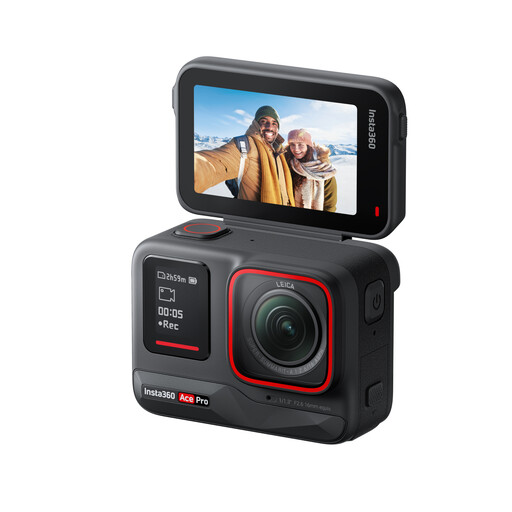 No image available
The flip screen can help you compose your shot; check whether an action camera and its shooting modes meet your needs for architectural photography.
1/1.3-inch sensor; 4K recording at 120 fps; 2.4-inch flip screen; FlowState stabilisation. According to the product description, the camera is waterproof to 10 m.
Test the angle of view and handheld shutter speed with the lens you actually plan to use, and check your battery and memory card. Image stabilisation helps counter camera movement, but it won’t ensure people stay still during the exposure.
Not in every case: Section 22 of the German Act on the Protection of Copyright in Works of Art (KunstUrhG) generally requires consent when images of people are distributed or displayed publicly. The Federal Ministry of Justice and the Federal Office of Justice include this provision in the text of the Act; other circumstances may also be relevant to a particular image. Avoid showing identifiable people unnecessarily, or get permission before publishing.
Section 59 of the German Copyright Act (UrhG) doesn’t provide blanket permission for interior shots. It covers works found on public roads, streets or squares, and limits the rights set out there to the exterior view of buildings. For indoor spaces, you should also follow the rules of the venue.
If a product is faulty, your statutory rights generally apply against the seller; a voluntary guarantee is separate. The consumer advice centre explains the difference. Keep your proof of purchase and details of the kit supplied, and check the guarantee terms too if relevant.