Photographers capturing the whole square
On your walk, you want to fit the whole square and its rows of buildings into the frame. So start by checking the angle of view offered by the lens included in the kit.


For capturing an entire market square, the angle of view at the wide end of the lens you’ll actually use is what matters. For distant architectural details, optical reach is key. At dusk, also check the maximum aperture at the zoom setting you’ll use and whether the camera has stabilisation. Stabilisation compensates for camera movement, but it won’t freeze market-goers on the move.
On your walk, you want to fit the whole square and its rows of buildings into the frame. So start by checking the angle of view offered by the lens included in the kit.
You take photos of illuminated façades without a tripod, so consider the maximum aperture, image stabilisation and movement in the scene separately.
You also want to capture distant clock towers or architectural details from the market square, without changing lenses for every shot.
When exploring market squares, your priorities will depend mainly on whether you’re looking for wide views of the square, dusk photography, lightweight luggage or distant details.
| Priority | What to check when buying | Who it matters most to |
|---|---|---|
| Capturing the whole square | Angle of view at the wide end of the lens actually included; compare the 35mm equivalent. | If I want to capture the whole square and its rows of buildings from a tight spot, I need a sufficiently wide angle of view. Around 31 % of consumers say wide views of the square are their main priority. |
| Handheld photography at dusk | Maximum aperture at the zoom setting you’ll use; stabilisation in the camera body or lens. | If I’m photographing illuminated façades without a tripod, I look at the maximum aperture and stabilisation. People moving through the frame are a separate challenge. Around 25 % of consumers put dusk photography first. |
| Travelling light | Weight of the complete kit, including the lens you need; fixed or interchangeable lens. | If I want to take my camera on a longer walk around town, the weight of all my equipment matters, not just the camera body. Around 25 % of consumers say travelling light is their main priority. |
| Distant details | Check optical telephoto reach and maximum aperture at the long end separately. | If I want to photograph clock towers or architectural details without changing position, optical reach is important. Around 19 % of consumers give distant details top priority. |
Canon says the EOS R50 does not have sensor-shift stabilisation. The RF-S 18–45-mm lens has optical stabilisation and starts at around 29 mm in 35mm equivalent terms. So both the angle of view and stabilisation also depend on the lens you choose.
Check the complete camera-and-lens combination for its angle of view, stabilisation and total weight.
You may need an additional lens to get the angle of view you want.
Focal length and maximum aperture describe different things. Stabilisation can reduce camera shake, but it won’t prevent motion blur when people move through the frame.
Compare optical reach and maximum aperture at the zoom setting you’ll actually use. When photographing moving subjects, you’ll also need a shutter speed that’s fast enough to freeze the action.
The RX100 VII is a compact camera for wide views of the square and distant details, if you’d rather not change lenses.
The PowerShot G7 X Mark III is a compact zoom camera, while the EOS R50 offers an interchangeable-lens option with compatible RF or RF-S lenses.
The LUMIX TZ99 is a compact camera for travellers looking for a wide optical zoom range.
The X-S20 is a mirrorless camera for buyers who want in-body stabilisation and the freedom to choose their own lens combination.
The OM-5 Mark II is a mirrorless camera for frequent photography walks outdoors.
This selection includes compact cameras and pocket cameras. Before buying, check the angle of view offered by the specific model and exactly what’s included in the kit to make sure it’s suitable for capturing market squares.
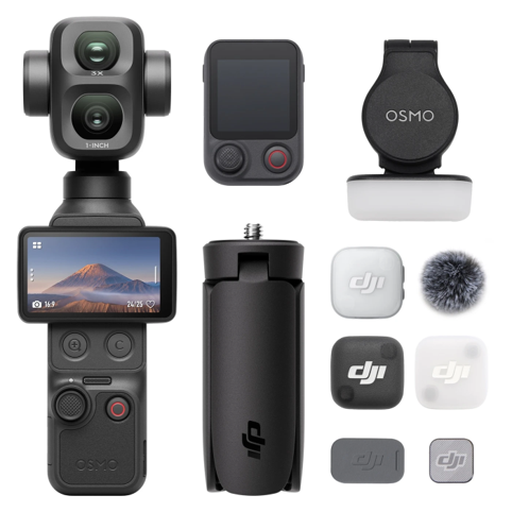 No image available
Before buying, check that the angle of view on this specific model is wide enough to capture the views you want across the square.
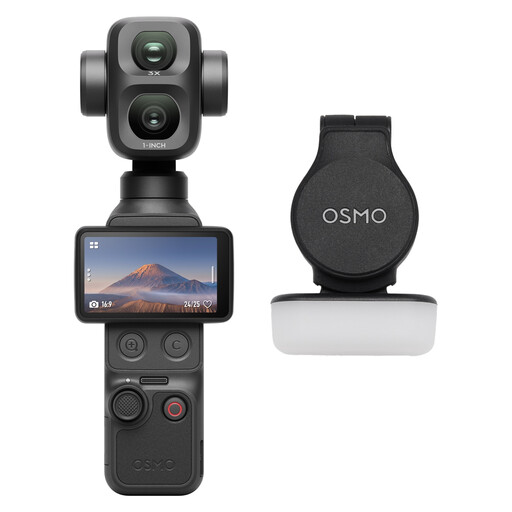 No image available
Before buying, compare the angle of view with what you need to capture whole squares and rows of buildings.
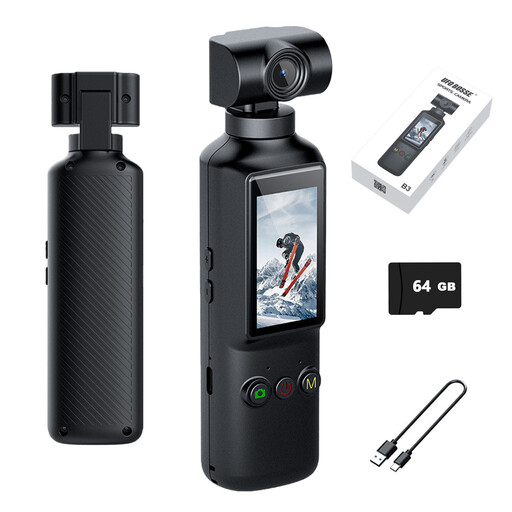 No image available
The product title describes this camera as suitable for travel and outdoor activities. For architectural photography, check that its angle of view suits the composition you want.
16 MP; 4K video at 30 frames per second; 5,1-cm HD display; Wi-Fi; 1000-mAh battery; USB-C port.
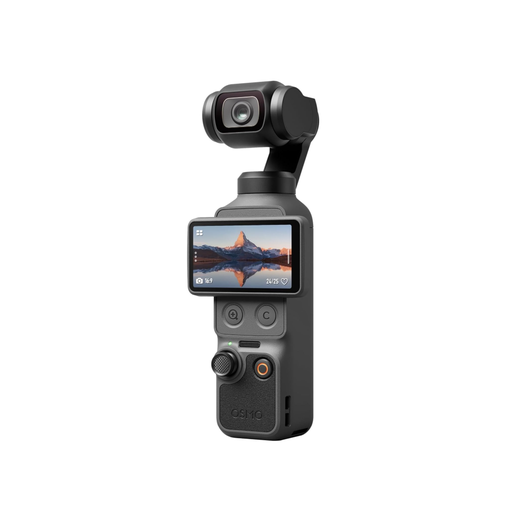 No image available
The product title describes this model as a camera for vlogging and photography. For views of market squares, check the angle of view and whether the pocket-sized design suits the way you take photos.
1-inch CMOS sensor; 4K/240fps; 3-axis stabilisation; 2× lossless zoom; 107 GB built-in storage; 2-inch rotating screen.
 No image available
Optical zoom can be useful for distant subjects. Before choosing this camera for dusk photography, also check the maximum aperture at the long end of the zoom range.
12× optical zoom; 4K; 64 MP; Wi-Fi.
No, neither is enough on its own. Also check the maximum aperture at the zoom setting you’ll use and whether the camera has stabilisation. If people are moving, you’ll also need a suitable shutter speed. Nikon describes image stabilisation as compensating for camera movement, not movement in the subject.
Before buying, check which lens is included in the kit and whether its angle of view and stabilisation suit your subjects. Changing lenses can let dust reach the sensor; Canon notes that the sensor is sensitive.
For online purchases, you generally have a 14-day right to cancel, which you must exercise by notifying the retailer. If goods are faulty, you have statutory consumer rights against the seller; the EU Your Europe portal describes a minimum period of two years from receipt. A voluntary manufacturer’s guarantee is separate. The details depend on the sales contract and circumstances.
This depends, among other things, on what you photograph and how you use the images. Under certain conditions, § 59 UrhG allows photos of works permanently located on public paths, streets or squares; for buildings, this applies to their exterior. Under § 22 KunstUrhG, consent is generally required to distribute or publicly display portraits. § 23 lists exceptions, including people who appear only incidentally, subject to the protection of legitimate interests. This does not give blanket permission for every photo or purpose of publication.