What should you look for when choosing?
First decide how you want the water to look, then consider how much protection, carrying comfort and flexibility you’ll need on the go.
| Your priority |
What to look for |
Who is it important to? |
| Controlling the movement of the water |
Make sure you can adjust the shutter speed; check the stabilisation of the camera-and-lens combination you’ll use and consider an ND filter function if needed. |
If I want to control how the water looks without a tripod, I need to consider shutter speed and camera shake together. Around 33% of consumers put control over the movement of the water first. |
| Protection from spray and moisture |
Check the protection rating for the exact model and, with interchangeable-lens cameras, for the lens too; don’t assume weather sealing means waterproofing. |
If I’m photographing close to spray, the protection offered by the specific camera-and-lens combination matters to me. Around 27% of consumers prioritise protection from water. |
| Weight and handling |
Compare the weight of the complete kit, including lens and accessories; also consider how easy it is to use and carry. |
If I’m travelling on foot, the weight of the whole kit matters, not just the camera body. Around 20% of consumers put a lightweight, easy-to-carry kit first. |
| Flexible framing |
Check the zoom range or the focal lengths of the specific kit lens; consider what’s included and whether you might need additional lenses. |
If I want to switch from a full view of the waterfall to the details, I want to change lenses as little as possible. Around 20% of consumers prioritise flexible framing. |
Joybuy products for travel and waterfall photography
This Joybuy selection features compact handheld, action and 360° cameras. Check that their video and panorama formats suit the way you want to photograph waterfalls.
 No image available
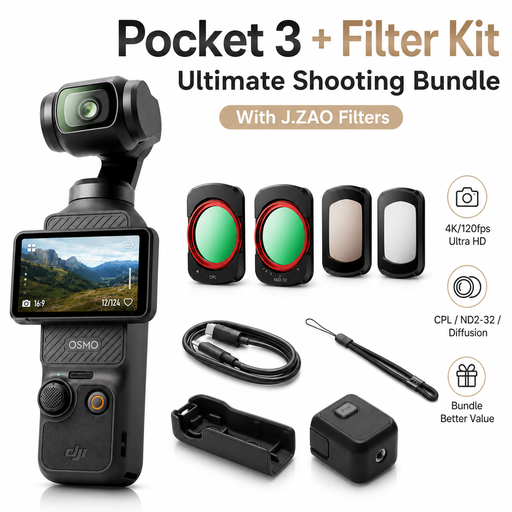
DJI Osmo Pocket 3 Standard Combo with J.ZAO Pocket 3 Camera Filter Kit
Designed as a handheld gimbal camera for use on the go, this set is worth considering if you also plan to capture moving footage.
Features include a 1-inch CMOS sensor, 4K/120fps video, a 2-inch rotating touchscreen and a filter kit in the bundle.
View at Joybuy
 No image available
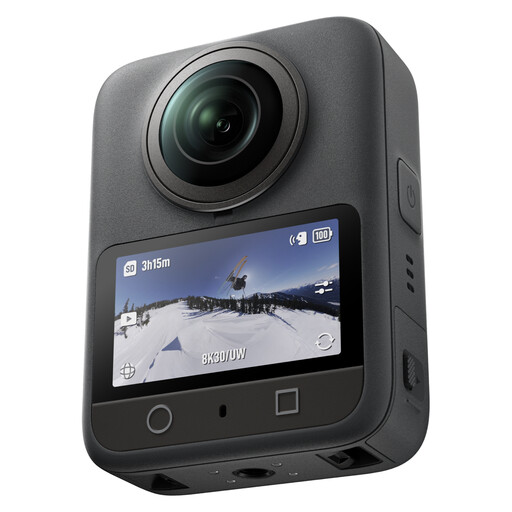
DJI Osmo 360 Standard Combo
If you’re planning to capture all-round views or panoramas, this model is described as a 360° camera. Check the conditions of its water protection rating before using it near water.
Features include a 1-inch sensor, 8K/30fps 360° video and 120 MP 360° photos; the product title describes the camera as waterproof.
View at Joybuy
 No image available
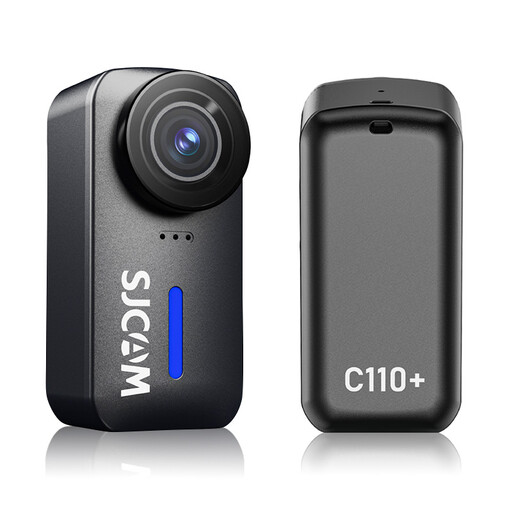
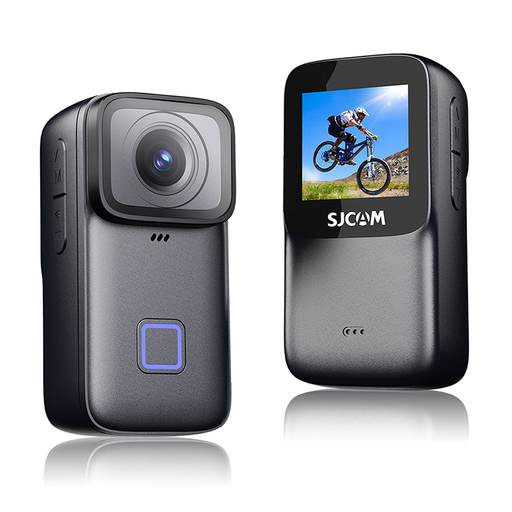
SJCAM C110+ 4K Action Camera
If you’re looking for a compact action camera for outdoor photography, check that its field of view and photo controls suit your subject.
The product title lists a 170° wide-angle lens, 20 MP photos, 4K video and a waterproof housing. Check the protection conditions for the way you plan to use it.
View at Joybuy
 No image available
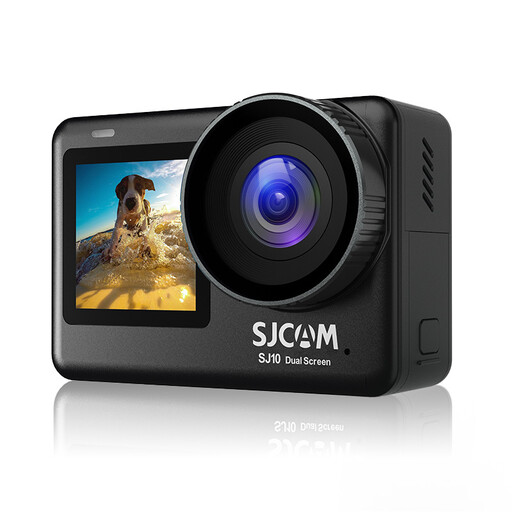
SJCAM SJ10 Pro Dual Screen Action Camera
This action camera could be a good option for travel if you want to shoot 4K video as well as take photos. Check the housing protection conditions before filming close to water.
Features include 20 MP photos, 4K video, a 154° wide-angle lens and 6-axis gyro stabilisation. The product title lists water protection to 30 m with the housing.
View at Joybuy
 No image available
SJCAM C200 Pro 4K Action Camera
If you’re looking for a small action camera for your travels, compare the field of view and check whether the stated electronic stabilisation is relevant to the shots you have in mind.
The product title lists 20 MP photos, 4K video, a 135° wide-angle lens and 6-axis EIS. Water protection is listed as up to 5 m without the housing and up to 40 m with it.
View at Joybuy
Frequently asked questions
Can I reliably capture silky-looking water without a tripod?
Not at any exposure length you like. Nikon explains how longer exposures can show the movement of flowing water and recommends using a tripod for this; stabilisation doesn’t replace that recommendation. Try different exposure times and check stationary parts of the image for camera shake too.
Is a weather-sealed mirrorless camera automatically waterproof?
No. OM SYSTEM gives the OM-5 Mark II body an IP53 rating; this doesn’t automatically tell you anything about the attached lens. Check the protection ratings for the complete combination. The Tough TG-7 is a different type of camera, which OM SYSTEM describes as waterproof.
What should I bear in mind when charging or changing lenses on the go?
Check what’s included with the exact kit: Nikon notes that the Z50II kit with the NIKKOR Z DX 16–50 mm f/3.5–6.3 VR does not include a charger. Sony also warns that dust or moisture can get inside an interchangeable-lens camera when you change lenses, so try not to change lenses right next to the spray.
What are my rights if I buy a faulty camera?
According to the EU’s Your Europe portal, if you buy from a business seller in the EU, you have a legal guarantee of at least two years from the date you receive the goods. This applies to the seller and is separate from a voluntary manufacturer’s warranty. The rules described there don’t apply to purchases from private individuals.
Can I leave the path to take a photo at any Black Forest waterfall?
You can’t assume that you’re allowed to do so everywhere. Section 23 of the Federal Nature Conservation Act protects nature reserves in accordance with more detailed provisions; according to Schwarzwald Tourismus, the Zweribach Waterfalls are in a nature reserve. At each location, follow the signs, stick to accessible paths and observe the applicable conservation rules.


