Who this camera choice matters to

Photographers capturing façades in narrow streets

If you want to fit as much of a timber-framed house as possible into the frame from where you’re standing, pay attention to the angle of view offered by the specific camera and lens combination. Canon Europe explains that a shorter focal length captures a wider angle of view from the same position.

Photographers in busy historic town centres

If you want passers-by to look sharp as well as the architecture, focus tracking and shutter speed are important. Nikon USA explains that a faster shutter speed is more likely to freeze movement, but lets less light reach the sensor.

Travellers packing light

If you want to take your camera with you on long walks, compare the weight of the complete kit. Panasonic Germany gives the weight of the LUMIX DC-TZ99 as around 322 g with battery and card; OM SYSTEM lists the OM-5 Mark II body at 418 g with battery and card, not including the weight of an additional lens.

What to consider when buying

Compact travel zoom camera

A good fit if: You want to switch between a full façade and distant details without changing lenses.

The trade-off: The angle of view and zoom vary depending on the shooting format; comparable tracking performance for moving subjects has not been established.

APS-C mirrorless camera

A good fit if: You want to choose a lens specifically for narrow streets or frequently focus on moving subjects.

The trade-off: The body alone doesn’t determine what fits in the frame; check the lens, what’s included and the weight of the kit.

Compact, weather-sealed interchangeable-lens system

A good fit if: You particularly value a lightweight body and weather sealing for long walks.

The trade-off: The overall weight and protection also depend on the lens you attach; stabilisation won’t keep passers-by sharp as they move.

Priority What to check when buying Who it matters most to
Fit the whole façade in the frame Compare the shortest full-frame-equivalent focal length in your preferred photo format. For mirrorless cameras, check which lens is actually included. Canon Europe explains the link between a shorter focal length and a wider angle of view. If I can’t move further back in the street, I want to fit as much of the building as possible into the frame. Around 36% of consumers say the angle of view for façades is their main priority.
Capture moving people sharply Check subject tracking on the specific model and whether you can set the shutter speed to suit the subject and lighting. Nikon USA notes that faster shutter speeds are more likely to freeze movement, but let in less light. If passers-by walk through my frame, I want to capture them sharply alongside the building. Around 28% of consumers say keeping movement sharp is their main priority.
Travel light Compare the weight and packed size of the complete kit, including the lenses you intend to use; body weight and camera weight aren’t directly comparable. If I want to take my camera on longer walks around town, the weight of all my equipment matters. Around 18% of consumers say portability is their main priority.
Take photos in low light Check the stabilisation offered by the specific body and lens combination, as well as the lens’s maximum aperture. Stabilisation helps counter camera shake; you may still need a faster shutter speed for moving people. If I want to photograph buildings and passers-by in low light, I need to account for both camera shake and movement. Around 18% of consumers say low-light performance is their main priority.

Avoiding buying pitfalls

  • Only looking at the focal length listed with the camera body

    With a mirrorless camera, the lens you attach determines the angle of view. According to Canon Germany, the Canon RF-S 18–45 mm starts at a 29 mm full-frame equivalent; the Sony α6700 body offer considered here doesn’t include a lens.

    Before choosing a body, check the angle of view from your available shooting distance and exactly what’s included.

  • Confusing image stabilisation with sharpness in motion

    A stabilised shot may show the building sharply while passers-by appear blurred. Stabilisation compensates for camera movement, not people’s movement.

    Choose a shutter speed that suits the movement, and bear in mind that a faster speed lets in less light.

  • Comparing camera weights on different bases

    Panasonic’s weight for the DC-TZ99 includes its built-in lens, battery and card; OM SYSTEM’s figure for the OM-5 Mark II is for the body with battery and card.

    Compare complete kits that are suitable for the shots you want to take, including the lens.

  • Assuming that people in public can always be photographed and published

    Subject to certain conditions, Section 59 of the German Copyright Act (UrhG) covers works permanently situated on public paths, streets or squares, and for buildings, only their exterior appearance. The rules about buildings don’t automatically answer whether identifiable people may be shown in a publication; Sections 22 and 23 of the German Art Copyright Act (KunstUrhG) set out their own conditions and exceptions.

    Before publishing, consider whether people are identifiable and merely incidental to the image, and whether their legitimate interests could be affected. If you’re unsure about a particular use, obtain consent or seek appropriate legal advice.

Key camera brands at a glance

Canon

The EOS R10 is an APS-C mirrorless camera for travellers who want to consider subject tracking and choose a suitable lens.

  • Canon Germany lists Dual Pixel CMOS AF II with subject tracking and up to 15 frames per second with the mechanical shutter.
  • The EOS R10 doesn’t have sensor-shift stabilisation. The RF-S 18–45 mm kit starts at a 29 mm full-frame equivalent; a wider angle of view may be needed in some narrow locations.

Sony

The α6700 is an APS-C E-mount body that lets you choose a lens to suit views of historic town centres.

  • Sony Germany lists subject recognition, AF tracking and built-in 5-axis image stabilisation.
  • The offer considered here is explicitly for the body only, without a lens. Its suitability for a narrow street therefore depends on the lens you choose; manufacturers’ specifications aren’t an independent autofocus comparison.

Fujifilm

The X-S20 is an APS-C mirrorless camera for city views and the occasional moving subject.

  • Fujifilm lists a weight of 491 g, face and eye tracking, and 5-axis sensor stabilisation.
  • According to the technical specifications, the quoted stabilisation effect of up to seven stops applies under CIPA conditions with the XF35mmF1.4 R; it can’t be assumed to apply to every travel lens.

Panasonic

The LUMIX DC-TZ99 is a travel zoom camera with a built-in lens, offering different framing options without changing lenses.

  • For 4:3 photos, Panasonic Germany lists a 24–720 mm full-frame equivalent and a weight of around 322 g with battery and card.
  • The focal length range depends on the shooting format. The specifications list a 1/2.3-inch sensor; this doesn’t establish an advantage for tracking moving people.

OM SYSTEM

The OM-5 Mark II is an interchangeable-lens option for travellers who value a lightweight body and weather sealing.

  • OM SYSTEM lists a weight of 418 g with battery and card, and IP53 weather sealing for the body.
  • The body specifications don’t confirm the same level of protection for every lens attached. Stabilisation alone won’t keep moving people sharp.

Cameras at Joybuy

The Joybuy products below are described as suitable for travel, POV and vlogging shots. For timber-framed façades and moving passers-by, you should also check the angle of view and focusing capabilities of the specific model.
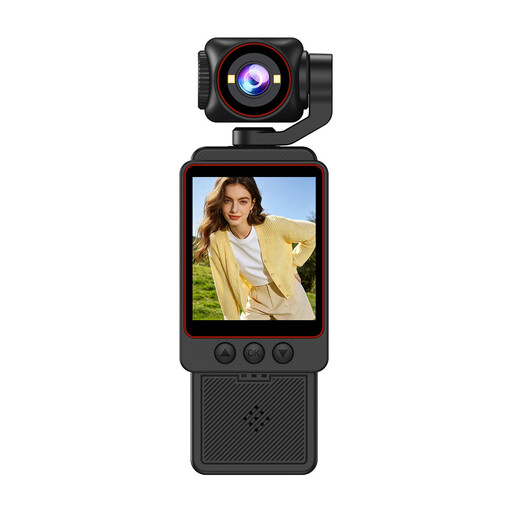
2K pocket POV camera with 360-degree rotating lens, black

2K pocket POV camera with 360-degree rotating lens, black

The product title describes it as a portable POV and vlogging camera for photos and videos.

The title specifies 2K and a lens that rotates through 360 degrees.

View at Joybuy
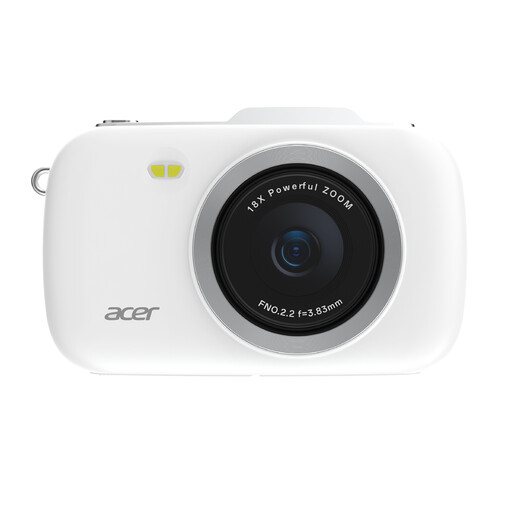
Komery G7-A 4K digital camera, white

Komery G7-A 4K digital camera, white

The product title describes it as a portable travel and compact camera.

The title specifies 4K, 80 MP and 18x zoom.

View at Joybuy
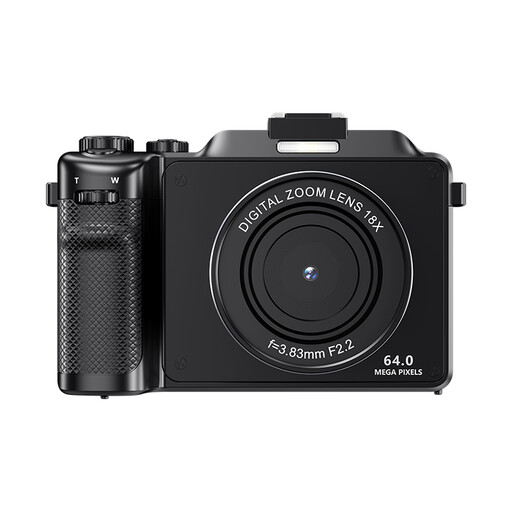
KOMERY X9 digital camera with autofocus and flash, black

KOMERY X9 digital camera, black

The product title describes it as a portable digital camera for taking out and about.

The title specifies 64 MP, autofocus, 18x zoom and a flash.

View at Joybuy
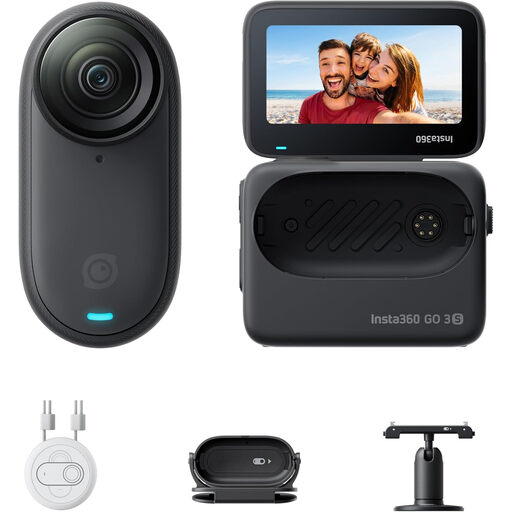
Insta360 GO 3S 128GB, portable mini camera

Insta360 GO 3S 128GB

The product title describes it as a portable mini camera for POV and travel shots.

The title specifies 4K, 128 GB, a 140-minute battery life and waterproofing down to 10 m.

View at Joybuy
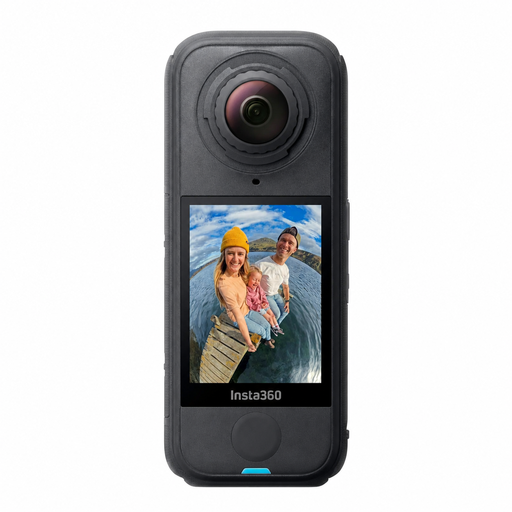
Insta360 X4 Air 8K 360-degree camera

Insta360 X4 Air

The product title describes it as a portable 360-degree camera for travel and outdoor shots.

The title specifies 8K, interchangeable lenses and FlowState stabilisation.

View at Joybuy

Frequently asked questions

Is image stabilisation enough to capture passers-by sharply?

No. Image stabilisation helps counter camera shake; whether a person looks sharp depends in particular on the shutter speed and how they’re moving. A faster shutter speed also lets in less light.

Do I need to buy a lens separately with a mirrorless camera?

It depends on the specific offer. The EOS R10 kit described by Canon Germany includes an RF-S 18–45 mm lens; the Sony α6700 offer considered here is explicitly for the body only. Check what’s included, the mount and the angle of view before buying.

What rights do I have when buying a camera from a German retailer?

Your statutory rights against the seller are separate from any voluntary warranty. If a product is faulty, the first step may be repair or replacement. The German Consumer Advice Centre explains that online purchases generally also come with a 14-day right to cancel, starting from the conclusion of the contract or receipt of the goods ordered; conditions and exceptions apply.

Can I photograph timber-framed houses from the street and publish the pictures?

Subject to certain conditions, Section 59 of the German Copyright Act (UrhG) permits photographs of works permanently situated on public paths, streets or squares; for buildings, this applies only to their exterior appearance. This doesn’t provide a blanket answer for every location or for additional people shown in the image.

Do I need consent to publish photos showing identifiable passers-by?

Section 22 of the German Art Copyright Act (KunstUrhG) generally requires consent to distribute or publicly display portraits. Section 23 sets out exceptions, including people who appear merely incidental to a location; this exception doesn’t apply if it infringes the legitimate interests of the person shown. Whether it applies to a particular photo depends on the image and how you plan to use it.