Photographing courtyard façades
If you want to capture an entire façade from close range, the right angle of view is crucial. Nikon Germany points out that light and shadow change in urban environments.


For narrow Berlin courtyards, the right angle of view at the lens’s widest setting matters more than a powerful telephoto zoom. With a mirrorless camera, make sure the wide-angle lens you need is compatible with the mount and actually included in the kit. RAW and exposure bracketing can help you handle changing light in post-production, while stabilisation solves a different problem: camera shake. If you want to travel light, compare the weight of the complete camera-and-lens kit with that of a compact camera.
If you want to capture an entire façade from close range, the right angle of view is crucial. Nikon Germany points out that light and shadow change in urban environments.
If you want to capture bright rooflines and shaded façades in the same frame, check whether you can shoot in RAW and take exposure-bracketed shots. Nikon Germany describes exposure bracketing as taking several shots at different exposure levels.
If you want to take your camera on city walks, compare the weight of the complete kit with that of a compact camera. Panasonic lists the LUMIX DC-TZ99 at around 322 g, including the battery and memory card.
First, check that the angle of view is wide enough for where you’re likely to stand. Then compare the options for handling changing light and the weight of the camera-and-lens setup you’ll actually need.
A good fit if: You want to capture as much of the façade as possible from close range. Canon lists the RF-S 10–18 mm as a compatible option for the EOS R50; Nikon offers the Z DX 12–28 mm for DX Z cameras.
The trade-off: An additional lens makes your kit bigger and can increase the overall cost; a wide-angle lens won’t correct converging verticals by itself.
A good fit if: You prefer a built-in lens and fewer things to swap around when packing. According to Panasonic, the LUMIX DC-TZ99 starts at a 24 mm full-frame equivalent in a 4:3 aspect ratio.
The trade-off: Whether this angle of view works for a particular courtyard depends on where you’re standing; the long telephoto range won’t make it wider.
A good fit if: Your phone already offers the framing and editing options you need, and you don’t want to carry an extra camera kit.
The trade-off: Check the features of your specific device rather than assuming it supports RAW, exposure bracketing or a particular angle of view.
| What matters when buying | What to check | Who it matters most to |
|---|---|---|
| Capturing the whole façade from close range | Angle of view at the widest focal length; mount and included lens | If I can’t step back much in a courtyard, I want the façade to fit in the frame as fully as possible. Around 36% of consumers put the wide-angle option first. |
| Shadows and bright areas in the frame | RAW and exposure bracketing on the exact camera model | If I want to make the most of changing daylight, I check the shooting and editing options. Around 29% of consumers prioritise light and contrast. |
| Light luggage | Compare weights on a like-for-like basis: camera, battery, card and the lens you need | I want to be able to carry my complete kit comfortably on a longer city walk. Around 21% of consumers prioritise portability. |
| Kits and extras | Kit version, what’s included, mount and any adapters needed | If I want to avoid missing a lens or adapter I need, I check exactly what’s included. Around 14% of consumers prioritise the kit and expandability. |
For a nearby façade, what matters is the angle of view at the widest end of the focal-length range. A high telephoto value won’t help if the frame you want doesn’t fit from where you’re standing.
Compare the widest angle of view on the same sensor or full-frame-equivalent basis, and consider how far back you can step.
Different kit versions may include different lenses. The weight of a camera body alone won’t tell you how much your complete travel kit weighs.
Check exactly what’s included and compare the camera, battery, card and lens you need together.
An additional lens or compatible adapter may be part of the camera setup you need.
Stabilisation can help reduce camera shake, but it won’t even out major differences in brightness between a roofline and a façade.
Check stabilisation for handheld shots separately from RAW and exposure bracketing for managing contrast.
Where you take the photo matters: according to the Berlin State Office for the Preservation of Monuments, you need the owner’s permission to take pictures from private property.
Get permission before entering private property or taking photos from there. For commercial filming and photography on public streets in the Mitte district, the Mitte district authority also requires a special-use permit.
The X-T5 is an APS-C mirrorless camera with interchangeable lenses, suited to photographers who want high resolution, RAW and direct control over exposure settings.
The α6700 is an APS-C mirrorless camera with built-in stabilisation; Sony sells the body and lens kits as different options.
The EOS R50 is an APS-C mirrorless camera compatible with a choice of RF and RF-S lenses.
The Z50II is part of Nikon’s DX interchangeable-lens system; the Z DX 12–28 mm is an ultra-wide-angle option for shooting from a limited distance.
The LUMIX DC-TZ99 is a compact camera with a built-in 30x zoom, ideal for travelling without having to change lenses.
The following selection from Joybuy includes compact action and vlogging cameras with a stated photo function. Before buying, check that the angle of view and controls suit still architectural photography.
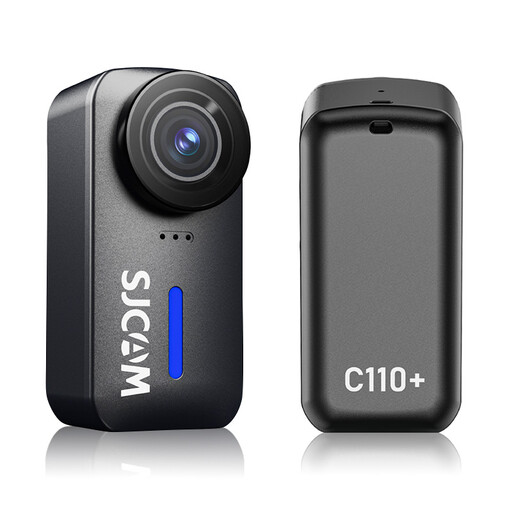 No image available
A compact action camera that could suit light travel; the product title specifies 20 MP photos.
The title also specifies a 170° wide-angle lens. The product description gives a weight of 82 g and dimensions of 6,4 × 3,1 × 3,3 cm; check that the angle of view and controls suit your architectural photography.
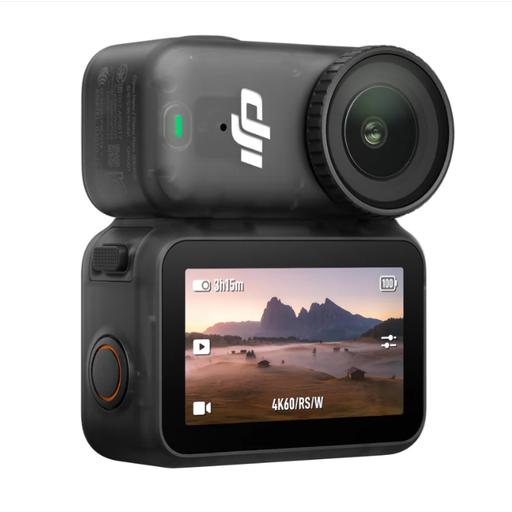 No image available
Its low stated weight could be useful if you’re travelling light; the product description lists a weight of about 52 g and 35 MP photos.
The stated 143° wide angle applies specifically to video and doesn’t confirm the same angle of view for photos. Check the photo framing from where you plan to shoot.
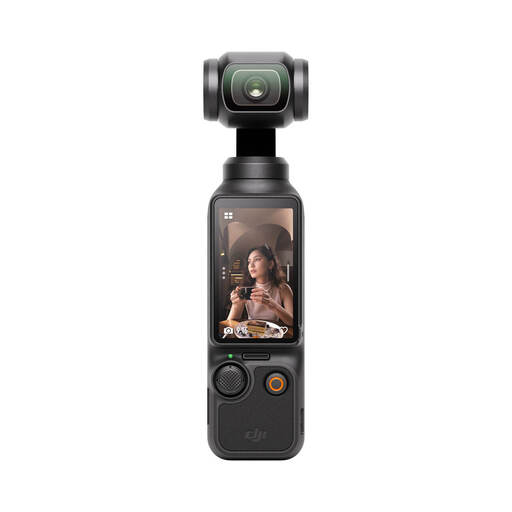 No image available
If still photos matter as well as video, the product description lists a focus function for photos.
The product title specifies a 1-inch CMOS sensor, 4K/120fps video and three-axis stabilisation. The product description gives a weight of 179 g.
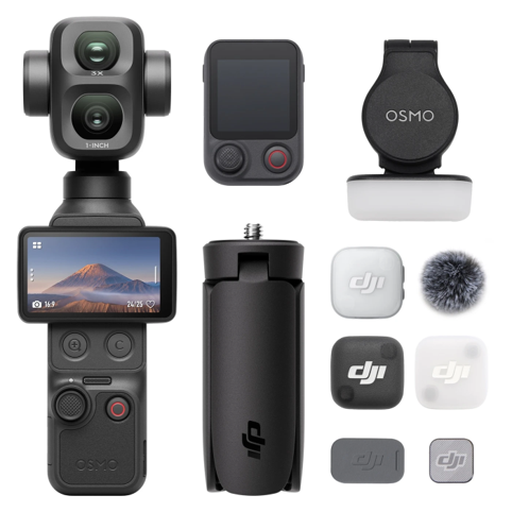 No image available
For courtyard façades, your main priority should be checking whether the angle of view on this specific model is wide enough for the distance available.
The product description specifies a 20 mm lens and claims a dynamic range of 17 stops. These details alone don’t confirm whether the model will capture the frame you want.
Start by checking the exposure of the important parts of the image. If one photo doesn’t capture the difference in brightness as you’d like, shots taken at different exposures can help when combining them into an HDR image later; RAW gives you more options in post-production. Whether exposure bracketing is available depends on the camera model.
If the façade won’t fit in the frame from where you’re standing, you may need a compatible ultra-wide-angle lens. Check whether it’s included in the specific kit: Canon lists the RF-S 10–18 mm as a compatible option for the EOS R50; Nikon offers the Z DX 12–28 mm for DX Z cameras.
It depends on where you take the photo and how you use it. The Berlin State Office for the Preservation of Monuments requires the owner’s permission for photos taken from private property. Section 59 of the German Copyright Act (UrhG) covers works permanently located on public paths, streets or squares; for buildings, this applies to their external appearance. For commercial filming and photography on public streets in the Mitte district, the Mitte district authority also requires a special-use permit.
Under Section 22 of the German Art Copyright Act (KunstUrhG), you generally need the consent of the person shown before distributing or publicly displaying their image. Whether an exception under Section 23 of the KunstUrhG applies depends on the specific image and how it is used; taking an architectural photo doesn’t automatically settle the question.