
Lieferung heute & morgen

Qualitätsgarantie

Willkommens-Angebote freischalten: KOSTENLOSE Lieferung | Bis zu 80 % RABATT | Kostenlose 30-Tage-JoyPlus-Testphase
App herunterladen
Whether for a holiday, a visit to the grandparents, or as a flexible second sleeping option at home – a good travel cot provides your child with a safe and familiar place to sleep while on the go. However, the selection of models is vast and their features are diverse. From ultra-lightweight pop-up versions to sturdy wooden constructions, making a decision can be challenging.
This guide is designed to help you understand the features of different travel cots and make an informed choice. We will introduce you to various concepts and highlight which characteristics might be relevant for your specific needs.
To find the right model, it's helpful to consider a few fundamental criteria. These are based on the practical aspects of daily life with a child, as well as common safety features.
A key feature is how easily the cot can be set up and taken down. A foldable travel cot should have an intuitive mechanism that can be operated without tools. For air travel or if the cot will be transported frequently, a lightweight travel cot with a compact packed size and a durable carrying bag is advantageous. Aluminium models are often lighter than those with a steel frame.
Depending on the child's age and the intended use, different functions are useful:
Safety is the top priority. Look for a sturdy construction and securely locking joints. Large mesh panels on the sides ensure good air circulation and allow you to keep an eye on your child at all times. The included mattress pads are often only thinly padded. For extended use or greater comfort, a separate, perfectly fitting travel cot mattress can be a good idea. For safety reasons, only use mattresses that are approved by the manufacturer for the specific model to avoid gaps between the mattress and the cot wall.
Here, we present three different models that cater to various requirements and usage scenarios.
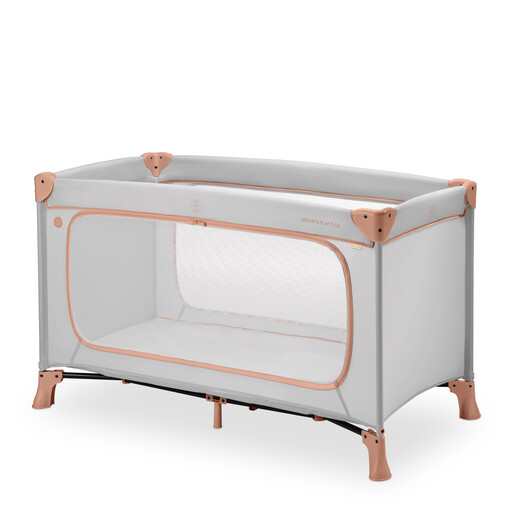
What makes it stand out: The Dream N Play Plus from hauck is a classic children's travel cot that is distinguished by its ease of use and practical side entry. It is designed to be a reliable companion for travel and visits.
Pros:
Who it's for: This model is a great choice for families looking for a functional and durable standard travel cot for babies and toddlers up to a weight of 15 kg. The side entry makes it particularly appealing for the phase when children become more mobile.

What makes it stand out: The roba folding cot stands out from typical travel cots due to its material and stability. Made from solid organic beech wood, it offers the look and feel of a permanent cot while remaining flexible thanks to its folding function and wheels.
Pros:
Who it's for: Ideal for parents or grandparents looking for an exceptionally stable and long-lasting sleeping solution that serves as both a travel cot and a permanent second cot at home. The wooden aesthetic also blends well into any home environment.
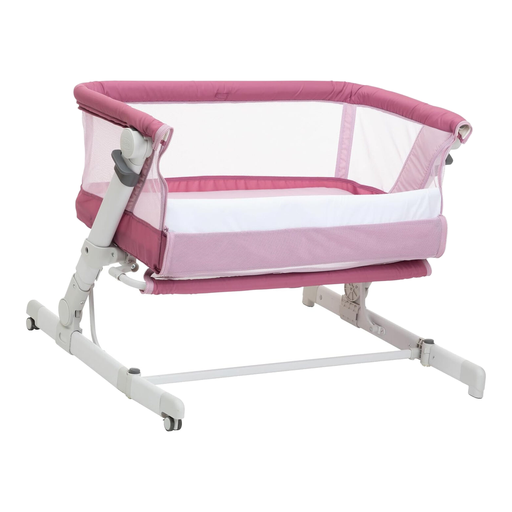
What makes it stand out: The Chicco Next2Me Pop Up combines the function of a portable bedside sleeper with an innovative, instantaneous folding mechanism. It is specially designed for the needs of newborns and their parents.
Pros:
Who it's for: This cot is an excellent solution for parents of newborns (up to 9 kg) who value closeness to their child at night and need an extremely fast-to-assemble solution for frequent short trips or visits.
The models presented here already cover a broad spectrum. However, the market offers many other variations, from multifunctional playpens to special portable cradles.
If you would like to compare more alternatives, discover our entire range of children's beds.
1. How long can a baby travel cot be used? The duration of use depends on the specific model and is determined by the manufacturer's weight or height recommendation. Common fabric travel cots are often usable up to approx. 15 kg (about 3 years). However, more important than weight is the child's developmental stage: as soon as a child can climb out of the cot on their own, they should no longer sleep in it for safety reasons.
2. Is an additional mattress necessary for a travel cot? Most travel cots come with a thin, foldable base pad that is sufficient for short stays. For more comfort, especially during longer use, a separate travel cot mattress can be beneficial. Be absolutely sure to choose a mattress that fits the cot exactly and is approved by the manufacturer to avoid dangerous gaps where the child could get trapped.
3. What is the difference between a travel cot and a bedside sleeper? A classic baby travel cot is a self-contained, portable bed. A bedside sleeper is designed to be attached to the parents' bed with one side open to create a safe co-sleeping space. Some modern travel cots, like the Chicco Next2Me, combine both functions, offering maximum flexibility for home and away.