If you already have a suitable monitor and mainly write, a fully equipped Windows mini PC is a space-saving place to start. If you’re buying the computer and monitor together, an all-in-one could be a good option. The key considerations are compatibility with your software, the space available for your whole workstation and how much file storage you need. If you share the computer, separate user accounts and an additional backup should also be part of the plan.
Which option suits you?
Travel journals with lots of photos
If you regularly edit travel photos as well as writing, check the requirements of the specific software you use and consider RAM, file storage and the monitor. Adobe’s Lightroom Classic requirements only apply if you use that software. EIZO notes that calibration cannot overcome certain limitations of a monitor.
Writers with limited desk space
If you share your desk, the space needed for the monitor, keyboard, cables and paperwork matters just as much as the size of the computer case. Compare the complete setup, not just the PC.
People sharing a PC
If several people use the same computer and you want to keep your writing and photos private, separate user accounts and a separate file backup are two different measures. Microsoft explains that individual accounts have their own personal settings and files; an additional backup keeps copies independent of the PC.
What to consider when buying
Windows mini PC
A good fit if: You have a suitable monitor, have limited space for the computer and your software runs on Windows.
Bear in mind: You’ll need to add a monitor and, depending on the model, a keyboard or mouse. Features and upgrade options vary by version.
Windows all-in-one
A good fit if: You’d like to buy the computer and monitor together and the built-in display suits your workspace.
Bear in mind: You’re tied to the built-in display. If you need colour-accurate photo editing, assess the specific display separately.
Mac mini
A good fit if: The software you actually use is compatible with macOS and you plan to use a separate monitor.
Bear in mind: You’ll also need to factor in a monitor and input devices. Choose the storage and SSD configuration you need.
Windows tower PC
A good fit if: There’s room beside or under the shared desk for a larger case and you need specific ports or the option to upgrade later.
Bear in mind: A tower needs space in addition to the monitor. Upgrade options depend on the model and configuration.
| What you need |
What to check before buying |
Who this matters most to |
| Software and editing |
The operating system and requirements of the software you actually use; for photo or layout projects, also check the RAM, SSD and monitor connections. |
If I edit photos or layouts as well as writing, I want to make sure my software is compatible with the configuration. Around 29% of consumers put software and editing first. |
| Space for your setup |
Available space for the computer, monitor, stand, cables and input devices; for an all-in-one, also check the size of the built-in display. |
If I share a desk, I still want room for my keyboard and paperwork alongside the monitor. Around 29% of consumers prioritise space for their entire workstation. |
| Separate user accounts |
Individual user accounts for everyone sharing the computer and an additional backup method that you check regularly. |
If other people use the same PC, I want to manage my personal writing and photos separately and back them up too. Around 21% of consumers prioritise keeping files separate. |
| File storage and accessories |
SSD capacity and the full contents of the exact version; also check whether you need to add a monitor, input devices or, for a barebone, the necessary PC components. |
If I want to store drafts and travel photos locally, I want to know what’s included in my chosen setup and how much storage is available. Around 21% of consumers look first at file storage and what’s included. |
Common buying mistakes
-
Comparing only the size of the mini PC case with the free desk space
A shared workspace also needs room for the monitor, power supply, cables and input devices. The tested GEEKOM A5 Pro did not come with a keyboard or mouse.
Plan the whole setup, including space for paperwork, and check what’s included with the exact version. You may need to buy a monitor or input devices separately.
-
Assuming a barebone is the same as a fully equipped PC
A barebone version of the GMKtec NucBox M6 Ultra is sold without RAM, an SSD or an operating system. The Intel NUC 13 version discussed also needs these components to be purchased and installed separately.
Compare the full model numbers and check which parts are included to get started.
Missing components can mean extra purchases and installation work.
-
Confusing a large internal SSD with a data backup
More internal storage doesn’t give you an independent copy of your writing and travel photos. Microsoft describes backups as additional copies that can be stored on an external drive or in another suitable location.
Plan a separate backup method and check regularly that you can restore important files.
You may need an additional storage location for an independent copy.
-
Focusing only on the PC specifications for photo work
A powerful computer alone doesn’t prove that its monitor is suitable for colour-critical work. EIZO notes that calibration cannot correct a limited colour gamut or panel inconsistencies.
If reliable colours matter to you, assess the specific monitor and your colour workflow separately from the computer’s performance.
Depending on your needs, you may also need to budget for a suitable monitor and calibration tools.
Key brands at a glance
GEEKOM
The A5 Pro 2026 Edition is a specific Windows mini PC option for a workspace with a separately chosen monitor.
- For the Ryzen 5 7530U version, GEEKOM lists 16 GB RAM, a 1 TB SSD and Windows 11 Pro. COMPUTER BILD ranks a configuration with these specifications first in its mini PC list; this does not mean it has been tested for every travel-journal workflow.
- Features and what’s included vary: the Ryzen 7 version has a different configuration, and the tested device did not include a keyboard or mouse.
Lenovo
The ThinkCentre M75q Gen 5 Tiny is a compact Windows option; the M70t Gen 6 is a tower if you have room for a larger case.
- Lenovo lists 16 GB RAM and a 512 GB SSD for the ThinkCentre M75q model 12RQ003QEZ. According to the manufacturer, you can access the memory and SSD without tools.
- Lenovo lists upgradeable memory options for the ThinkCentre M70t Gen 6; the exact specifications vary by configuration.
Apple
The Mac mini is a compact option with a separate monitor if the software you use runs on macOS.
- Apple’s German specifications list different M6 and M5 Pro configurations, with varying RAM and SSD capacities, as well as HDMI and Thunderbolt display outputs.
- The specifications don’t confirm whether an as-yet-unchosen journal app is compatible with macOS or whether you have everything you need for your workstation.
HP
The Pro Mini 400 G9 range is a Windows mini PC option for a workspace with a separately planned monitor.
- COMPUTER BILD ranks version D6B240EA fourth in its mini PC list.
- The version listed by HP, 937U0EA#ABD, has 16 GB RAM and a 512 GB SSD. It isn’t the same as D6B240EA just because both are part of the Pro Mini 400 G9 range.
Acer
The Aspire C24-195ES DQ.BM4EG.001 is an all-in-one alternative if you want to buy the computer and monitor together.
- For this version, Acer lists Windows 11 Home, 16 GB RAM, a 1 TB SSD and a built-in 23.8-inch Full HD display.
- These specifications alone don’t show that the display is suitable for colour-accurate photo editing.
Joybuy products for a shared desk
This selection includes compact Mac mini and Windows mini PC options for a workspace with a separately planned monitor. Check that your software is compatible and choose a version that meets your storage needs.
 No image available
Apple Mac mini M6, 24 GB, 512 GB SSD
For writing a travel journal and storing photos locally, if your software is compatible with macOS and you use a separate monitor.
24 GB Unified Memory, 512 GB SSD, Thunderbolt 4 and HDMI.
You’ll need to plan for a monitor, keyboard and mouse separately.
View at Joybuy
 No image available
ACEMAGIC AK1PLUS, Intel Celeron N5095
A Windows mini PC option if you already have a monitor and want to store your writing and files locally.
16 GB LPDDR4X, 256 GB M.2-2280-SATA SSD and Windows 11 Pro.
Two HDMI 2.0 outputs are listed; the product description gives the dimensions as 128 × 128 × 51,5 mm.
View at Joybuy
 No image available
ACEMAGIC E3B, AMD Ryzen 7 7735HS
A compact Windows option for writing and light creative tasks if you want to keep using your existing monitor.
24 GB LPDDR5, 512 GB NVMe SSD and Windows 11 Pro.
Two M.2-2280 slots, up to 4 TB according to the product name; video outputs: HDMI, DisplayPort and USB-C.
View at Joybuy
 No image available
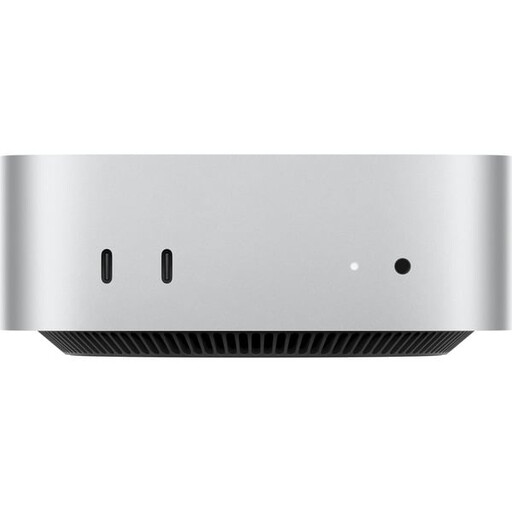
Apple Mac mini M6, 24 GB, 1 TB SSD
For writing a travel journal and storing files locally, if your software runs on macOS and you plan to use a separate monitor.
24 GB Unified Memory and a 1 TB SSD.
You’ll need to allow for a monitor, keyboard and mouse separately.
View at Joybuy
 No image available
Apple Mac mini M5 Pro, 24 GB, 512 GB SSD
A Mac mini option for a workspace with a separate monitor, provided the software you use is compatible with macOS.
18-core CPU, 20-core GPU, 24 GB Unified Memory and a 512 GB SSD.
The product description lists Thunderbolt 5, HDMI and USB-C. Check what’s included with the specific version before planning your workspace.
View at Joybuy
Frequently asked questions
Do I need a powerful graphics card for a travel journal?
For writing alone, the requirements of a photo app don’t mean that you need a particular graphics card. If you use Lightroom Classic or other specific image-editing features, compare their requirements with the exact PC configuration. Adobe distinguishes, among other things, between requirements for general use, GPU acceleration and AI features.
How do I set up a PC for several people?
In Windows, you can create separate user accounts for different people. Microsoft explains that these have separate files and settings; you should also back up important journal files somewhere independent of the PC.
Does a large internal SSD count as a backup?
No. A backup is an additional copy, for example on an external drive or in another suitable location. Check regularly that you can restore the writing and photos you need.


