Choose a keyboard to suit the task you do most often. If you enter lots of index numbers, a number pad can be useful; for recurring software commands, programmable keys may be worth considering. A compact keyboard could suit you if space is limited or you switch between devices. For long writing sessions, also consider your hand position and workspace setup. It’s your software, not your keyboard, that links an entry to a source file. For example, Obsidian Help explains how to use internal links and customise keyboard shortcuts.
Who this keyboard choice is relevant for
People organising indexes and sources
If you’re recording places, names and dates, and often switch between an index entry and its source file, check the layout and the commands your software actually supports. Obsidian Help explains internal file links and customisable keyboard shortcuts.
People indexing on the move
If you work with a travel journal and a computer or tablet in a limited space, a compact design and the ability to switch between devices may matter more than a number pad. Keychron describes several connection options for the K3 Max; Logitech lists Easy-Switch for compatible keyboards.
Writers who spend long hours at a desk
If you’re transcribing longer passages, consider your hand position, keyboard, mouse and documents together. The Federal Institute for Occupational Safety and Health considers input devices as part of the wider workstation setup; no particular design guarantees an individual benefit.
What to consider when buying a keyboard
Start with the task you do most often when indexing: using commands, entering numbers, writing long passages or working in a confined space. Then check the specific layout and how well the keyboard connects to your devices.
| Consideration |
What to check before buying |
Especially relevant if |
| Switching between an entry and its source file |
Check that your software supports the keyboard shortcuts you want and that the key assignments can be customised. |
When indexing, I often switch between a note and its source, so I want to trigger the right commands quickly. Around 33% of consumers put file navigation first when choosing a keyboard. |
| Index details and numbers |
Check the layout of the specific version, its special characters and whether you need a number pad. |
When entering names, places and dates, I want a familiar key layout; if I enter lots of numbers, I also need a suitable number pad. Around 27% of consumers prioritise layout and metadata entry. |
| Hand position while typing |
Compare the dimensions and key arrangement, then try the hand position while typing as you normally would. |
When writing longer passages, I want to assess the key arrangement and my hand position at my own workstation. Around 20% of consumers put typing posture first. |
| Space and switching between devices |
Compare the dimensions, as well as the connection type or Bluetooth support for your devices. |
When I have journal pages or source material beside my keyboard, or switch between a computer and tablet, the right size matters to me. Around 20% of consumers prioritise space and switching between devices. |
Avoiding common buying mistakes
-
Assuming a model name means it has a German layout
The CHERRY KC 6000 SLIM has different country-specific product numbers. CHERRY lists the German version as JK-1600DE-2; a similarly named version may have a different layout.
Before buying, compare the product number and the stated key layout, especially if you enter special characters or lots of numbers.
-
Assuming macros will link source files automatically
Keyboard shortcuts and file links are different functions: the keyboard can trigger a command, but your software manages the link and decides which file it points to.
Test the linking process in your software first, then set up suitable keyboard shortcuts. Obsidian Help documents these features for Obsidian; other programmes may work differently.
-
Choosing a split keyboard based on its name alone
Perixx recommends allowing time to get used to the PERIBOARD-512 B, which measures 485 × 236 × 44 mm. Its design does not guarantee relief from discomfort.
Measure your available space and try the hand position before choosing a split model.
You may need more space to transport it and set it up at a permanent workstation.
Key keyboard brands at a glance
CHERRY
The KC 6000 SLIM is a full-size wired keyboard, while the STREAM KEYBOARD TKL does without a number pad.
- CHERRY lists scissor keys for the KC 6000 SLIM and specifically identifies the German version as JK-1600DE-2.
- The KC 6000 SLIM requires USB-A. Claims about the quiet typing feel of the STREAM KEYBOARD TKL come from the manufacturer, not an independent noise comparison.
Keychron
The K3 Max ISO collection is aimed at buyers looking for a compact mechanical layout with customisable keys.
- Keychron lists a 75% layout, QMK/VIA, and wired and wireless connections for the K3 Max.
- The product page covers different national layouts and switch options. Check that the specific listing includes the DE-ISO version you want.
Logitech
The MX Keys Mini is a compact multi-device keyboard, while the ERGO K860 has a split key layout.
- Logitech lists the MX Keys Mini as compatible with Easy-Switch and describes the ERGO K860 as a split keyboard.
- Check the design and version separately. Manufacturer claims about posture or muscle strain do not guarantee a personal health benefit.
Perixx
The PERIBOARD-512 B is a full-size wired split keyboard for a permanent workstation.
- Perixx lists USB-A, dimensions of 485 × 236 × 44 mm and the option to choose a German layout.
- The manufacturer advises allowing time to get used to it. The health benefits mentioned are not independently proven.
Joybuy keyboards for these work scenarios
The following Joybuy listings include compact TKL models for German-language typing, a wired 104-key keyboard and a foldable Bluetooth keyboard for switching between devices.
 No image available
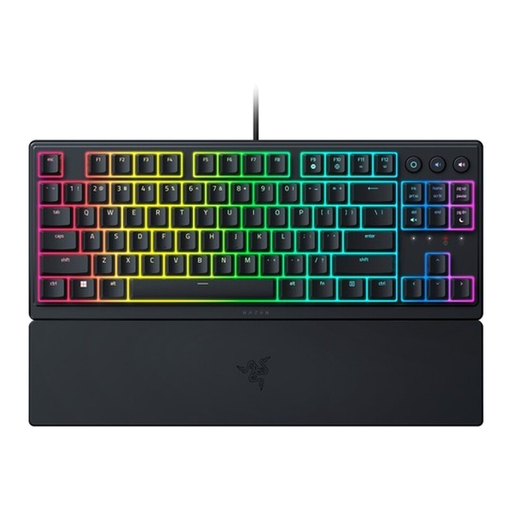
Razer Ornata V3 Tenkeyless, German layout
If you’re looking for a more compact keyboard without a number pad, this TKL model could be worth considering. Check whether the programmable keys listed in the product description work with your software commands.
The product name specifies a German layout. The TKL design has no number pad.
View at Joybuy
 No image available
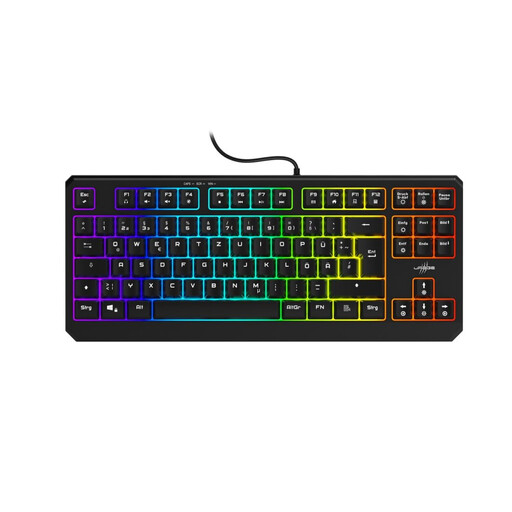
Exodus 220 TKL, QWERTZ DE
If you’re looking for a compact keyboard for entering German-language index details and don’t need a number pad, this TKL model could be a good fit.
The product name specifies QWERTZ DE; the TKL design does without a number pad.
View at Joybuy
 No image available
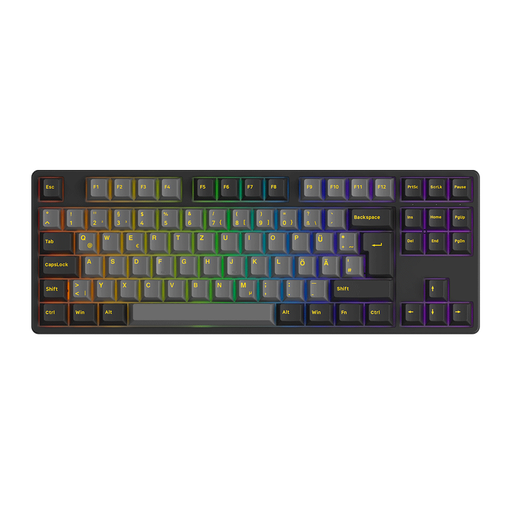
Akko 5087S V1 TKL, wired
If you want to customise recurring keyboard commands, check whether the macro support listed in the product description works with your software.
The TKL design has no number pad.
View at Joybuy
 No image available
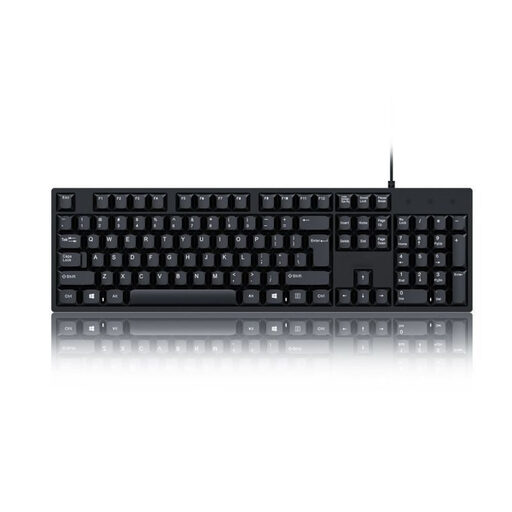
Wired USB keyboard with 104 keys
If you’re looking for a full-size keyboard for entering index details and writing text, this wired 104-key USB keyboard could be an option.
View at Joybuy
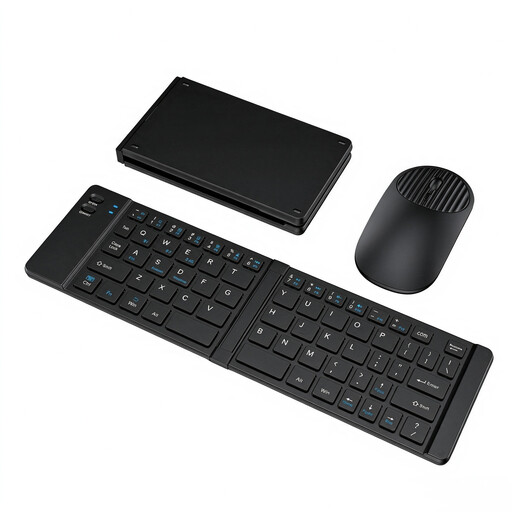 No image available
Foldable Bluetooth keyboard with wireless mouse
If you work in a confined space or switch between devices, the foldable design could be worth considering.
The product name lists Bluetooth connections for up to three devices, USB-C charging and compatibility with Windows, Android and iOS.
View at Joybuy
Frequently asked questions
Will a programmable keyboard automatically link my scans to the right index entries?
No. Customisable keys can trigger suitable commands, but which file is linked and whether a link remains when a file is renamed depend on your software and file organisation. Obsidian Help explains internal file links and an option to update links when renaming files; this does not automatically apply to other programmes.
How do I set up keyboard commands for source files?
First, set up the commands you want in your programme, then test them with a sample note and file. In Obsidian, you can assign keyboard shortcuts under “Settings → Hotkeys”; the US key symbols shown may differ for other layouts.
How can I avoid broken file links after setting everything up?
Check how your note-taking software handles file paths and renaming, and test the process using copies. Obsidian can update internal links when you rename a file; this does not mean other programmes have the same feature.
Can I return a keyboard ordered online?
For online consumer contracts, you generally have a 14-day right to cancel after receiving the goods. The consumer advice centre explains that you need to notify the other party to the contract; check the terms of your specific purchase.
What’s the difference between statutory rights and a manufacturer’s guarantee?
If goods are faulty, your statutory rights are against the seller; an additional guarantee is voluntary and subject to its own terms. For new goods, the European Commission generally states that sellers are liable for any lack of conformity that becomes apparent within two years of delivery.


