
当日/次日达

品质保障

开启新人专享福利: 全场免邮 | 低至 2 折 | 免费试用 30 天 JoyPlus 会员
下载 Joybuy
A good travel mug promises hot coffee on the way to work or a cool drink after a workout. But the reality is often different: a supposedly leak-proof lid fails in your bag, and your hot beverage is merely lukewarm after a short time. Before you make a purchase, you should know three common pitfalls that lead to disappointment and wasted money.
To avoid these pitfalls, it helps to focus on objective product features. Three characteristics are of central importance.
The ability to retain heat or cold is primarily determined by the material and construction. The most effective method is double-wall vacuum insulation. This process removes the air between an inner and outer wall of stainless steel, which significantly reduces heat transfer.
Look for the food-grade stainless steel designation (often listed as 18/8 or SUS304). This material is durable, rust-proof, and taste-neutral, so your coffee won't taste like yesterday's tea. Any plastic parts that come into contact with the beverage should also be explicitly labelled as BPA-free.
Making a travel mug leak-proof is a technical challenge. Reliability depends directly on the lid:
For a travel mug that will be carried in a backpack, a simple and robust mechanism is often the more reliable choice.
The longevity of a travel mug also depends on its care. A model that is designated as a dishwasher-safe travel mug makes the daily routine much easier. However, the crucial factor is that the lid can be disassembled into its individual parts. This is the only way to thoroughly clean all seals and crevices to prevent bacteria and mould growth. A wide opening on the mug also facilitates manual cleaning.
Instead of making blanket recommendations, we have identified models that are tailored to specific use cases and requirements.
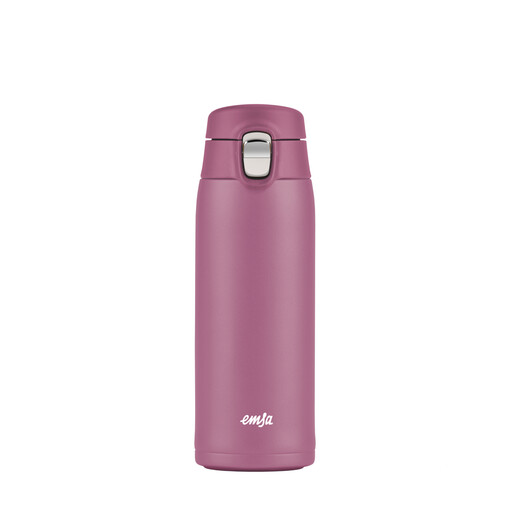
Why This Fits Their Persona: The mug is designed for one-handed operation and its slim shape fits standard car cup holders. Ideal for commuting by car or train.
The flip-top lid is a proven, straightforward solution that minimises the risk of leaks from complex, wear-prone mechanisms.
According to the manufacturer, it's 100% leak-proof; features easy one-handed operation and a dishwasher-safe design.
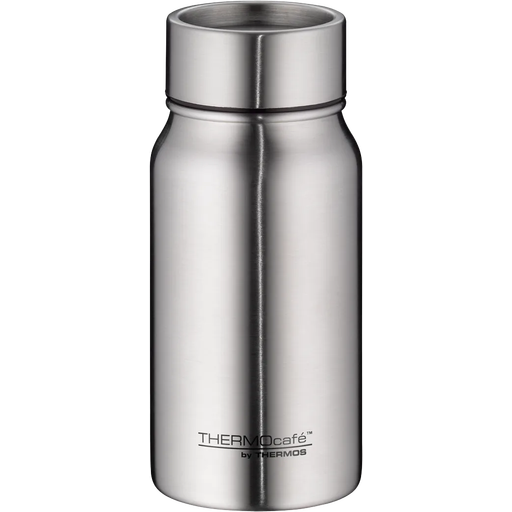
Why This Fits Their Persona: The sleek stainless steel design looks professional in the office. Its insulation performance is designed for a full workday, and the push-button lid allows for convenient sipping.
The double-wall stainless steel construction delivers verifiable insulation performance (up to 8 hours hot, according to the manufacturer), going beyond vague marketing promises.
Leak-proof design with a push-button; disassemblable lid for hygienic and easy cleaning.
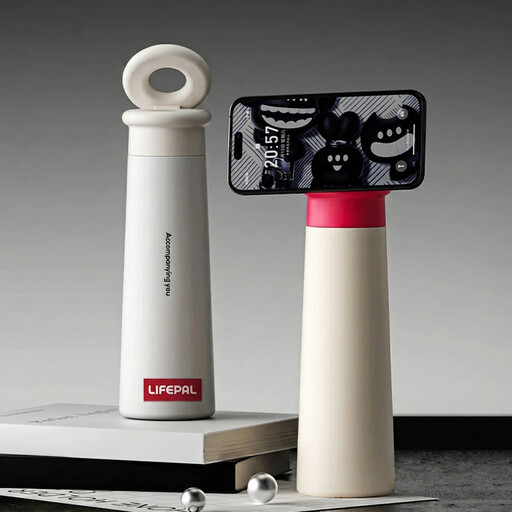
Why This Fits Their Persona: This on-the-go bottle combines an insulation function with a practical phone holder (MagSafe compatible)—ideal for video calls at home, on the train, or at the gym.
The inner container made of SUS316 stainless steel is particularly corrosion-resistant and hygienic, preventing odour build-up and flavour transfer—a common problem with lower-quality materials.
Innovative 2-in-1 function with a phone holder; high-quality and odour-neutral SUS316 stainless steel interior.
We have compiled a complete, up-to-date list of products that fully meet these strict selection criteria and safety regulations.
The most thorough cleaning method is to completely disassemble the lid. Wash all parts, including the mug itself, with warm water and mild dish soap. For stubborn coffee or tea odours, a mixture of warm water and a teaspoon of baking soda can help. Let the solution sit for a few hours, then rinse thoroughly. It is important to let all parts air dry completely before reassembling the mug.
No, not every mug is compatible. Most car cup holders have a diameter of about 7 to 8 cm (2.75 to 3.15 inches). Many manufacturers list the base diameter of their mugs in the product specifications. Models described as "slim" or "compact" are generally designed for this purpose. It is advisable to check the product's dimensions before purchasing.
BPA (Bisphenol A) is an industrial chemical used in the manufacturing of certain plastics. The "BPA-free" label means that the plastic components of a product that come into contact with food (like lids or seals) were made without this chemical. This is a relevant standard for food-contact materials to prevent unwanted substances from leaching into your beverage.