
Lieferung heute & morgen

Qualitätsgarantie

Willkommens-Angebote freischalten: KOSTENLOSE Lieferung | Bis zu 80 % RABATT | Kostenlose 30-Tage-JoyPlus-Testphase
App herunterladen
A good travel mug is a daily companion for many commuters, office workers, and students. It keeps coffee hot on the way to work or water cold in the summer. But the market is flooded with models whose promises often don't hold up in practice. The result: leaky bags, lukewarm drinks, and frustration. As your Joybuy Product Recommendation Officer, I'll help you recognise the typical marketing traps and make an informed decision.
Before we dive into the features of a great mug, let's highlight the three most common problems that lead to a bad purchase.
To avoid these traps, you should focus on three core features. These objective criteria will help you evaluate a model's quality, regardless of its advertising claims.
The basis for long-lasting temperature retention is the construction. Look for a stainless steel insulated mug, specifically one with double-wall vacuum insulation. A vacuum between the two stainless steel walls minimises heat transfer (both hot and cold). High-quality models often use food-grade stainless steel (e.g., Type 304 or 316), which is rust-resistant and won't alter the taste of your beverage. The lid materials are also important; BPA-free plastic and silicone seals are the standard here.
The lid is the most critical component. A simple coffee mug with a lid is not automatically a leak-proof travel mug.
A truly leak-proof travel mug will ideally have a screw-on lid with an additional, separate drinking opening.
The size and shape must fit your habits. A compact 350 ml mug is perfect for a daily espresso, while a large tumbler with a straw and a capacity of 900 ml or more is suitable for long workdays or car journeys. If you drive a lot, look for a tapered base to ensure the travel mug for the car fits securely in the cup holder.
Based on these objective criteria, we have identified a few models that are particularly well-suited for different user profiles.
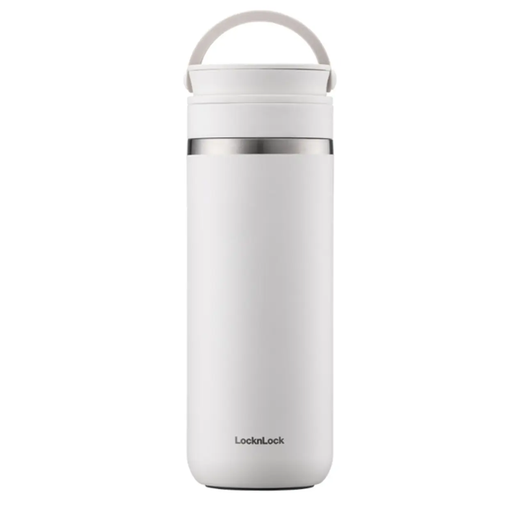
Why it's a great fit: With its reliable screw-on lid and practical 475 ml size, this mug is ideal for transport in a backpack or bag on the way to work or university.
The screw-on lid provides genuine leak-proof security, sidestepping the trap of false promises. The two-part lid can be disassembled for thorough cleaning, preventing hygiene issues.
The two-way lid allows for both sipping from a narrow opening and filling with ice cubes through a wide one.
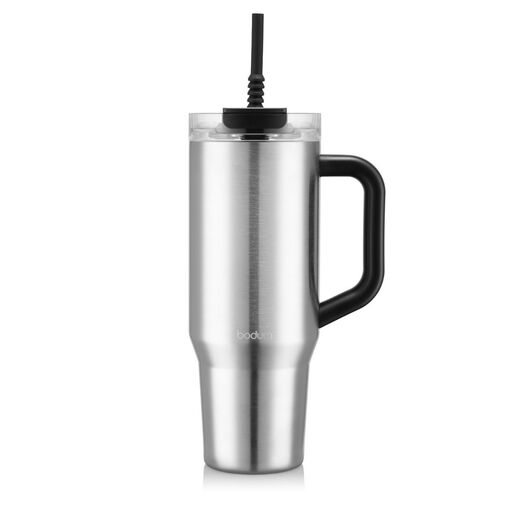
Why it's a great fit: For long days at the office, extended car journeys, or outdoor activities where a large amount of liquid is needed. The handle and straw enhance comfort during use.
This model is designed for a different purpose. It avoids the trap of insufficient capacity. It's intended as a splash-proof companion for upright transport (e.g., in a car), not as a leak-proof mug for a bag.
A very large capacity of 1.2 litres and convenient handling thanks to the integrated handle and straw.
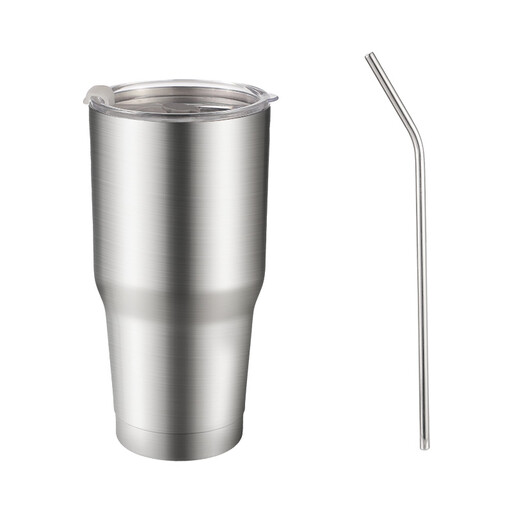
Why it's a great fit: This mug is designed for users who prioritise maximum hygiene and flexibility. It's suitable for both hot and cold drinks and offers a large volume for the entire day.
It addresses the hygiene trap directly: all components of the mug, including the lid and straw, are fully disassemblable. This allows for uncompromising cleaning with no hidden corners.
The fully disassemblable design allows for easy and thorough cleaning. The 2-way drinking design (with and without a straw) offers additional flexibility.
The most thorough cleaning is achieved by disassembling the lid as much as possible. Rinse all parts with warm water and mild washing-up liquid. Use a small brush to clean seals and hard-to-reach areas. It's crucial to let all components air dry completely before reassembling the mug. Always check the manufacturer's instructions, but hand washing is often gentler on the vacuum insulation than a dishwasher.
A higher price often correlates with the quality of the materials and craftsmanship. More expensive models frequently offer more reliable and durable vacuum insulation, higher-grade stainless steel that doesn't affect taste, and more precisely engineered, leak-proof lids. It can be an investment in a longer lifespan and consistently good performance.
This is generally not recommended. The pressure created by the carbonation can damage the lid's sealing mechanism or cause the lid to pop off suddenly. This poses a safety risk and can lead to leaks. Most manufacturers explicitly exclude the use of carbonated beverages in their safety guidelines.