
当日/次日达

品质保障

开启新人专享福利: 全场免邮 | 低至 2 折 | 免费试用 30 天 JoyPlus 会员
下载 Joybuy
A travel mug should keep coffee warm on the way to the office, cool water during sport or transport tea reliably during a train journey. In practice, however, disappointment is often caused not by the insulation itself, but by unsuitable lids, the wrong size or components that are difficult to clean.
A lid with a drinking opening can reduce splashes while you are walking, but it may not be suitable for carrying in a bag. Some travel mugs explicitly state that the lid is not completely leak-proof. So check whether the manufacturer distinguishes between leak-proof, splash-resistant and “use upright only”.
Claims such as “hot for several hours” or “cold throughout the day” depend, among other things, on the fill level, the starting temperature and the surroundings. A small travel mug loses heat more quickly through frequent opening than a large insulated bottle. Manufacturer specifications should therefore be treated as guidance rather than a guarantee for every everyday situation.
Straws, narrow drinking openings and sealing rings can make cleaning more difficult. Residue is particularly problematic with milk-based drinks, juices or sweetened tea. A travel mug with a lid is therefore only practical if the relevant parts can be cleaned in accordance with the care instructions.
For a short commute, 300 to 500 ml is often sufficient. This size fits many cup holders and remains comparatively lightweight. For longer commutes, walks or a full day at the office, 600 to 750 ml is a good choice. A 1.2- or 1.5-litre container is more suitable as a supply vessel for several people or for a long stay without the option to refill.
Also pay attention to the external dimensions. A slim insulated drinking cup may fit better in rucksack compartments or car holders than a wide thermal tumbler with a large handle.
Double-wall vacuum insulation reduces heat exchange between the drink and its surroundings. Stainless steel, such as 18/8 or 316 stainless steel, is commonly used for drinking vessels. 316 stainless steel is described in the product specifications for the relevant model as offering enhanced corrosion resistance; this does not, however, mean that it is suitable for every drink without restriction.
A stainless-steel drinking bottle is robust and does not affect the flavour, provided it does not have an interior coating that could be damaged. Plastic components such as lids, seals and straws should be labelled BPA-free if this is important to you. Microwave ovens, conventional ovens and direct heat are generally unsuitable for vacuum-insulated vessels.
With a leak-proof travel mug, a suitable closure and an intact sealing ring are essential. A push-button or flip-top lid makes one-handed use easier, while a wide opening helps with adding ice cubes and cleaning.
Before buying, check:
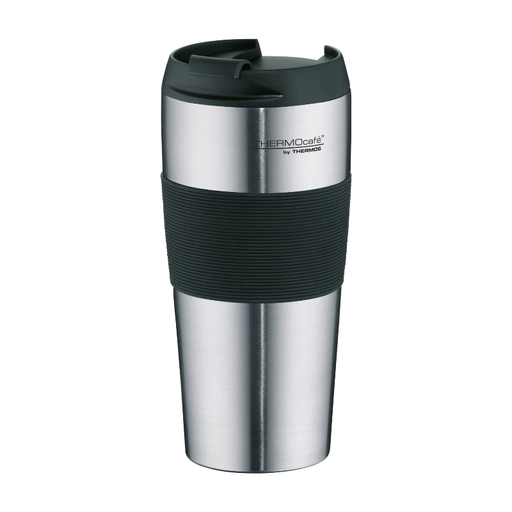
Why this product suits this profile: With a capacity of 0.4 litres, it is suitable for coffee, tea or water at the office, in the car and on short journeys. The flip-top lid is designed for one-handed use.
The double-wall stainless-steel construction and lockable flip-top lid address the common combination of heat loss and an open drinking closure.
According to the product specifications, it keeps drinks warm for up to 4 hours and cold for up to 8 hours; BPA-free and suitable for the top rack of the dishwasher.
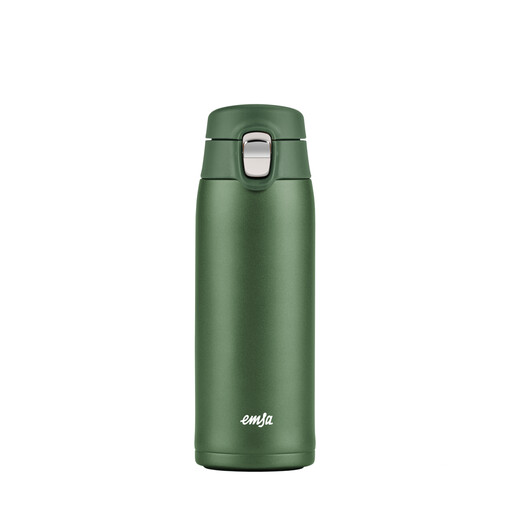
Why this product suits this profile: The slim stainless-steel body is aimed at commuters and students looking for a lightweight travel mug with clear care instructions.
The flip-top closure is stated to offer 100 per cent leak protection. Nevertheless, the closure should be fully engaged before carrying the mug.
According to the product specifications, it keeps drinks warm for up to 8 hours and cold for up to 16 hours; dishwasher-safe and with a capacity of 0.4 litres.
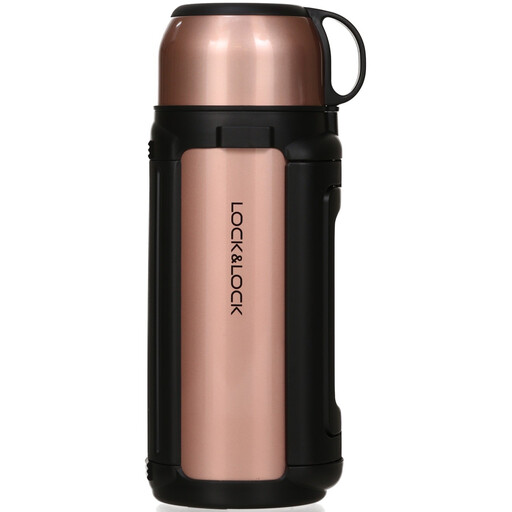
Why this product suits this profile: The large insulated bottle or thermos jug is suitable for offices, days out and outdoor activities when several servings are needed.
The wide opening makes filling and cleaning easier. The product specifications mention a silicone seal and double-wall vacuum insulation.
1.5-litre capacity, integrated cup and carrying handle; according to the product description, it is designed for hot and cold drinks.
We have put together a complete, regularly updated list of products that fully meet these strict selection criteria and the safety regulations applicable in the EU.
Rinse a reusable drinking cup as soon as possible after use. If you have a model with a straw, use a suitable cleaning brush. Seals should be checked regularly in accordance with the manufacturer’s instructions and replaced if visible cracks appear.
When cleaning stainless-steel vessels, avoid scouring agents, steel wool and harsh bleach. Carbonation and dry ice can build up pressure in closed containers. Drinks containing milk should not be left in a travel mug for extended periods. Before filling it with a hot drink, you can preheat the vessel with warm water; for cold drinks, brief pre-chilling is possible.
This depends on the design, fill level, drink temperature and how often the mug is opened. Double-wall vacuum models generally insulate for longer than simple double-wall cups without a vacuum. The manufacturer’s specific time claim is the relevant one for each model.
Not every stainless-steel travel mug can be put in the dishwasher. Some models are explicitly approved for the top rack, while others must be cleaned by hand. The product’s care instructions are decisive, particularly for lids, seals and coatings.
A travel mug is usually designed for drinking directly and often has a diameter compatible with car cup holders. A thermos or insulated bottle often has a larger capacity and a closure for pouring or sealing completely. A travel mug is practical for your daily coffee on the go; for longer days out, a larger thermos flask may be more suitable.