
Lieferung heute & morgen

Qualitätsgarantie

Willkommens-Angebote freischalten: KOSTENLOSE Lieferung | Bis zu 80 % RABATT | Kostenlose 30-Tage-JoyPlus-Testphase
App herunterladen
Planning a trip with young children requires careful preparation. The right travel stroller can be the difference between a relaxed family holiday and a stressful hassle at the airport. But the market is flooded with models promising mobility and ease. Many parents discover only after their purchase that their supposedly practical stroller is cumbersome at the crucial moment or gets rejected by the airline at the gate.
As your Joybuy Product Recommendation Officer, I'm here to help you identify the common pitfalls and understand the key features. This will enable you to make an informed decision based on objective criteria that matches your actual travel needs.
Before you choose a model, you should be aware of the most common problems, which often only become apparent once you're travelling.
To avoid these pitfalls, focus on the following objective criteria. These define a truly travel-worthy stroller for your holiday.
These are the most important metrics for a stroller for air travel. Instead of relying on marketing claims, check the exact dimensions of the folded stroller (length x width x height). Compare this data with the carry-on regulations of the airlines you travel with most frequently.
A good travel stroller is more than just a mode of transport. Look for features that ensure your child's comfort, especially during long city trips or waiting periods.
User-friendliness determines whether the stroller is a help or a hindrance in daily use.
Here are some models that are suitable for specific profiles based on their objective features.
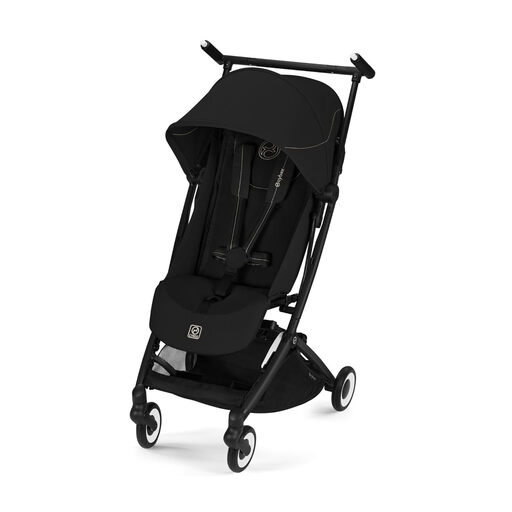
Why it's a match: Ideal for parents who frequently travel by plane, train, and in busy cities. Its strength lies in its extreme compactness and low weight, making it easy to manoeuvre through crowds and narrow aisles.
With a folded size of just 32 x 20 x 48 cm (according to the manufacturer), the Libelle is one of the most compact models on the market, falling well within the carry-on limits of most airlines. This minimises the risk of it being rejected at the gate.
Its extremely low weight of 6 kg and quick folding mechanism make it a practical solution for life on the move. The one-pull harness system further enhances its user-friendliness.
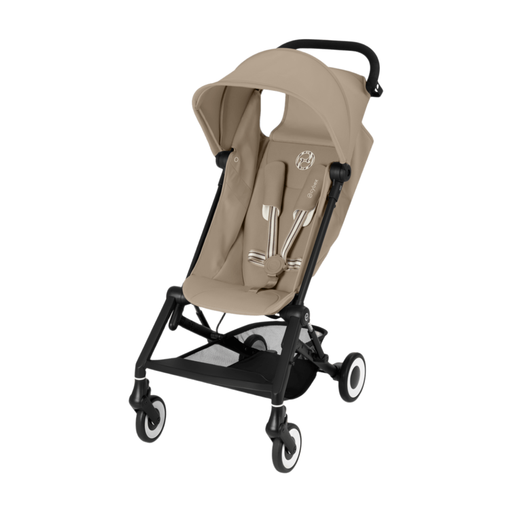
Why it's a match: For families who don't want to sacrifice ride comfort, even on holiday. This model focuses on good suspension and a comfortable seating position, making it suitable for longer walks on varied terrain.
The Agis tackles the "weight over comfort" pitfall by integrating an advanced suspension system despite its travel-friendly design. The adjustable backrest and large sun canopy provide comfort without significantly compromising portability.
The combination of a carry-on-compatible folded size and comfort-focused suspension offers a great balance for demanding journeys. The large shopping basket with a 5 kg capacity is a practical bonus.
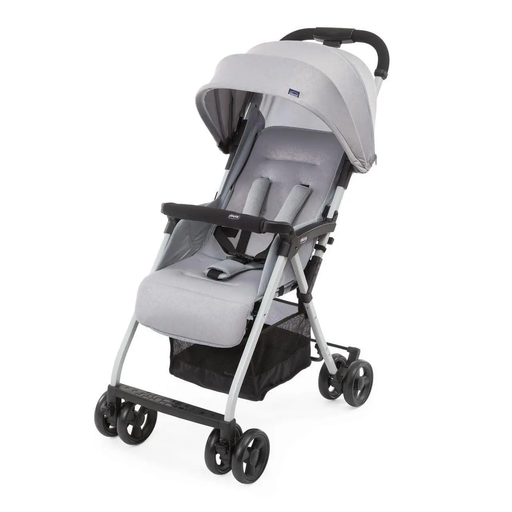
Why it's a match: A solid choice for families looking for a very lightweight stroller for occasional trips or as a second stroller for the car, with a keen eye on value for money.
Despite its extremely low weight of just 4.2 kg (manufacturer's specification), the OHlalà 3 features a backrest that reclines to a lie-flat position and an adjustable leg rest. It thus avoids compromising on fundamental comfort.
The simple one-hand folding mechanism and its ultra-light weight make handling exceptionally straightforward. When folded, it is self-standing, which simplifies storage.
Besides the right stroller, other lightweight travel accessories can also make your holiday easier. For excursions at your destination where a stroller isn't needed, a lightweight chair could be useful, for example.
We have compiled a complete, up-to-date list of products that fully meet these strict selection criteria and rigorous safety standards.
Most travel strollers are designed for children who can already sit up independently, which is typically from around 6 months of age. The maximum weight capacity is usually 22 kg, corresponding to an age of about 4 years. Some models can also be used from birth as a travel system with the help of an adapter and a compatible infant car seat.
No. The term "carry-on compliant" is not standardised. It is essential that you check the exact folded dimensions of the stroller against your airline's specific carry-on regulations before you travel. These can vary greatly, especially with budget airlines. When in doubt, measure it yourself and save a screenshot of the airline's rules on your smartphone.
The main differences lie in the parameters of weight, folded size, and portability. A travel stroller is specifically designed to be extremely lightweight and to fold down to a very compact size, often small enough to fit in an airplane's overhead compartment. A conventional stroller or a full-sized pram system might offer more robust wheels or more extensive features, but it is typically much heavier and bulkier when folded.