
Lieferung heute & morgen

Qualitätsgarantie

Willkommens-Angebote freischalten: KOSTENLOSE Lieferung | Bis zu 80 % RABATT | Kostenlose 30-Tage-JoyPlus-Testphase
App herunterladen
Travelling with a child or navigating urban life presents parents with the challenge of balancing mobility and comfort. A bulky pram can often be a hindrance. A travel stroller is designed to be lightweight, compact, and easy to handle. However, the market offers a vast array of models with different features. This article serves as an objective guide to help you compare the features of various strollers and make an informed decision.
Before you decide on a model, there are several key criteria to consider that will determine its practicality for everyday use and travel.
The defining feature of a travel stroller is its compactness. A stroller with a compact fold fits easily into a car boot, a train's luggage rack, or even an aeroplane's overhead compartment. Pay attention to the folded dimensions (length x width x height) and the total weight. A lightweight stroller under 8 kg makes it significantly easier to carry, whether you're climbing stairs or boarding public transport.
For air travel, a so-called cabin-approved stroller is especially practical. Important: The permitted dimensions for cabin luggage vary by airline. Therefore, always check your airline's current regulations before you travel to ensure the stroller is allowed on board.
Your child should be comfortable even when you're on the go. A stroller with a lie-flat recline is essential if your child will be napping in it. A fully reclining backrest often makes the stroller suitable from birth. Models with an adjustable footrest offer extra comfort, especially for younger children. An extendable sun canopy with UV protection also shields them from the sun and wind. The maximum weight capacity (usually 15 kg or 22 kg) indicates how long the stroller can be used.
Ease of use is crucial in the hustle and bustle of daily life. An auto-folding stroller or a model with a one-hand fold mechanism allows you to collapse it while holding your child. Suspended and 360° swivel front wheels ensure a smooth ride and excellent manoeuvrability, even on uneven surfaces like cobblestones.
Based on the criteria mentioned, we have curated a selection of models that are suited for different needs due to their specific features.
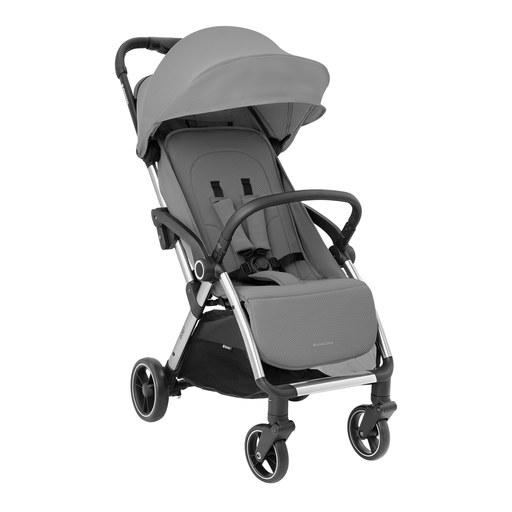
What sets it apart: This model focuses on maximum ease of use with its automatic folding mechanism. With just the push of a button, the stroller collapses on its own.
Advantages:
Who is it for? For parents who place a high value on quick and effortless handling. The automatic folding mechanism is ideal when you're often out alone with your child and need a free hand.
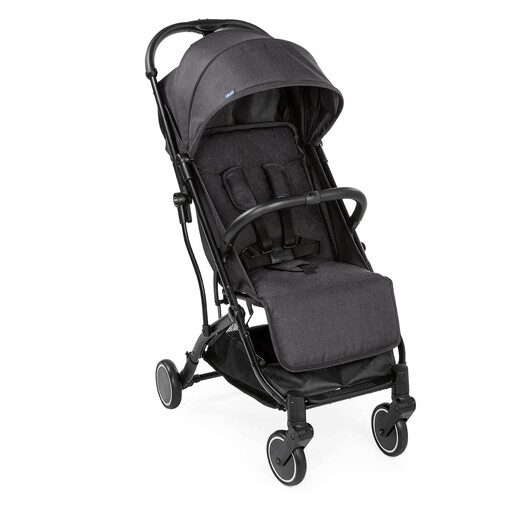
What sets it apart: When folded, the Chicco Trolleyme can be pulled like a trolley case. This trolley function makes transport through airports or train stations exceptionally convenient.
Advantages:
Who is it for? Ideal for travel-loving families who frequently navigate airport terminals or long walkways. The trolley function reduces the carrying load and increases mobility.
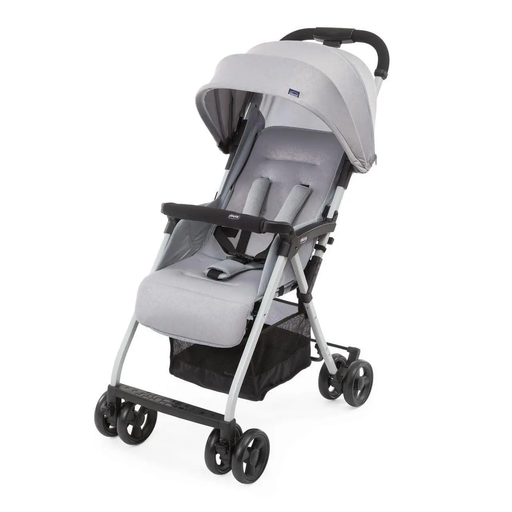
What sets it apart: Weighing just 4.2 kg, the OHlalà 3 is incredibly lightweight. The manufacturer claims it can be lifted with just one finger, making it a top choice for parents where every gram counts.
Advantages:
Who is it for? For parents looking for an ultra-light and compact stroller for city life, carrying up to the 4th floor, or as a hassle-free companion for air travel.
The models featured here cover specific needs. If your preferred model isn't listed or you'd like a different colour, you can find more options that suit your lifestyle in our grey baby strollers category and across our entire range.
1. From what age can a travel stroller be used? Many travel strollers are equipped with a lie-flat recline and are therefore approved as a stroller from birth. For models without a fully flat recline, use is recommended from the age your baby can sit up unaided (approx. 6 months). Always refer to the manufacturer's specifications.
2. Does every compact-folding stroller count as cabin luggage on a plane? No. Although many models are marketed as cabin-approved strollers, there is no universal guarantee. The regulations for the size and weight of cabin luggage differ between airlines and are subject to change. It is essential to check your airline's current guidelines before every flight.
3. What is the difference between a travel stroller and a regular stroller? The main difference lies in their optimisation for transport. A travel stroller is characterised by a lower weight, a more compact fold, and often a simpler folding mechanism. In return, the wheels are usually smaller and the suspension less robust compared to larger travel systems, which are designed for more challenging terrain.