
Lieferung heute & morgen

Qualitätsgarantie

Willkommens-Angebote freischalten: KOSTENLOSE Lieferung | Bis zu 80 % RABATT | Kostenlose 30-Tage-JoyPlus-Testphase
App herunterladen
A travel tripod for your camera and smartphone should take up little space, stand securely and be quick to set up. In practice, though, some buying decisions can lead to unnecessary expense: a lightweight model may topple in the wind, an extended selfie stick can feel unstable, and a gimbal cannot replace a traditional tripod in every shooting situation.
This buying guide helps travellers, vloggers, content creators and smartphone photographers make sense of the technical specifications and choose the right compact tripod, mini tripod or camera accessory.
A tall working height sounds useful, but on its own it tells you little about stability. The further you extend the centre column or telescopic pole, the more it is affected by wind and minor vibrations. So check:
A lightweight travel tripod is handy for train journeys and carry-on luggage. For a heavy DSLR with a telephoto lens, a sturdier model with a wider footprint may be a better choice.
Not every smartphone tripod is automatically suitable for a camera. Check the thread, mount and stated load limit. A 1/4-inch thread is common on many cameras and accessories, but it is no substitute for a suitable smartphone clamp or dedicated adapter.
A tripod for DJI Osmo Pocket 3 may also require a compatible adapter. For mirrorless cameras and DSLRs, the quick-release plate, head and maximum load capacity are particularly important.
A Bluetooth remote control needs to connect to your smartphone and may also require a suitable battery. Before buying, check whether your iOS or Android device is supported. The range in real-world conditions will also depend on your surroundings and any obstacles.
With a selfie stick with tripod, stability when fully extended should be the priority. Built-in lighting is useful, but adds weight and may need its own power supply.
The stated maximum load is a technical upper limit, not a target for everyday use. Add together the weight of your camera, lens, microphone, light and adapters. The centre of gravity should sit as close as possible to the middle of the tripod base. With a large smartphone or a camera fitted with a long lens, a small load margin can make the setup harder to use.
For static shots with a DSLR or mirrorless camera, a tripod for DSLR and mirrorless cameras with a sturdy head and secure locks is more suitable than a simple tabletop tripod.
Packed size determines whether your travel tripod will actually stay in your rucksack. A model with a folded length of around 30 to 40 cm is usually easier to stow than a traditional studio tripod. At the same time, compare the lowest and highest working heights:
Aluminium is widely used for travel tripods and offers a good balance of weight and load capacity. Carbon can reduce weight, but it is not automatically the best choice for every use. What matters is that the leg locks close properly, the feet have a non-slip grip and the tripod head is sturdy.
Set up your tripod on a level, stable surface. In windy conditions, a hook for adding weight can be useful. However, don’t load the accessory so heavily that the tripod risks tipping over.
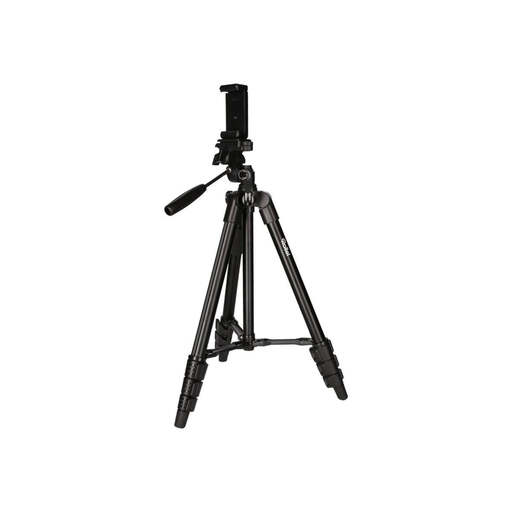
Why this product suits this profile: This model is aimed at smartphone users looking for a relatively lightweight travel tripod for photos, video calls and vlogging.
The specifications explicitly state a maximum load of 2 kg and that it is for use with smartphones. This makes it easier to avoid using it with an unsuitable, heavier camera.
Weighs 595 g, packs down to 39 cm, and includes a smartphone holder and Bluetooth remote control with a stated range of up to 10 m.
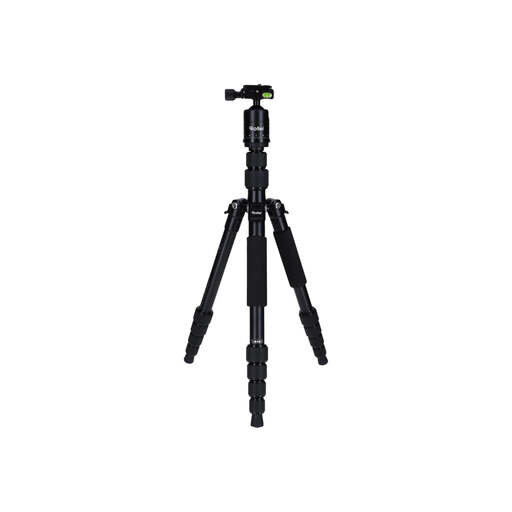
Why this product suits this profile: For camera users who travel, this aluminium model provides clear specifications for packed size, working height, head and load capacity.
Its stated maximum load of 5 kg, five leg sections and panoramic ball head make it easier to choose for heavier camera equipment.
Packs down to 32 cm, weighs 1.17 kg including the head, offers a working height of 32 to 134 cm and has a built-in hook for extra weight.
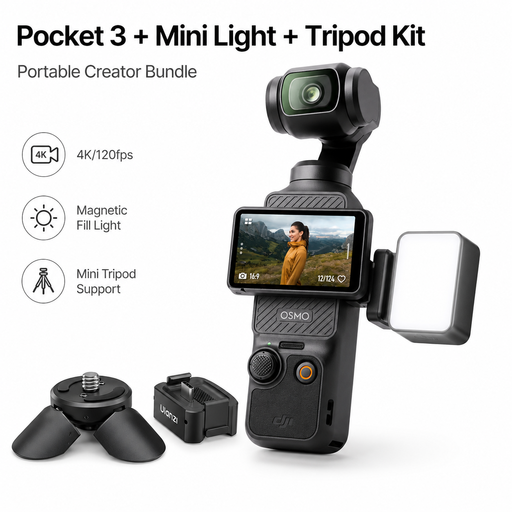
Why this product suits this profile: This bundle is designed for vlogging, travel footage, static videos and shooting in lower ambient light.
The camera, adapter, mini tripod and light are each listed as included items. This reduces the risk of having to budget separately for accessories you need.
1-inch CMOS sensor, 4K/120fps recording according to the product description, 3-axis gimbal, magnetic light and mini tripod.
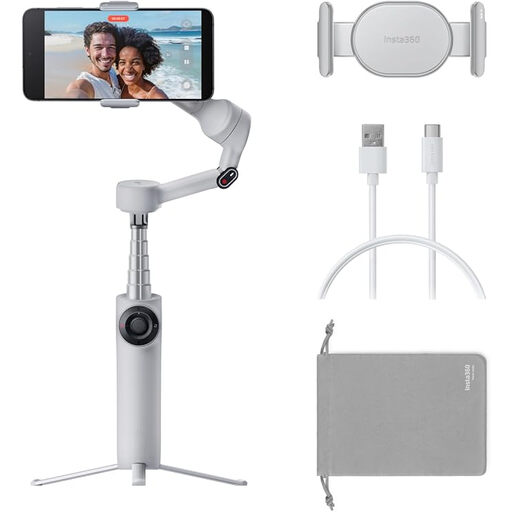
Why this product suits this profile: For filming on the go with a smartphone, this device combines a gimbal, built-in tripod and selfie stick in one.
Rather than combining a gimbal with a separate smartphone tripod, several functions are integrated into one design. Check smartphone compatibility before buying.
3-axis stabilisation, built-in tripod, selfie stick, gesture control and up to 10 hours of battery life according to the product description.
We’ve put together a complete, regularly updated list of products that meet these strict selection criteria and comply fully with the safety regulations in force in the EU.
It depends on your equipment. For a smartphone, a model with a suitable clamp and a moderate load capacity should be enough. For a DSLR or mirrorless camera, check the tripod head, quick-release plate, thread and load capacity. An adapter may allow you to use the same tripod with both, but it cannot make up for a lack of stability.
A mini tripod is suitable for tabletop shots, product videos, video calls and static vlogging. For shots from a greater height or on uneven ground, a larger compact tripod is usually more versatile. Before each shot, check that it is standing securely and lock all the sections.
There’s no set lifespan that applies to every tripod. It depends on the materials, how it’s transported, exposure to moisture and dust, and how often it’s set up and packed away. Clean the threads and locks regularly, avoid overloading the tripod and store it somewhere dry. If it has visible play, damaged locks or loose screws, don’t continue using it with valuable equipment.