
Lieferung heute & morgen

Qualitätsgarantie

Willkommens-Angebote freischalten: KOSTENLOSE Lieferung | Bis zu 80 % RABATT | Kostenlose 30-Tage-JoyPlus-Testphase
App herunterladen
A travel tripod needs to do more than take up little space in your luggage. It should suit your camera or smartphone, stand securely and be easy to carry without unnecessary extra parts. However, when looking for camera and smartphone tripods for travel, some common marketing claims can lead to the wrong purchase.
A lightweight tripod is convenient when travelling, but is more sensitive to wind, uneven ground and sideways pressure. The key factors are therefore not just the weight in grams, but also the material, leg sections, footprint and maximum load capacity. A hook for adding extra weight can improve the stability of a camera tripod, but it cannot replace secure positioning.
A long centre column or extendable selfie stick can provide a high working height. However, fully extending it often increases the risk of tipping. You should therefore also check the folded length, the diameter of the leg sections and the locking mechanism. For tabletop photography, product videos or hotel rooms, a mini travel tripod may be more practical than a large model.
A smartphone tripod with Bluetooth remote control requires a suitable mount and a compatible operating system. With gimbals, you also need to consider supported smartphone models, app functions and the weight of the phone. A camera gimbal or smartphone gimbal is not a replacement for a classic tripod: it mainly stabilises movement while filming, whereas a tripod is designed to hold a fixed position.
For DSLR and system cameras, the stated load capacity should account for more than just the camera body. The lens, battery, microphone and other accessories all add to the total weight. A 1/4-inch thread is common on many compact cameras, smartphones and small video devices. Before buying, check whether a smartphone clamp, quick-release plate or adapter is included.
With a smartphone tripod, the maximum width of the holder is also important. A model designed only for smartphones should not be used with a heavy camera. The stated load capacity is a technical upper limit, not a recommendation for every shooting situation.
A short folded size and low weight are practical for train journeys, air travel and hikes. Five leg sections can allow for a compact folded size, but they also mean more locking steps. Twist locks save space; flip locks can often be checked more quickly.
Check whether the tripod can also be used at a low height. Reversible centre columns or adjustable leg angles are useful for low-angle landscape photography, macro photography and product photography.
A vlogging tripod or selfie tripod with Bluetooth remote control supports hands-free filming. Some models specify a range of around 10 metres, but this should not be confused with a guaranteed range in every environment. Walls, other Bluetooth devices and the smartphone software can affect the connection.
Gimbals are useful for filming on the move. The Insta360 Flow 2 is listed as featuring an integrated tripod, extendable selfie stick, remote control and three-axis stabilisation. The DJI Osmo Pocket 3 accessories included in the bundle described here also comprise a mini video light, an adapter and a mini tripod. This combination is aimed at users who want to combine a camera, lighting and tabletop positioning in one compact set-up.
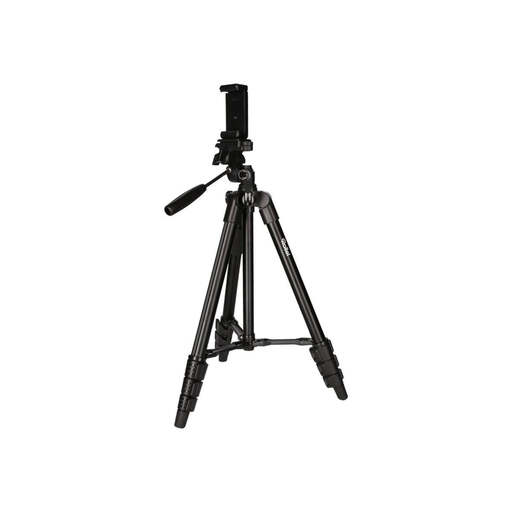
Why this product suits this profile: The model is designed for smartphones and weighs 595 g according to the product information. The integrated holder and Bluetooth remote control reduce the need for additional accessories for travel videos and selfies.
The stated maximum load capacity of 2 kg and clear focus on smartphones help to prevent unsuitable use with a camera. The contents list includes a remote control, holder and carrying case.
39 cm folded size, four leg sections, integrated spirit level and Bluetooth range of up to 10 m according to the product description.
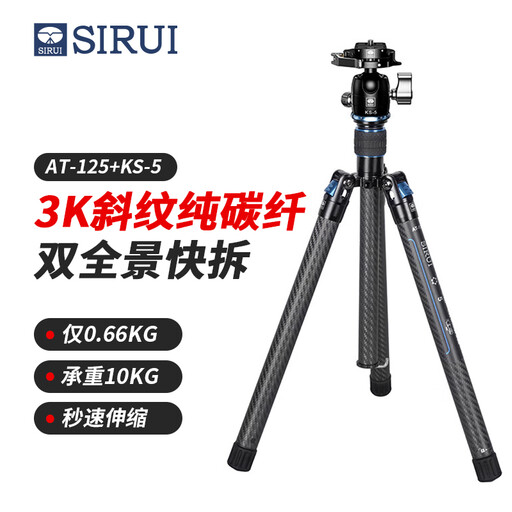
Why this product suits this profile: This carbon-fibre travel tripod is an interesting option for users carrying camera equipment with interchangeable lenses who value a portable camera tripod.
The carbon-fibre specification and separate tripod head set make the construction clearer than a simple marketing claim about portability. Before buying, you should compare the load capacity with your own equipment.
Suitable for DSLR and digital cameras; the combination of travel tripod and ball head supports flexible image composition.
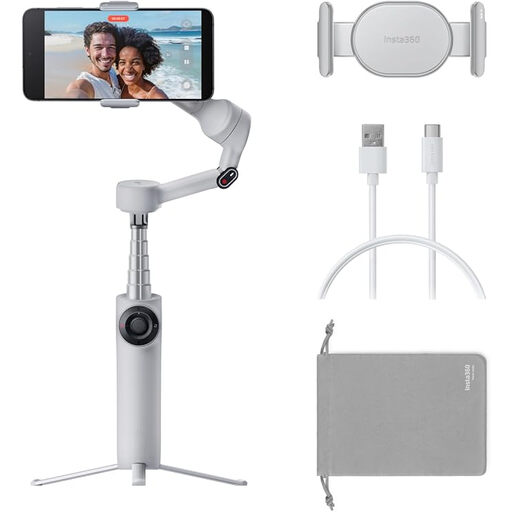
Why this product suits this profile: This smartphone gimbal combines three-axis stabilisation, an integrated tripod and selfie-stick functionality. It is suitable for vlogs, walks, livestreams and filming moving subjects.
The product information specifies features including an integrated tripod, smartphone clamp and battery life of up to 10 hours. Compatibility should be checked with your own iPhone or Android model before buying.
Tracking functions for several people and animals, plus remote and gesture control according to the manufacturer.
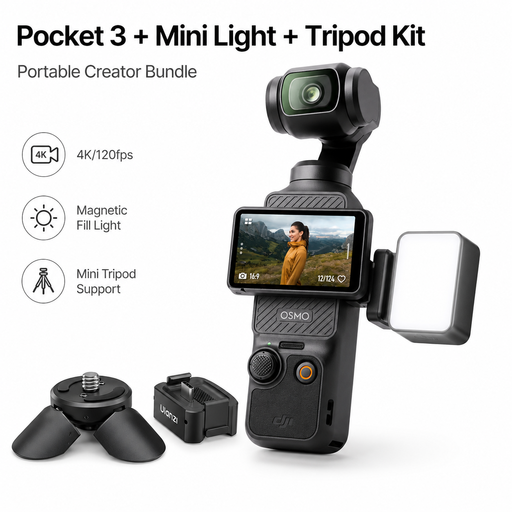
Why this product suits this profile: This bundle combines a pocket camera with a three-axis gimbal, mini video light, adapter and tabletop tripod. It is aimed at vloggers, product videographers and users who want to switch quickly between handheld and fixed-position filming while travelling.
The included components are listed individually. This makes it possible to check before buying whether the light, adapter and mini tripod really suit your intended filming scenario.
1-inch CMOS sensor, 4K recording at 120 frames per second and rotatable 2-inch touchscreen according to the product description.
We have put together a complete, regularly updated list of products that fully meet these strict selection criteria and the safety regulations applicable in the EU.
For devices with button cells and lithium batteries, follow the safety instructions. Small batteries must be kept out of the reach of children and disposed of at suitable collection points in Germany.
For smartphone-only photography, a model with a suitable clamp, 1/4-inch connection and stated load capacity is usually sufficient. A Bluetooth remote control is useful for group photos, selfies and fixed-position vlogs. In windy conditions, the tripod should also be secured and not left unattended.
A smartphone gimbal is useful when you move while filming or want to keep a subject automatically in the frame. For interviews, livestreams, product photography and night-time shots from a fixed position, a classic tripod is often the more suitable choice. The two types of device can complement each other.
Its service life depends on the material, load, transport and care. Clean the threads and locks after outdoor use, avoid overloading the tripod and check the locking mechanisms before every use. With gimbals, the battery, charging cycles and software support also affect long-term usability.