What should you look for when buying?
For a 1.5-litre dish, Good Food specifies 180 °C with conventional heat or 160 °C with fan assistance, and a baking time of 35–40 minutes. Use these recipe settings as a starting point, and check whether the sponge is cooked through if your dish or oven is different.
Mini oven
A good fit if: You’re baking one or a few portions, don’t have a built-in space and your dish fits with enough clearance.
Things to consider: The oven’s capacity and the height of your dish limit what you can fit inside at once. You’ll also need to follow the instructions for positioning and ventilation.
Built-in oven
A good fit if: You have a suitable space for installation and want to make room for larger dishes or other baking tasks too.
Things to consider: The appliance dimensions and connection requirements must suit your kitchen. Extra features don’t guarantee better results for this particular recipe.
| What matters to you |
What to check before buying |
Who should consider this? |
| Dish and portion size |
Check the internal dimensions, shelf height and clearance around the heating elements against the dimensions of your oven-safe dish. |
If you want to fit a particular dish or make several lunchbox portions, don’t rely on capacity alone. Around 30% of consumers put dish size and portion numbers at the centre of their buying decision. |
| Baking settings |
Check that the heating modes and temperature settings match the recipe. If you’re using a different dish or oven, check that the sponge is cooked through. |
If you want to follow the recipe, pay particular attention to whether the oven offers conventional heat or fan assistance, and to its adjustable temperature range. Around 30% of consumers prioritise having the right baking settings. |
| Positioning and installation |
Check the external and internal dimensions separately, and follow the model-specific instructions for positioning, ventilation and connections. |
If your worktop space or built-in slot limits your choice, the appliance needs to fit your kitchen and be safe to use. Around 20% of consumers prioritise positioning and installation. |
| Cleaning and energy information |
Check the cleaning instructions and removable parts. Only compare energy figures when they’re based on the same test method. |
If you bake regularly, cleaning up after sweet mixtures and having comparable energy figures may matter more to you than the maximum dish size. Around 20% of consumers focus on day-to-day running and cleaning. |
Joybuy products for this recipe
The following Joybuy products include mini ovens, built-in ovens and combination appliances. Check that each model’s heating mode, appliance type and internal dimensions suit your dish and kitchen.
 No image available
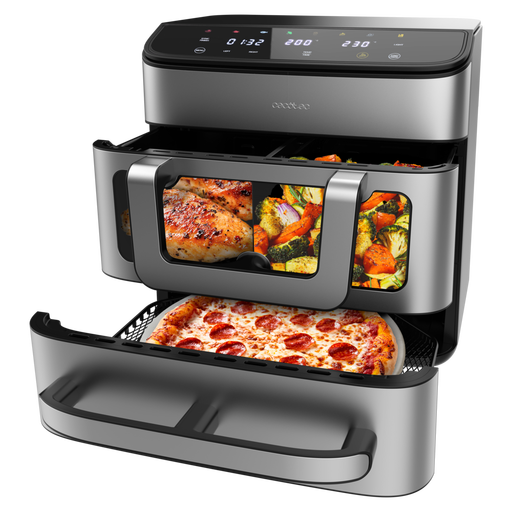
Cecotec Cecofry FoodCourt 18000 4Pizza
The stated oven compartment is only suitable if its internal dimensions and heating mode work with your dish and the recipe.
The listing specifies a total capacity of 18 l, a separate pizza oven compartment for pizzas up to 30 cm, and a 9-litre air fryer.
The stated maximum temperature is 230 °C.
View at Joybuy
 No image available
Comfee built-in oven, 60 cm, 70 l
An option if you’re looking for a built-in oven and have a suitable space for installation.
The listing specifies a 70-litre capacity, fan-assisted circulation, grill and pizza functions, and a timer.
This is a built-in appliance. Check the dimensions and installation requirements for your kitchen.
View at Joybuy
 No image available
Bosch Serie 6 built-in oven HBG578ES3
Could suit larger baking tasks if you have a suitable space for installation. Check your dish dimensions against the oven cavity.
The listing specifies a 71-litre capacity, conventional heat and a temperature range of 30–275 °C.
The product description states that 3D hot air can be used on up to three levels. Installation and connection must be carried out correctly.
View at Joybuy
 No image available
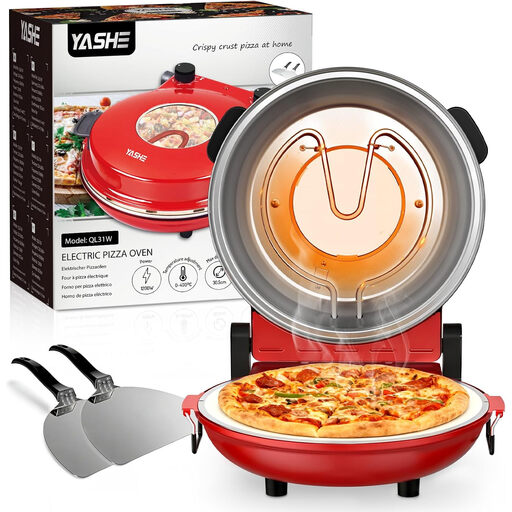
YASHE QL31W pizza oven
The description also mentions baking, so check that the available cooking compartments suit your dish before choosing it.
The listing specifies two 20-litre cooking compartments, independently adjustable heating elements and a temperature range of 50–350 °C.
The product name states that a 30 cm ceramic stone is included. A timer and viewing window are also listed.
View at Joybuy
 No image available
Woltu BF12sz mini oven, 32 l
A freestanding option if you’re looking for a mini oven. Check the dimensions of your dish and the appliance’s positioning requirements.
The listing specifies a 32-litre capacity, 1600 W, a temperature range of 100–250 °C and a timer.
A removable crumb tray is listed.
View at Joybuy
Frequently asked questions
What settings does the treacle sponge recipe recommend?
For a 1.5-litre dish, Good Food specifies 180 °C with conventional heat or 160 °C with fan assistance, and a baking time of 35–40 minutes. If you’re using a different dish or oven, check whether the sponge is cooked through. The recipe settings aren’t guaranteed appliance specifications.
How can I tell whether my dish will fit in the oven?
Compare the height and diameter of your oven-safe dish with the internal dimensions and shelf positions of the specific appliance. Allow for the required clearance around the heating elements too. A capacity in litres alone won’t tell you whether it will fit.
Can you put a mini oven in a built-in space?
Only if the manufacturer specifically says that the model is suitable for built-in installation. The instructions for the Steba KB M19 describe it as a freestanding appliance, not a built-in oven, and require unobstructed ventilation and clearance from the wall, among other things.
What does the energy label tell me about the electricity cost of baking this cake?
For ovens covered by it, the EU energy label shows consumption figures per standard cycle for conventional heating and, where applicable, fan-assisted heating. These aren’t measured consumption figures for this recipe. To work out the cost, you’ll need the actual energy used during your baking session and your electricity tariff.
How should I transport a portion with custard or cream?
Plan the accompaniment and transport arrangements separately from your choice of oven. Germany’s Federal Institute for Risk Assessment stresses the importance of suitable temperatures when transporting and storing perishable foods. This doesn’t establish a single storage time for every version of the baked cake.


