What should you consider when choosing?
Built-in oven
A good fit if: you have a suitable housing unit and the dish and the shelves you need will fit inside.
Trade-off: the housing unit dimensions must match the appliance. A claim that it can cook on several levels doesn’t guarantee an even result with several deep dishes.
Freestanding oven
A good fit if: you don’t have a built-in housing unit and your dish will fit inside the freestanding oven.
Trade-off: internal dimensions and the space required vary by model. A litre capacity alone doesn’t prove that your dish will fit.
Steam-assisted built-in oven
A good fit if: you’d also like to use steam and other functions for different dishes.
Trade-off: the baked Treacle Sponge recipe reviewed doesn’t call for a burst of steam, so no benefit for this dessert has been established.
Good Food gives a temperature of 180 °C for conventional top and bottom heat, or 160 °C for fan-assisted cooking, and uses a 1.5-litre dish for its baked version. Follow the settings in the recipe you’re actually making, and check that the dish dimensions suit the available oven space.
| Buying priority |
What to check when buying |
Who is this important to? |
| Space for a batch to freeze |
Compare the dish dimensions, shelf positions and usable internal dimensions; litre capacity alone doesn’t prove that the dish will fit. |
If I’m planning to use several dishes for portions to freeze, I’ll first check that they fit, including their height and the space between them. Around 36% of consumers put space for a batch to freeze at the top of their list. |
| A cooking method to suit the recipe |
Check for conventional top and bottom heat and the fan-assisted setting you want; use the temperature given in your recipe. |
If I’m following a particular Treacle Sponge recipe, I want to be able to use its heating mode and temperature setting in my oven. Around 29% of consumers prioritise a suitable cooking method. |
| A suitable installation location |
For built-in models, check the housing unit dimensions; for freestanding appliances, check the external dimensions and the space available. |
If I’m choosing between a built-in and a freestanding oven, the first thing that matters is what will fit in my kitchen. Around 21% of consumers prioritise a suitable installation location. |
| Energy use when running |
Compare consumption per standard cycle and heating mode; check whether the energy label applies to that type of appliance. |
If I bake often, I want to take the stated consumption for the heating mode I plan to use into account. Around 14% of consumers put running costs and energy use first. |
The European Commission lists small and portable ovens as exceptions to the scope of the oven energy-labelling requirements reviewed here. For appliances covered by the rules, consumption per standard cycle doesn’t tell you how much energy your particular batch will use.
Ovens at Joybuy
The range includes built-in ovens and a freestanding cooker with an oven to suit different kitchens and cooking needs.
 Image unavailable
Bosch HBA571BB4 Series 2 built-in oven
Could suit a batch for the freezer if the built-in housing unit and the dish fit the oven.
The product details list a capacity of 71 l, conventional top and bottom heat, and 3D Hotair for up to three levels. Check the housing unit and dish dimensions before buying.
View at Joybuy
 Image unavailable
Bosch HBG578ES3 Series 6 built-in oven
Could be a good fit if you’re looking for a built-in oven with conventional top and bottom heat and fan-assisted cooking, and you have a suitable housing unit.
The product details list a capacity of 71 l, conventional top and bottom heat, and 3D Hotair for up to three levels. Check that your dish and housing unit dimensions suit the specific appliance.
View at Joybuy
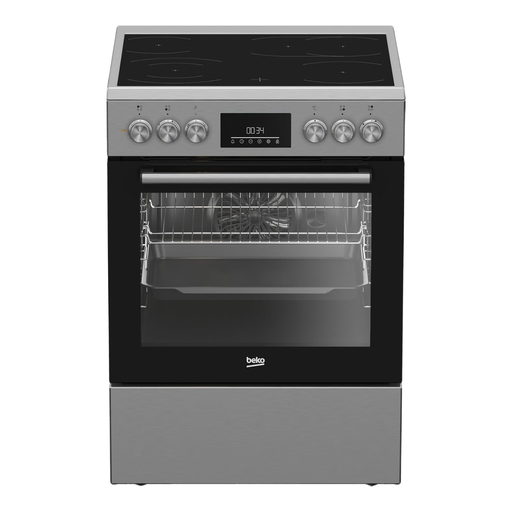 Image unavailable
Beko FBM67320XS freestanding cooker with oven, 60 cm
Could be an alternative if you’re looking for a freestanding appliance rather than a built-in oven and have enough space for it.
The product details list a capacity of 72 l, eight heating functions, conventional heat and fan-assisted cooking. Follow the manufacturer’s installation instructions and check that your dish will fit inside.
View at Joybuy
Frequently asked questions
Can I use a steamed pudding recipe in the oven without changing it?
No, not as an unchanged baking recipe. Good Food gives a baking dish and oven temperatures for its baked version, while the steamed version is cooked covered in a pudding basin. Follow the instructions for the method you’re actually using.
How should I plan to freeze the finished batch?
Divide the baked sponge into suitable portions and wrap it for storage. The Federal Centre for Nutrition recommends −18 °C for frozen food. The consumer advice centre warns that pudding may become watery after defrosting; this can’t automatically be assumed to apply to baked sponge. Assess any sauce or custard accompaniment separately.
Does the EU energy label show how much energy my pudding batch will use?
No. For household ovens covered by the rules, the label gives consumption per standardised cycle, shown separately for conventional heating and fan-assisted cooking where the relevant figure applies. The European Commission lists small and portable ovens as exceptions to the scope of the oven energy-labelling requirements reviewed here.
What warranty and disposal rules should I be aware of when buying an oven?
According to Your Europe, when you buy from a trader in the EU, you’re entitled to a minimum legal guarantee of two years from the date you receive the goods. This is separate from any voluntary manufacturer’s warranty. The German Environment Agency lists local collection points for waste electrical appliances and take-back obligations for retailers, subject to the applicable conditions.


