
Lieferung heute & morgen

Qualitätsgarantie

Willkommens-Angebote freischalten: KOSTENLOSE Lieferung | Bis zu 80 % RABATT | Kostenlose 30-Tage-JoyPlus-Testphase
App herunterladen
Choosing the right trekking boots is crucial for safety and comfort on demanding tours. Anyone who regularly travels in rough terrain such as scree fields, muddy paths, or across wet rocks needs footwear that performs beyond a standard hiking boot. It's about reliability when weather conditions are unpredictable and the strain on materials and feet is high.
This guide is designed to provide you with objective orientation. We analyse the technical features that matter in high-performance outdoor footwear and present a selection of models designed for specific requirements.
The decision for a particular model should be based on a factual evaluation of material, construction, and fit. Three criteria are of particular importance.
For tours in regions with variable weather, waterproof hiking boots are a prerequisite. Modern boots use special membranes for this purpose, which are integrated between the upper material and the inner lining. These prevent water from penetrating from the outside, while simultaneously allowing sweat to be wicked away to the outside in the form of water vapour. The result is a dry foot climate. The upper material is just as important. Robust hiking boots rely on abrasion-resistant synthetic fabrics or leather, which protect the boot from damage by sharp-edged rocks or brush. A reinforced toe and heel cap offers additional protection.
The sole is the direct connection to the ground and is decisive for sure-footedness. In mountain boots and advanced trekking boots, it consists of three components: the insole (for stiffness), the midsole (for cushioning), and the outsole (for grip). The profile of the outsole, also known as the lug pattern, is optimised for traction on various surfaces. Deep, aggressive lugs provide grip on soft ground like mud or snow, while a larger contact area is advantageous on rock. The rubber compound determines the balance between abrasion resistance and traction.
A correct fit is essential to prevent pressure points and blisters. Models for men's hiking boots and women's hiking boots are often built on different lasts that take the respective foot anatomy into account. In addition to classic lacing, modern quick-lacing systems are gaining importance. These allow for a precise and rapid adjustment of the fit, often with just one hand. Such systems prevent the laces from loosening during a tour, which is a significant safety advantage.
Based on the criteria mentioned, we have compiled a selection of PELLIOT footwear developed for demanding outdoor activities.
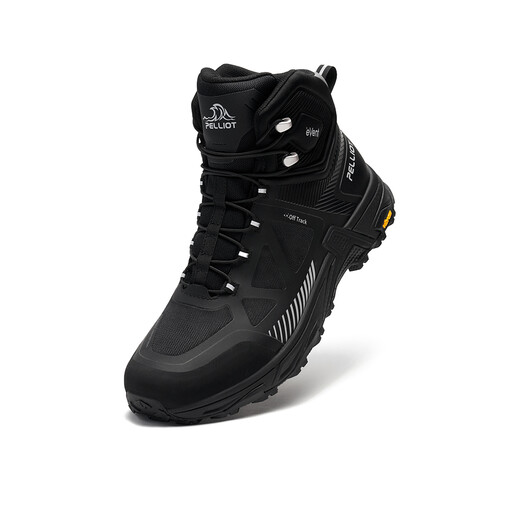
View Product: PELLIOT Men's Trekking Boots (Obsidian Black)
Why this model stands out: This model is designed for demanding hikers and mountaineers who require maximum stability and protection. The combination of an aggressive sole profile and an advanced quick-lacing system makes it an option for unpredictable terrain.
Advantages:
Who is it for? For experienced male hikers and mountaineers seeking a highly functional boot for long, technically demanding tours in alpine terrain.
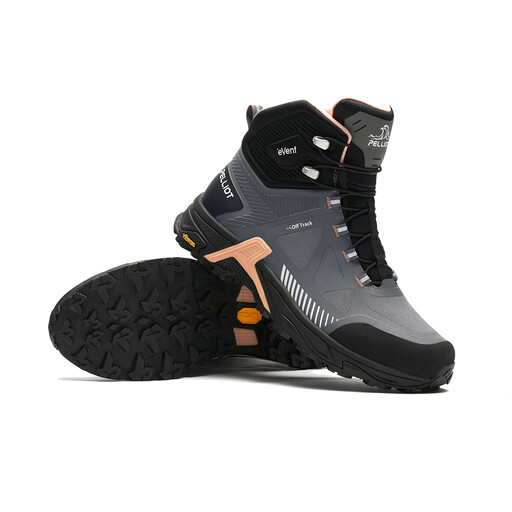
View Product: PELLIOT Women's High-Top Hiking Boots (Rock Gray)
Why this model stands out: This boot was specifically designed for the female foot anatomy, combining robust protection with excellent support. It offers the same technological advantages as the men's model, but in an adapted fit.
Advantages:
Who is it for? For experienced female hikers and mountaineers who need a reliable, stable, and protective boot for demanding tours in variable conditions.

View Product: PELLIOT Unisex Running Shoes (Obsidian Black)
Why this model stands out: Designed as versatile trail running shoes, these are suitable for transitioning from road to trail. The focus is on low weight, breathability, and responsive cushioning.
Advantages:
Who is it for? For trail runners and fast hikers who are looking for an agile, lightweight, and stable shoe for mixed terrain and who value speed and comfort.
The requirements for outdoor footwear are as individual as the tours themselves. If the models presented here do not exactly meet your needs, you can find more options in our broader category.
Discover more sports shoes here
Trekking boots are generally stiffer and more robust than classic hiking boots. They are designed for multi-day tours with a heavy pack in trackless or alpine terrain. Their soles are firmer to protect and support the foot on uneven ground. Hiking boots are more flexible and lighter, ideal for day hikes on established or well-maintained trails.
A waterproof membrane is very important for tours in regions with unpredictable weather or for stream crossings. It keeps the feet dry, which not only increases comfort but also prevents blisters and reduces the risk of hypothermia. For tours in exclusively hot, dry climates, a shoe without a membrane may be more advantageous due to its higher breathability.
Measure your foot length in the afternoon or evening, as feet tend to swell slightly during the day. Stand on a piece of paper and trace the outline of your foot. Measure the distance from the heel to the tip of your longest toe. Compare this measurement with the manufacturer's size chart, which can be found on the product page. Plan for about a finger's width (approx. 1 cm) of space in front of your toes to avoid them jamming into the front when walking downhill.