
Lieferung heute & morgen

Qualitätsgarantie

Willkommens-Angebote freischalten: KOSTENLOSE Lieferung | Bis zu 80 % RABATT | Kostenlose 30-Tage-JoyPlus-Testphase
App herunterladen
A climbing triangle in the playroom is a wonderful way to encourage a toddler's natural urge to move and provide a safe environment for active playtime. But the market is flooded with models that look similar at first glance, and choosing the right product can quickly become overwhelming. As a Joybuy Product Recommendation Officer, I'll help you identify the key features and avoid common purchasing pitfalls.
Many parents invest in an indoor climbing frame only to find that it doesn't meet their expectations after a short time. Here are two common problems you should avoid:
To make an informed decision, it's helpful to focus on the fundamental parameters that define a durable and safe piece of play equipment.
Instead of being swayed by marketing promises, you should examine three objective criteria. These will help you assess the quality of a climbing triangle or similar play equipment.
The foundation of any safe indoor wooden toy is its material. Solid wood is typically the most robust choice, as it ensures high stability and durability. Pay attention to the following details:
Your child's safety is the top priority. Reliable manufacturers provide clear information on safety standards and load limits.
A good motor skills toy for ages 2 and up should accompany a child's development over a longer period. A simple Pikler triangle is an excellent starting point. However, models that can be expanded offer more sustainable play value.
Based on these objective criteria, we have identified some products that represent a considered choice for specific requirement profiles.
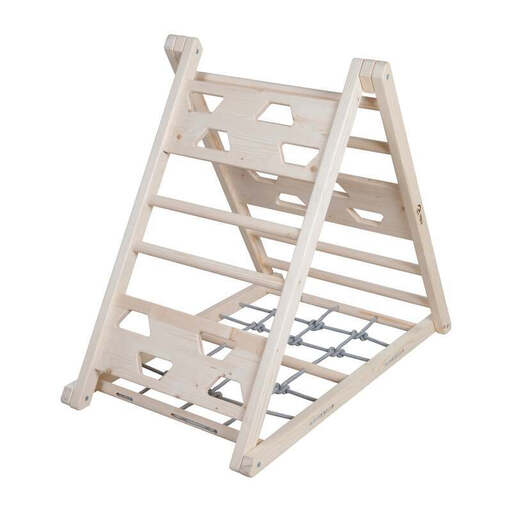
Why This Fits Their Persona: Ideal for families looking for a classic climbing frame aligned with Pikler's teachings. It focuses on the fundamental motor skill development of climbing and balancing without additional distractions. Perfect for an introduction to the world of free play.
The solid wood construction and clear focus on stability counteract the pitfall of a wobbly structure. It is designed as an expandable system and can be combined with a slide, which prevents the problem of limited play value.
Three different sides (rungs, climbing rope, grip surfaces) offer variety. Compatibility with separate accessories ensures a long service life.
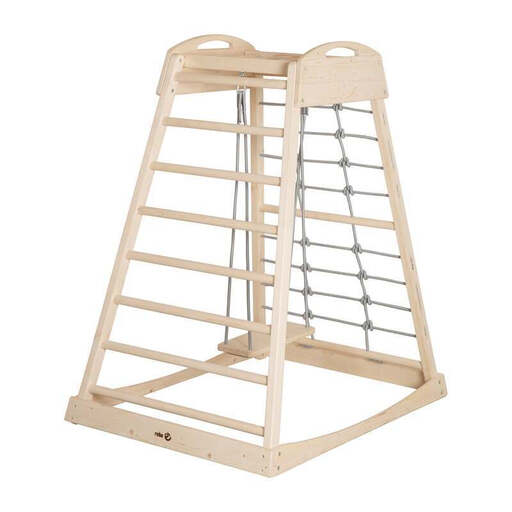
Why This Fits Their Persona: Suitable for parents looking for an all-in-one solution that immediately offers diverse play opportunities. This climbing tower combines climbing, swinging, and gymnastics, appealing to children who are constantly seeking new challenges.
By integrating a climbing rope, gymnastic rings, and a solid wood swing, it directly bypasses the trap of limited play value. The robust natural wood construction with a load capacity of up to 70 kg addresses the problem of instability.
A multifunctional piece of play equipment that promotes various motor skills simultaneously. The high load capacity ensures a long service life, even as the child grows.
We have compiled a list of products that meet strict selection criteria for material and safety. Discover more thoughtfully designed wooden toys for a stimulating environment.
Most manufacturers recommend their climbing triangles for children from around 24 months. However, the child's individual developmental stage is more important than age. As soon as a child starts to pull themselves up independently and makes their first attempts to climb furniture, a climbing triangle can offer a suitable and safe alternative to support this urge.
Safety begins with choosing a stable product. Beyond that, three points are crucial during use:
A foldable climbing triangle can be a practical solution for homes with limited space, as it can be stored compactly when not in use. With these models, pay special attention to a robust and secure folding mechanism. It should have a locking feature that reliably prevents it from accidentally collapsing during play. The stability when assembled should be in no way inferior to that of a non-foldable model.