
Lieferung heute & morgen

Qualitätsgarantie

Willkommens-Angebote freischalten: KOSTENLOSE Lieferung | Bis zu 80 % RABATT | Kostenlose 30-Tage-JoyPlus-Testphase
App herunterladen
Published on: 2026-07-28 By: Joybuy Product Recommendation Officer
The fascination of bringing prehistoric creatures to life in your own room makes a Triops breeding kit a captivating project for inquisitive children. These tiny crustaceans, which populated the Earth alongside the dinosaurs, hatch from eggs that can survive for decades in a dry state. However, the joy of the experiment can quickly turn to frustration if the chosen kit has fundamental flaws. Many products on the market overpromise and underdeliver, leading to disappointment instead of educational success.
Before you make a purchase, it's crucial to understand the most common pitfalls that can sabotage your breeding success:
To ensure a successful and educational experience, you should look for a few objective criteria when choosing a kit. These features separate a well-designed biology experiment kit from a mere toy with a short lifespan.
A good kit for breeding prehistoric crustaceans should include more than just eggs and instructions. A complete set of equipment is the foundation for success and saves you from making extra purchases and improvising. Look for the following components:
The tank's size is critical. A volume of at least 1.5 to 2 litres provides the creatures with enough swimming space and ensures a more stable biological equilibrium. Some high-quality sets, like the Kosmos Triops World experiment kit, offer an extra-large tank with clever partitions. A separate, sectioned-off area for hatching protects the tiny larvae from being accidentally removed during water changes and makes observation easier during the first critical days.
A good instruction manual is more than just a checklist. It should explain the entire life cycle of the Triops, provide background information on the biology of these fascinating creatures, and encourage targeted observation. This transforms the kit into a true educational toy for ages 8 and up, which not only entertains but also fosters a sense of responsibility and an interest in science. Such a set is an ideal gift for curious children who enjoy research and discovery.
Instead of making a blanket recommendation, we have curated products for different interests and use cases.
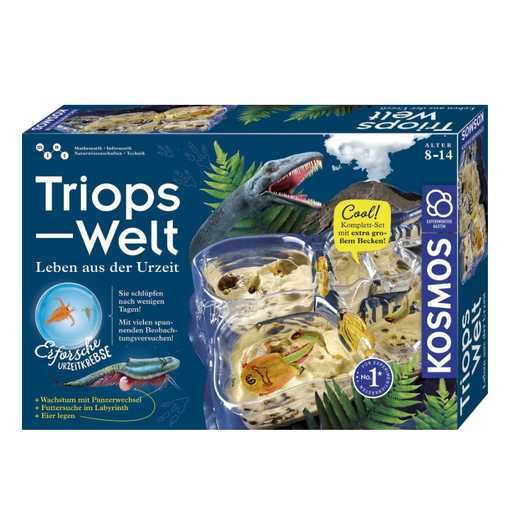
Why This Fits Their Persona: Ideal for children looking for an in-depth biological project. The kit allows for observation of the entire life cycle—from hatching, growth, and moulting to egg-laying.
The extra-large tank with a separate hatching area avoids the pitfall of a too-small habitat and increases the larvae's survival rate. The comprehensive equipment makes it a true all-in-one package.
Large, partitioned tank for optimal observation; detailed instructions with scientific background information; eggs from a controlled laboratory breeding program.
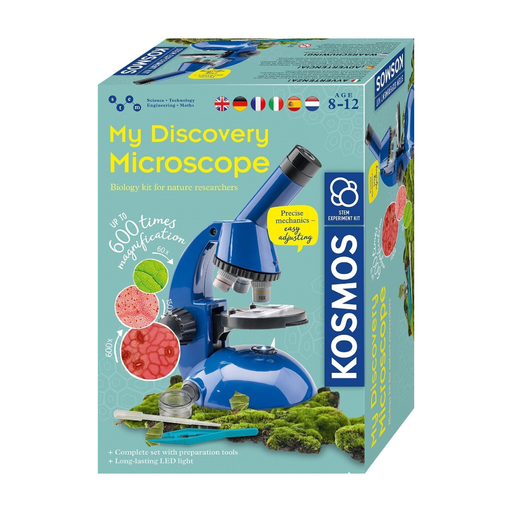
Why This Fits Their Persona: Perfect for children whose curiosity goes beyond the naked eye. It's the ideal tool for examining the Triops eggs, the tiny nauplii, and even the food in detail.
This is not a breeding kit, but a supplement. It avoids the trap of superficial observation and transforms the Triops project into a genuine scientific experiment that goes far beyond simple keeping.
Up to 600x magnification; sturdy design for children's hands; a complete specimen preparation kit for your own samples is included.

Why This Fits Their Persona: For children who love the feel of a laboratory but prefer more creative, design-oriented work. This kit playfully teaches the basics of chemistry and cosmetic production.
It bypasses the risk of biological failure (if the Triops don't hatch) by offering a project with a guaranteed creative outcome. It's a great alternative or supplement in the STEM field.
Safe melting of the glycerine soap in the microwave; fosters creativity by mixing colours and shapes; all materials needed to start are included.
We have compiled a complete, up-to-date list of products that fully meet these strict selection criteria and rigorous safety standards.
Under optimal conditions, the Triops larvae (nauplii) hatch within 24 to 72 hours of being placed in water. Their typical lifespan is relatively short, ranging from 40 to 90 days, depending on the species and keeping conditions. During this time, they go through a rapid growth cycle.
Do not use tap water directly from the faucet, as it may contain chlorine or other substances harmful to Triops. The safest options are still mineral water from a bottle or distilled water. Some kits include a water conditioner that makes tap water usable. Follow the manufacturer's instructions precisely.
Yes, this is possible and a fascinating part of the experiment. Adult Triops lay their eggs, known as resting eggs, in the sand at the bottom of the tank. After the first generation has died, you can carefully remove the sand from the tank, let it dry completely, and store it for a few weeks. Afterwards, you can add water to the sand again to hatch a new generation. Alternatively, you can also buy Triops eggs in separate refill packs to restock your tank.