
Lieferung heute & morgen

Qualitätsgarantie

Willkommens-Angebote freischalten: KOSTENLOSE Lieferung | Bis zu 80 % RABATT | Kostenlose 30-Tage-JoyPlus-Testphase
App herunterladen
A tripod should provide stable footage, hold your smartphone securely or position a camera at the desired height. In practice, however, models differ considerably in load capacity, stability, folded size and compatibility. Focusing solely on maximum height or a long list of features can result in buying a tripod that is too unstable, too heavy or unsuitable for your device in everyday use.
This buying guide from the Joybuy Product Recommendation Officer explains which technical specifications matter before you buy and which models are best suited to different use cases.
A height-adjustable tripod with an extensive working height is not automatically stable. The further the centre column and leg sections are extended, the more strongly they are affected by wind, accidental contact and an asymmetrically mounted device. Particularly lightweight phone tripods can tip over at maximum height when the smartphone is tilted to the side.
That is why you should consider more than just maximum height:
The stated load capacity refers to the tripod’s mechanical resilience. It is equally important to check whether the mount is compatible with your device. A camera tripod with a 1/4-inch thread may be suitable for many compact cameras, action cameras and smartphone mounts. However, a phone holder does not replace a suitable camera mount.
Check the following before buying:
A MagSafe tripod or magnetic smartphone mount allows for quick attachment, but requires a compatible device or a suitable magnetic case. Always check that the smartphone is securely attached before letting go. Magnetic products should not be used near pacemakers, bank cards or magnetic storage media if the manufacturer issues a corresponding warning.
The load capacity should not be only marginally higher than the actual weight of your equipment. Add up the weight of the smartphone, camera, lens and accessories. For a DSLR camera with a heavy lens, a dedicated DSLR tripod with a stable centre column and securely locking legs is a better choice than a mini model.
Manufacturer specifications should be understood as technical maximum values. In strong winds, on uneven ground or with the centre column extended, practical stability may be lower.
For travel, the folded dimensions matter. A travel tripod with a folded length of 32 cm fits more easily into a backpack or suitcase than a full-size studio model. A foldable tripod should nevertheless lock securely and have no loose leg sections.
For smartphone videos and vlogs, a weight below one kilogram can be convenient. Anyone using a camera setup may need to accept a higher tripod weight in return for greater stability reserves.
A mini tripod is ideal for tabletop photography, low-angle perspectives and mobile setups. For eye-level shots or standing livestreams, you need a model with a greater adjustment range. A ball head makes alignment easier, while a smartphone holder should also support both portrait and landscape orientation.
A Bluetooth remote control is useful when you want to trigger photos or videos from a distance. Check whether your smartphone is compatible with the remote and which battery is included or required by the device.
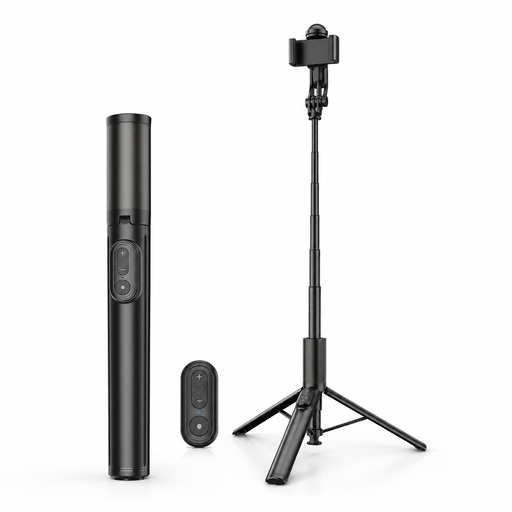
Why This Fits Their Persona: Ideal for smartphone users, vloggers and beginners looking for a compact phone tripod with an extended reach for photos, livestreams or group shots.
The specifications state a maximum length of approximately 193 cm, a weight of around 340 g and a Bluetooth range of approximately 10 m. Before buying, check smartphone compatibility for devices up to 6.0 inches.
Selfie stick and floor tripod in one, with wireless triggering via Bluetooth remote control.
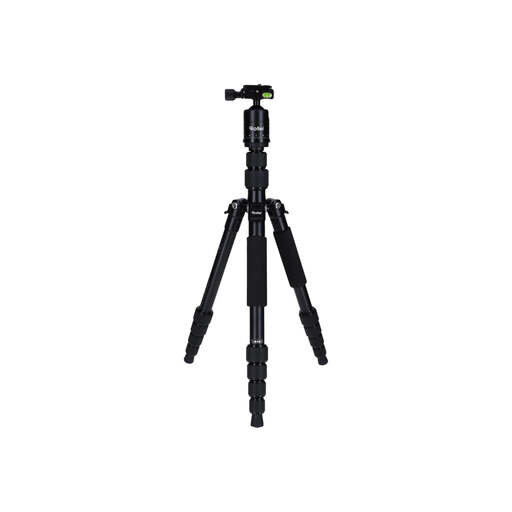
Why This Fits Their Persona: Designed for photographers and travellers carrying a camera with a 1/4-inch mount who need a defined height range for landscape and macro photography.
According to the product specifications, the model features 5 leg sections, a 32 cm folded size and a maximum height of 134 cm. The stated load capacity is 5 kg; in windy conditions, the hook should also be weighted down.
Aluminium construction with panoramic ball head, three integrated bubble levels and legs that fold by 180°.
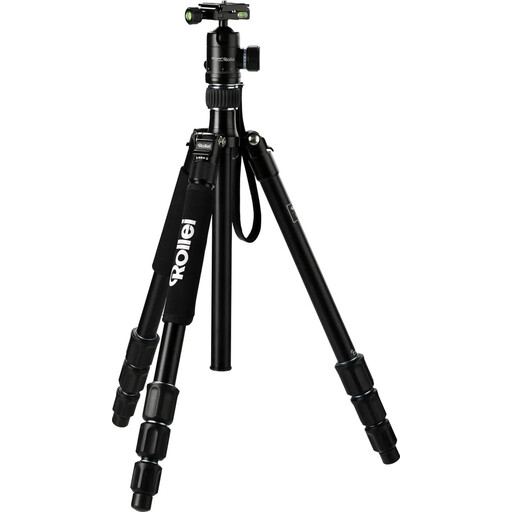
Why This Fits Their Persona: Suitable for DSLR and mirrorless cameras, macro photography and users who want to switch between tripod and monopod configurations.
The technical specifications state a maximum load capacity of 8 kg, a net weight of 1.62 kg and a height range of 21.5 to 159 cm. These figures must match your specific camera setup and its centre of gravity.
4-in-1 design with monopod, macro and reproduction functions, plus an ARCA-SWISS-compatible quick-release plate.
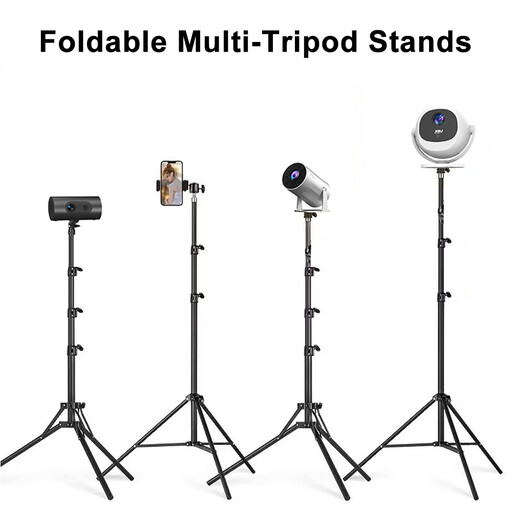
Why This Fits Their Persona: Designed for projectors, ring lights, smartphones and cameras when an adjustable stand is needed for different setup heights.
The stated height range of 40 to 160 cm, the 1/4-inch interface and the included phone adapter indicate its intended multi-device use. With a projector, the actual load capacity must be checked.
360-degree joint, aluminium construction with folding locks and a folded size of approximately 60 cm.
Before using the tripod for the first time, check all leg locks, screws and joints. Place it on a level surface, centre the device and do not exceed the stated load capacity. In windy conditions or on unstable ground, additional securing is required.
For a smartphone, a phone tripod with a secure clamp, 1/4-inch mount or compatible magnetic holder is suitable. A Bluetooth remote control can be useful for selfies and livestreams. Check your phone’s width, weight and mounting method.
Service life depends on the material, locks, transportation and load. Aluminium tripods should be stored in a dry place and cleaned with a soft cloth after outdoor use. Regularly inspect the threads, leg sections and locking mechanisms. Damaged or stiff components should not be used under load.
The price depends primarily on load capacity, material, head, folded dimensions and accessories. A simple mini tripod for a smartphone requires less mechanical complexity than a DSLR or travel model with a ball head and quick-release plate. The key consideration is therefore not a blanket price point, but whether the technical specifications suit the intended use.