
Lieferung heute & morgen

Qualitätsgarantie

Willkommens-Angebote freischalten: KOSTENLOSE Lieferung | Bis zu 80 % RABATT | Kostenlose 30-Tage-JoyPlus-Testphase
App herunterladen
If you’re looking to buy a tripod, you’ll find models for cameras, smartphones, action cameras, vlogging and projection. The choice may seem straightforward at first, but technical specifications aren’t always directly comparable. A lightweight smartphone tripod, for example, isn’t designed for a heavy mirrorless camera. A video tripod can be too bulky for photography, while a mini tripod saves space when travelling but offers very little working height.
The stated maximum load capacity doesn’t automatically mean the tripod can be used safely for long periods in every position. You need to take the combined weight of your camera, lens, microphone, LED light and any other accessories into account. For a camera tripod, the load capacity should be comfortably higher than the total weight of your equipment. A tripod with its legs fully extended is also more susceptible to wind and uneven loads.
A tripod with a high maximum working height may be more prone to vibration when its sections are fully extended. The footprint, leg sections, locks and the tripod’s own weight also matter. A lightweight model may be enough for indoor use. For outdoor photography, long focal lengths or uneven ground, a stable base and a hook for adding extra weight are useful features.
A tripod with a Bluetooth remote control is useful for smartphone photos and livestreams, but it won’t make the tripod itself more stable. A magnetic attachment, as found on a MagSafe tripod, needs to be compatible with your smartphone or the case you’re using. With cameras, a 1/4-inch thread, quick-release plate or ARCA-SWISS-compatible mount is often more relevant.
First, check the weight of your device, including accessories. If you have a mirrorless camera with a lens, it’s worth choosing a camera tripod with plenty of capacity to spare. Compact models with a lower load capacity are often enough for smartphones. With a projector tripod, consider the base, the projector’s weight and the position of its centre of gravity.
A tripod with a ball head lets you adjust the angle quickly in several directions. For video recording, a video head with controlled pan and tilt movements is a better choice. Fluid damping can be useful for camera pans, while a ball head remains handy for stills and changing perspectives.
Compare the minimum height, maximum working height and packed size. A travel tripod should fit in your rucksack or suitcase. A mini tripod is suitable for tabletop shots, but not for taking photos at eye level. A selfie stick tripod can give you greater reach, but it needs a secure base when fully extended.
For frequent travel, folding legs and a low weight are useful. Aluminium is usually more affordable and durable. A carbon tripod may be lighter at a similar size, but it won’t necessarily be the most cost-effective choice for every use. The specific manufacturer’s details on weight, load capacity and dimensions remain key.
Look for clearly described materials and easy-to-understand locking mechanisms. Twist locks reduce the number of components, while lever locks make it quick to adjust the height. Rubberised feet can provide grip on smooth floors. With a flexible tripod, you need to be able to shape the legs so they grip securely around a suitable structure.
Before each use, make sure all the leg sections and the head are fully locked. Extra support is needed on slippery surfaces, in strong winds or when the device is positioned off-centre.
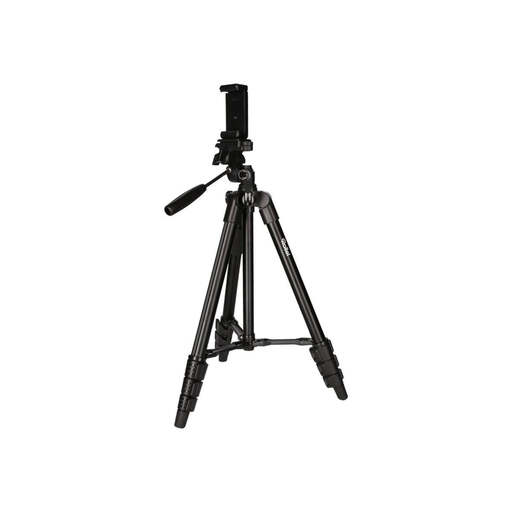
Why it suits this user: Designed for smartphones, vlogging and mobile photography, this model weighs 595 g according to the product specifications.
The specifications state a maximum load capacity of 2 kg and make clear that the tripod is designed for smartphones, not heavy cameras.
4 aluminium leg sections, a packed size of 39 cm, a smartphone holder and a Bluetooth remote control with a range of up to 10 m.
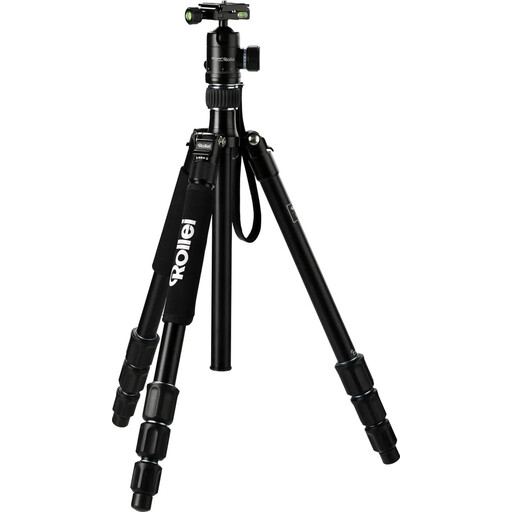
Why it suits this user: This aluminium tripod is aimed at photographers who need different working heights and shooting options for their camera equipment.
The 8 kg load capacity, ARCA-SWISS compatibility and included ball head are clearly specified, making it easier to check the details before buying.
Maximum height of 159 cm, minimum height of 21,5 cm, weight of 1,62 kg and 4-in-1 functionality with monopod and macro options.
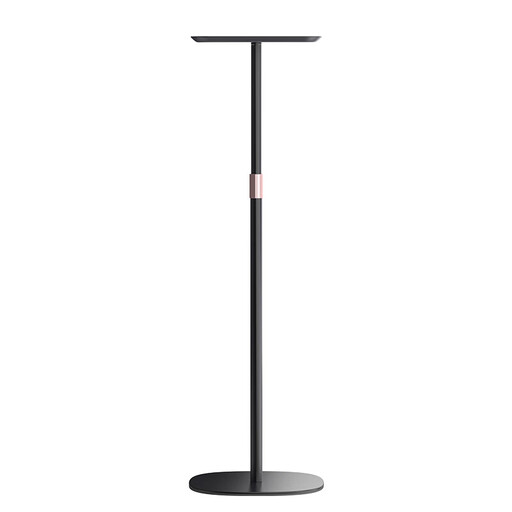
Why it suits this user: For home cinema, presentations and flexible projection, this projector stand offers an adjustable-height solution.
The product details specify a maximum load of 5 to 8 kg, a stand height of around 60 to 160 cm, a shelf and a 1/4-inch thread.
Adjustable height, 360-degree rotation, tilt function, non-slip feet and a removable universal shelf.
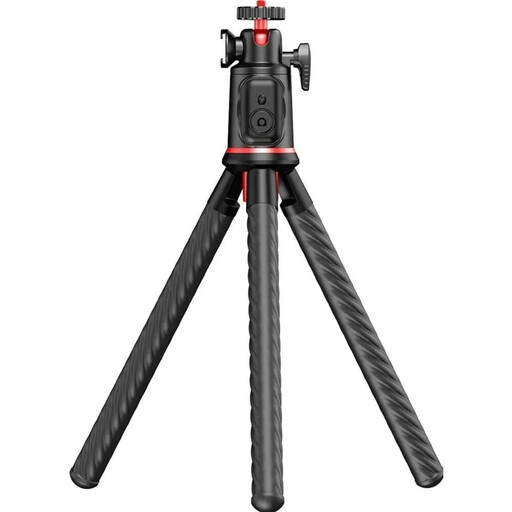
Why it suits this user: Vloggers and travellers can attach this flexible tripod to tables or suitable bars, and use it as a selfie stick too.
The maximum load capacity of 2 kg is clearly stated. Wrap the flexible legs fully around a suitable structure and check they’re secure before letting go.
Weight of 369 g, 1/4-inch thread, 360-degree ball head, cold shoe mount and Bluetooth 5.4 remote control with a range of up to 10 m.
We’ve put together a complete, regularly updated list of products that meet these strict selection criteria and fully comply with the safety regulations in force in the EU.
A smartphone tripod, mini tripod or selfie stick tripod with a compatible holder will work well with smartphones. Check the maximum device width, load capacity and that the clamp holds securely. A Bluetooth remote control is handy for group photos and livestreams.
Its lifespan depends on the materials, load, how it’s transported and how well it’s cared for. A tripod can last a long time if you avoid overtightening the locks, keep the threads clean and check for loose parts regularly. After using it outdoors, remove any sand, moisture and dirt.
The price depends on the type, load capacity, material and head. A basic mini tripod for smartphones needs fewer features than a camera tripod with a ball head or a video tripod with fluid damping. So don’t compare price alone: check the connection, packed size, working height and the load capacity you actually need.