
Lieferung heute & morgen

Qualitätsgarantie

Willkommens-Angebote freischalten: KOSTENLOSE Lieferung | Bis zu 80 % RABATT | Kostenlose 30-Tage-JoyPlus-Testphase
App herunterladen
A tripod should hold your equipment securely, provide the height you need and be easy to transport without unnecessary hassle. In practice, however, purchases often go wrong not because of the price, but because requirements are misjudged. A smartphone tripod for livestreams has different requirements from a DSLR tripod for heavy lenses or a projector tripod for a home cinema.
An adjustable-height tripod with a large working height may sound practical at first. However, the further the centre column and leg sections are extended, the higher the centre of gravity becomes. In windy conditions, on uneven ground or with heavy equipment, the tripod can tip over more easily. The important factors are therefore not just the maximum height, but also footprint, leg profile, locks and permitted load capacity.
A magnetic tripod can be attached quickly and saves space. However, it only works reliably if your smartphone or camera has a suitable magnetic interface. With MagSafe-compatible iPhones, a direct connection may be possible. Other smartphones may require an additional magnetic plate or case. Before buying, you should also check the guidance regarding credit cards, magnetic storage media and medical devices.
A smartphone tripod often includes a clamp, while cameras and many projectors use a 1/4-inch thread. An action camera may require an adapter. A cold shoe for a microphone or LED light is not included with every model either. If you only check these details after delivery, you may need additional mounts.
The stated maximum load capacity is an important guide, but it should not be considered in isolation. The camera, lens, microphone, light and adapter together make up the mounted weight. A mini tripod for a compact camera is not automatically suitable for a DSLR with a telephoto lens.
For smartphones, models with a stated load capacity of around 2 kg are usually sufficient, provided the clamp holds the device securely. With a mirrorless camera or DSLR, a sturdy centre column, stable leg sections and a ball head that can be firmly locked are more important. According to the product details, the Rollei C5i, for example, can support up to 8 kg; the Rollei Compact Traveler No. 1 has a stated maximum load capacity of 5 kg.
An aluminium tripod often offers a sensible balance of weight, stability and cost. It is suitable for travelling, indoor use, vlogging and many camera applications. A carbon tripod can be lighter with comparable dimensions, but it is not automatically the better choice for every use. For outdoor use, transport dimensions, leg locks and the option of adding weight with a hook are also important.
For travelling, a travel tripod with a compact folded size is a sensible choice. According to the manufacturer’s specifications, the Rollei Compact Traveler No. 1 folds down to 32 cm, weighs 1.17 kg including the head and reaches a height of 134 cm. A foldable tripod saves space in your rucksack, but may have a smaller footprint when all sections are fully extended.
For desk-based photography, a mini tripod or tabletop tripod is often sufficient. For floor projections, ring lights and flexible camera positioning, a model with a height range of 40 to 160 cm may be more practical. Before use, it is important to lock all leg sections and clamps fully.
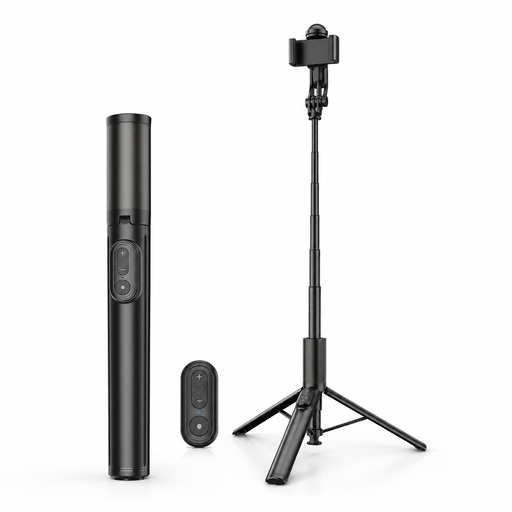
Why this product suits this profile: For smartphone photos, group shots and simple livestreams, this model offers an extendable length of around 193 cm and a Bluetooth remote control.
The Bluetooth remote control enables you to take photos from up to around 10 m away. For a secure stance, the smartphone should be fixed fully into the holder.
Around 340 g in weight, iOS and Android compatibility, plus selfie stick and tripod functionality.
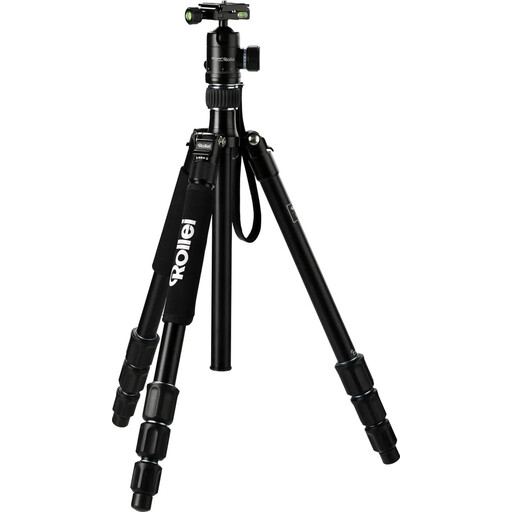
Why this product suits this profile: This DSLR tripod is designed for users who need different camera positions, macro photography capabilities and a high stated load capacity.
The stated 8 kg load capacity and four leg sections make it easier to assess the equipment combination before buying. This specification does not replace checking the actual centre of gravity.
Height range of 21.5 to 159 cm, 360-degree ball head and conversion to a monopod according to the product details.
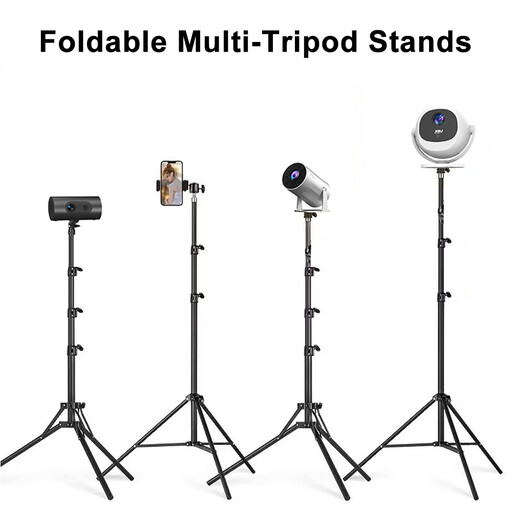
Why this product suits this profile: Designed for home cinema, ring lights, smartphones, action cameras or projectors, it combines a height range of 40 to 160 cm with a 1/4-inch connection.
Compatibility is clearly explained through the smartphone clip, adapter and standard thread. Screws, clamps and equipment weight must be checked before use.
Aluminium construction, 360-degree adjustment, quick-release locks and a folded length of around 60 cm.
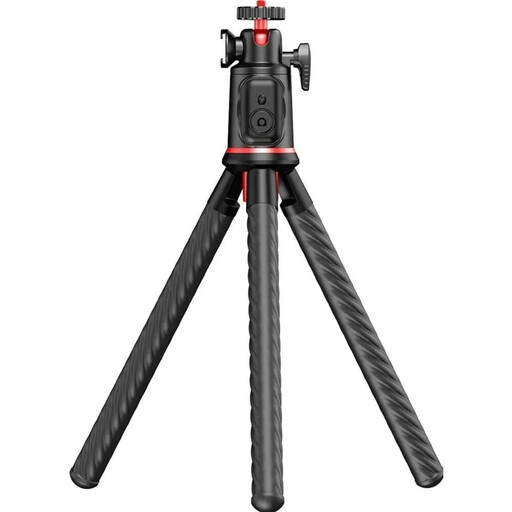
Why this product suits this profile: This flexible tripod can be used as a tabletop tripod, selfie tripod or holder attached to suitable structures, making it ideal for vlogs and mobile filming.
The three flexible legs can be set up on a level surface or wrapped around a suitable structure. Always check that the tripod is fully secure before letting go.
Stated load capacity of 2 kg, 360-degree ball head, cold shoe and Bluetooth remote control with a range of up to 10 m.
We have put together a complete, regularly updated list of products that fully meet these strict selection criteria and the safety regulations applicable in the EU.
For photos, video calls and livestreams, a smartphone tripod with a secure clamp is usually sufficient. If you want to trigger the shutter from a greater distance, you can choose a model with a Bluetooth remote control. A mini or tabletop tripod is enough for a desk; for full-body shots, an adjustable-height floor tripod is a sensible choice.
Its lifespan depends on the material, joints, locks and how it is used. Aluminium and plastic parts should be checked regularly for cracks, play and loose screws. Flexible legs should not be bent excessively on a permanent basis. After outdoor use, cleaning with a soft, slightly damp cloth followed by thorough drying is recommended.
The cost depends mainly on load capacity, material, head, accessories and folded size. A simple phone tripod or Bluetooth selfie stick is usually cheaper than a carbon tripod with a high-quality ball head. When choosing, the right equipment category is more important than setting a blanket budget: an inexpensive model may be sufficient for a smartphone, while a heavy DSLR or projector requires a more robust construction.