
Lieferung heute & morgen

Qualitätsgarantie

Willkommens-Angebote freischalten: KOSTENLOSE Lieferung | Bis zu 80 % RABATT | Kostenlose 30-Tage-JoyPlus-Testphase
App herunterladen
Whether for the office, university, lunchbox or your next trip, tropical dried fruit and fruit snacks are easy to portion and ready to eat without any preparation. However, there are clear differences between soft fruit strips, crunchy fruit chips and savoury Asian snacks when it comes to ingredients, processing and nutritional values.
The product name alone is therefore not enough. By taking a critical look at marketing claims, you can quickly see whether a snack suits your taste, diet and intended use.
Removing the water from fruit means that dried fruit contains more sugar per 100 grams than the original fruit. Sugar, syrup or palm sugar may also be added. When choosing dried mango, it is worth checking both the ingredients list and the nutrition table:
“ Naturally sweet” is therefore not a sufficient selection criterion. What matters is the specific ingredients per pack and the portion size.
Banana chips, plantain chips and other fruit chips are often baked or fried in oil. Their crunchy texture is therefore not created by drying alone. According to the product details, MUSHAN Banana Chips contain 81.1% banana and 18.9% palm oil. The nutrition table lists 35.7 grams of fat per 100 grams.
Plantain chips are also a savoury snack and should not be treated as equivalent to soft dried fruit. According to the labelling, Tropicalgourmet Salted Plantain Chips contain green plantains, palm oil and salt. Afroase Plantain Chips are listed as containing 84% plantains, palm oil and 1.5% sea salt.
Exotic fruits often contain acid regulators, preservatives, flavourings or sulphites. This is particularly relevant for people with a known sensitivity to sulphites. Several mango and guava products in the selection contain sulphur dioxide or sulphites.
You should therefore check the following details before buying:
For a fruit-focused snack, a high fruit content is a clear and understandable criterion. According to the product details, Tuan Dat Guava Dried contains 95% guava and sugar. MUSHAN BASE Red Heart Guava Dried lists 72% red guava, as well as sugar, an acid regulator, a preservative and flavouring.
The processing method should also be considered for crunchy products. Vacuum-fried or vacuum-dried snacks can retain a firm texture, but may contain oil depending on the recipe. The term “fruit chips” therefore primarily describes the shape and consistency, not automatically a specific nutritional quality.
Pack sizes between 50 and 100 grams may seem modest. However, values per 100 grams are the key to making a meaningful comparison. Among the reference products, for example, energy values range from 313 kcal for dried strawberries to around 538 kcal for MUSHAN Banana Chips.
Pay particular attention to:
Soft dried fruit such as dried mango, dried guava, dried pineapple, dried jackfruit or dried plums should be sealed tightly after opening to prevent it from drying out or absorbing moisture. Crunchy chips quickly lose their texture when exposed to humidity.
Resealable bags or individual portions are practical for taking snacks on the go. According to the available product details, some products should be eaten soon after opening or stored in the fridge. The information on the individual packaging takes precedence.
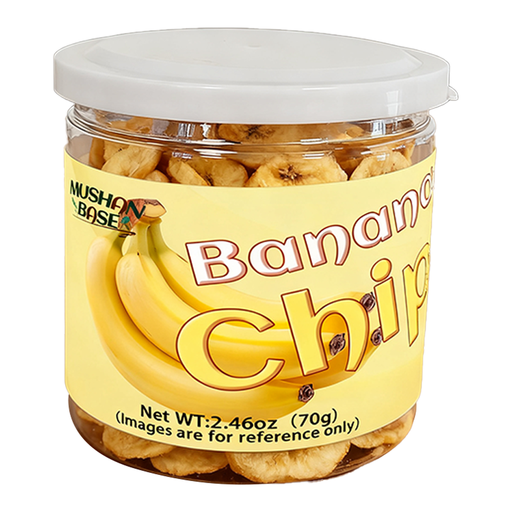
Why this product suits this profile: The 70-gram pack is ideal for a first purchase and for snacking on the go. The chips are ready to eat and, according to the product details, individually wrapped.
The ingredients list gives specific proportions for banana and palm oil. This makes it clear that it is an oil-containing fruit chip rather than pure dried fruit.
70 g net quantity, 81.1% banana according to the declaration and 0 g salt per 100 g according to the product details.

Why this product suits this profile: The soft texture and 100-gram pack are ideal for people who prefer fruit strips for the office, breakfast or muesli.
The product details state that no sugar has been added. At the same time, sulphites are mentioned, so allergens can be checked before purchase.
Mango as the main ingredient, 0.9 g fat and 0.14 g salt per 100 g according to the product description.
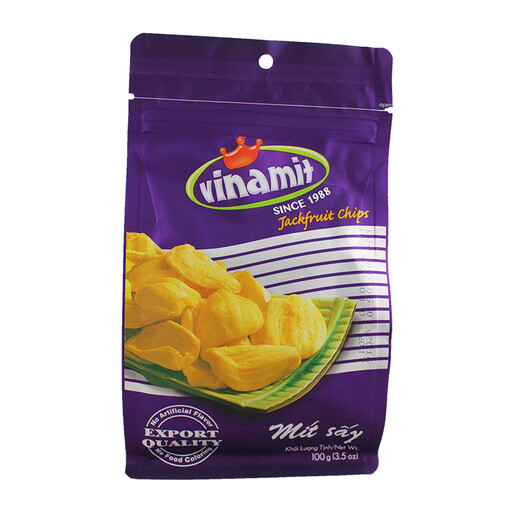
Why this product suits this profile: Dried jackfruit broadens the choice beyond mango and banana. The pieces can be enjoyed on their own, added to yoghurt or used as a dessert topping.
The ingredients list states 98% jackfruit and vegetable oil. This makes the processing transparent and clearly distinguishes the snack from unsweetened, air-dried fruit.
100 g pack size, 0 g salt and 98% jackfruit according to the product details.
We have put together a complete, regularly updated list of products that fully meet these strict selection criteria and the safety regulations applicable in the EU.
Yes, it keeps well, is easy to transport and is ready to eat straight away. Packs of 50 to 100 grams are suitable for a rucksack, office or lunchbox. After opening, the bag should be sealed tightly again. For products with refrigeration instructions, always follow the manufacturer’s guidance.
Dried fruit such as dried mango, guava or plums is usually soft or chewy and is preserved by removing the water. Fruit chips and plantain chips, on the other hand, are often crunchy and may be fried or vacuum-fried in oil. It is therefore important to compare the fat and salt content as well as the ingredients list.
According to the labelling, many products are suitable for a vegan diet. This applies, for example, to several mango, guava and banana products in the selection. However, “gluten-free” should not be inferred from the type of fruit alone. Always check the specific packaging, any precautionary allergen statements and the complete allergen labelling.