
Lieferung heute & morgen

Qualitätsgarantie

Willkommens-Angebote freischalten: KOSTENLOSE Lieferung | Bis zu 80 % RABATT | Kostenlose 30-Tage-JoyPlus-Testphase
App herunterladen
Tropical snacks and dried fruit offer a wide variety of flavours: from salty plantain chips and crunchy banana pieces to soft, sweet mango. However, when shopping in Germany, it is worth taking a close look at the ingredients list, allergens and nutritional values. Terms such as “natural”, “fruity” or “free from artificial colourings” do not automatically mean a recipe is low in sugar or fat.
This shopping guide from the Joybuy Product Recommendation Officer explains which details matter when comparing products and which options suit different everyday situations.
The ingredients list for dried fruit may include sugar, oil, salt, acidity regulators or preservatives in addition to the fruit itself. Recipes can vary considerably, particularly for dried mango: according to the product information, Philippine Brand Dried Mango contains 74,99 % mango and 25 % sugar. Tuan Dat Mango Dried, on the other hand, lists 95 % mango and 5 % sugar.
If you are looking for a snack with as much fruit as possible, check the fruit percentage and the order of the ingredients. The ingredient used in the greatest quantity is normally listed first.
Banana chips, fruit crisps and plantain chips are sensitive to humidity. A large pack is not always practical if it remains open for a long time after opening. Smaller bags may be more suitable for the office, school or walking trips. Once opened, the packaging should be resealed securely and the contents eaten promptly.
With soft products such as dried guava or mango, consistency is a different selection criterion. These snacks are often chewy and soft rather than crunchy.
Sulphites, also known as sulphur dioxide, must be taken into account in the ingredients and allergen information. Several mango and guava products in the selection contain E223 or INS 220. Even where a product contains none of the main recognised allergens, there may still be a warning about possible traces of peanuts, nuts, soya, sesame or gluten.
The information on the product page should be compared with the packaging, particularly if you have a known intolerance. The current labelling on the product delivered is the information that applies.
For a sweet snack, the fruit content and amount of added sugar are key considerations. With savoury snacks, you should also take the salt content into account. Salted Plantain Chips, for example, contain green plantains, palm oil and salt; according to the product information, the salt content is 0,11 g per 100 g. Afroase Plantain Chips Salted list 0,9 g of salt per 100 g.
Seasoned varieties such as Jia Jian Cheng Chu Dried Mango Thai Flavour also contain salt, spices, acidity regulators and several preservatives. This can create an interesting flavour, but it significantly changes the recipe compared with a simple dried fruit.
Pack sizes are only comparable to a limited extent. That is why energy, fat, carbohydrates, sugar and salt should always be considered per 100 g. The figures are intended for comparing products and do not constitute a health assessment.
Examples from the selection:
These figures show why “fruit” and “low fat” are not synonymous, and why the specific preparation method matters.
Small packs between 50 and 100 g are suitable for individual snack portions, lunchboxes or keeping at your desk. Larger bags such as Vinamit Banana Chips 250 g or Manji Snacks Banana Chips 300 g are more suitable for households, regular use or sharing.
For maximum crunchiness, store in a dry, cool place away from direct sunlight. Depending on the product, soft dried fruit may need to be stored in the fridge after opening. The specific storage period stated on the packaging takes precedence.
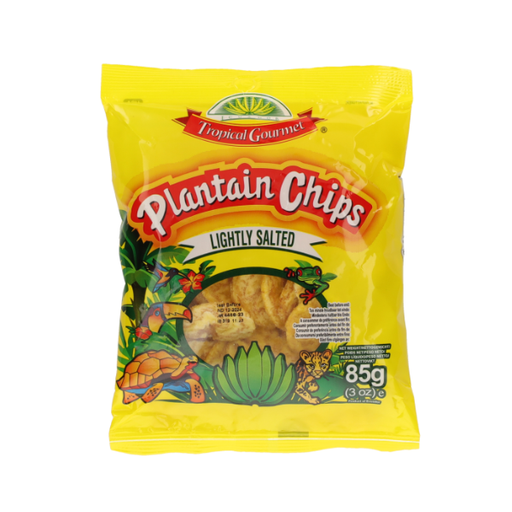
Why this product suits the profile: The 85 g pack is an accessible introduction to savoury Asian snacks and is easy to take with you when you are out and about.
The ingredients list clearly identifies green plantains, palm oil and salt; the salt content is stated as 0,11 g per 100 g.
Crunchy texture, an 85 g portion and, according to the product information, no declared allergens.
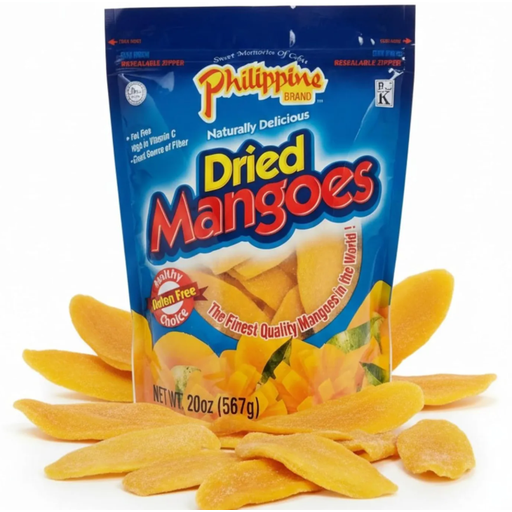
Why this product suits the profile: The product information provides detailed information on fruit content, sugar, nutritional values, allergens and several stated production standards.
The labelling explicitly identifies sugar and sodium metabisulphite E223. This means the recipe can be checked before purchase.
100 g bag, 74,99 % mango according to the stated information, plus details on suitability for vegan and vegetarian diets.
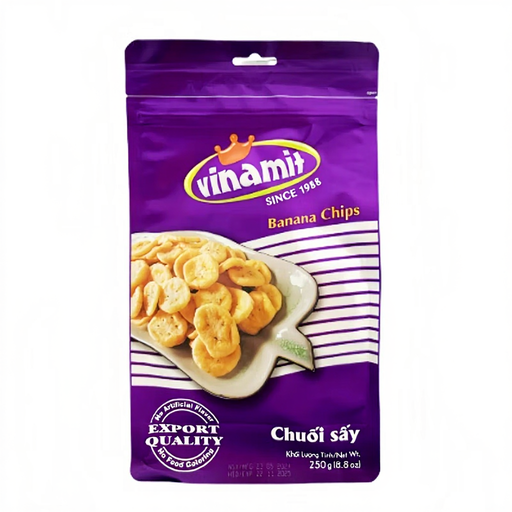
Why this product suits the profile: The 250 g pack is suitable for regular snack breaks, family households or keeping a supply in the office.
According to the product information, the pack has a zip closure. This reduces contact with air, provided the bag is sealed securely after each use.
98 % fresh banana according to the product information, no declared allergens and a net quantity of 250 g.
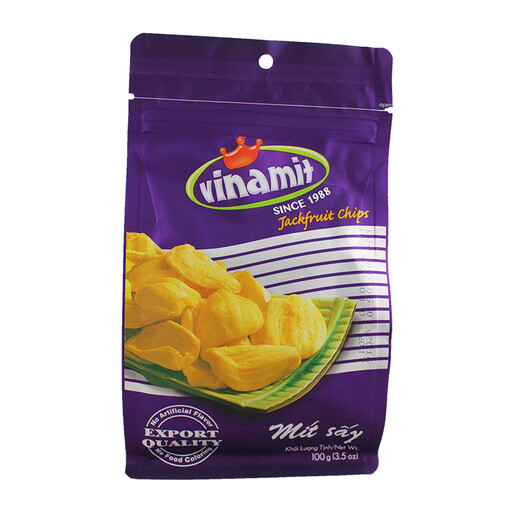
Why this product suits the profile: According to the ingredients information, the snack consists of 98 % jackfruit and vegetable oil, offering an alternative to classic banana or mango products.
The product description does not mention any added sweeteners and lists no allergens. For binding information, check the packaging.
100 g pack, 98 % jackfruit according to the stated information, 0 g salt per 100 g and ready to eat.
We have put together a complete, regularly updated list of products that fully meet these strict selection criteria and the safety regulations applicable in the EU.
For walking trips or the journey to university, resealable bags and smaller portions are practical. Crunchy fruit snacks can also be used as a topping for yoghurt, muesli or desserts. If you want to combine sweet and savoury snacks, you can pair dried mango or jackfruit with salted plantain chips.
For families and offices, it is worth comparing the price per 100 g. A larger pack is not automatically cheaper, but it may be the more practical choice if it will be used regularly. Once opened, the contents should be kept dry and not stored next to strongly scented foods.
According to their product information, many products are suitable for a vegan diet, including certain varieties of dried mango, guava, jackfruit and banana chips. Nevertheless, check the ingredients list, allergen information and possible traces on the relevant packaging. “Vegan” does not automatically mean low in sugar or calories.
After opening, banana chips should be sealed airtight and stored in a dry place at room temperature. Moisture can affect their crunchiness. With larger packs, a well-sealed container is recommended if the original packaging does not provide a reliable closure.
This depends on the product and the storage instructions. Some product information recommends eating it promptly, while other products specify, for example, ten or 21 days after opening. The best-before date applies to the unopened pack when stored under the stated conditions. Once opened, follow the packaging instructions and check the smell, appearance and texture.