
Lieferung heute & morgen

Qualitätsgarantie

Willkommens-Angebote freischalten: KOSTENLOSE Lieferung | Bis zu 80 % RABATT | Kostenlose 30-Tage-JoyPlus-Testphase
App herunterladen
With rising summer temperatures, effective cooling in your home is becoming increasingly important. A portable air conditioner offers a flexible and ready-to-use solution, especially for rental apartments or individual rooms where a permanently installed unit isn't feasible or desired. This article serves as a guide, introducing various models and their features to help you choose the right unit for your home.
The selection of portable air conditioners is vast. To make an informed decision, several technical characteristics and functional aspects are particularly important.
Cooling capacity is often specified in BTU (British Thermal Unit) per hour. This value describes how much heat energy a unit can remove from a room per hour. A higher BTU number means greater cooling power. For effective cooling, the capacity should match the room size. As a guideline:
An air conditioner for your apartment should therefore be selected to match the largest room you intend to cool, such as the living room or bedroom.
Energy consumption is a crucial factor. The energy efficiency class, which ranges from A (very efficient) to G (less efficient) on the EU energy label, indicates the unit's power consumption during operation. Devices with a good efficiency rating help keep running costs low.
Also, pay attention to the refrigerant used. Modern units use more environmentally friendly refrigerants like Propane (R290), which has a significantly lower global warming potential than older agents.
Modern portable air conditioners are often multifunctional. For example, a portable air conditioner with a heating function can be used all year round to cool in the summer and provide heat during transitional seasons. Other useful functions include:
Here is a selection of units that are suitable for different needs due to their specific characteristics and functions.
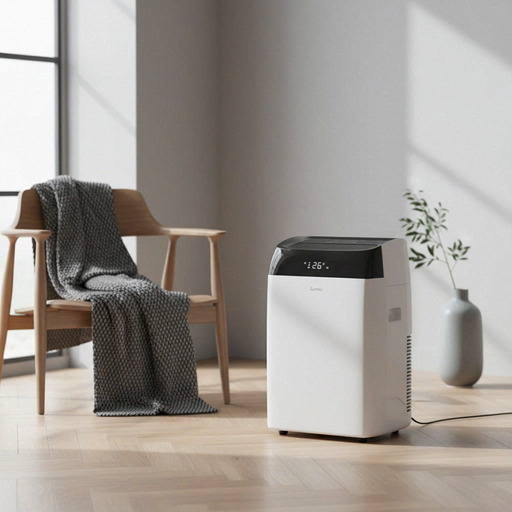
Why it stands out: The Daitsu APD 12FCX is a versatile solution for year-round use. With its integrated heat pump, it can not only cool but also heat, making it a practical air conditioner for cooling and heating.
Features:
Who is it for? For users looking for a multifunctional device that ensures a pleasant indoor climate all year round and can be conveniently controlled via an app. Ideal for living spaces or offices up to approx. 35 m? (375 sq ft).
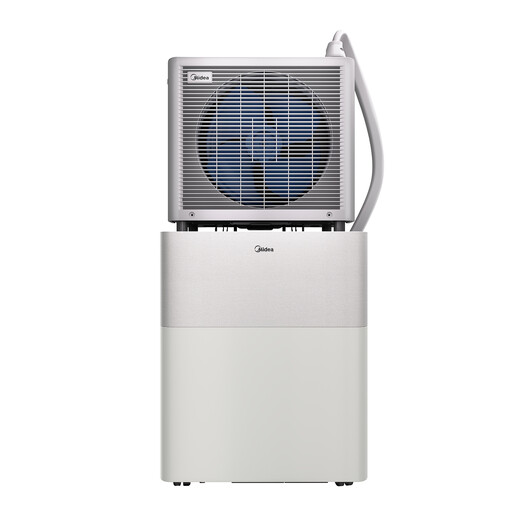
Why it stands out: The Midea PortaSplit-E combines the flexibility of a portable air conditioner with the efficiency of a split system. By separating the indoor and outdoor units, it operates more quietly and achieves high energy efficiency.
Features:
Who is it for? For users who prioritise maximum energy efficiency and quieter operation and are willing to undertake a slightly more complex installation involving an external unit. Suitable for rooms up to 105 m? (approx. 3,700 cu ft).
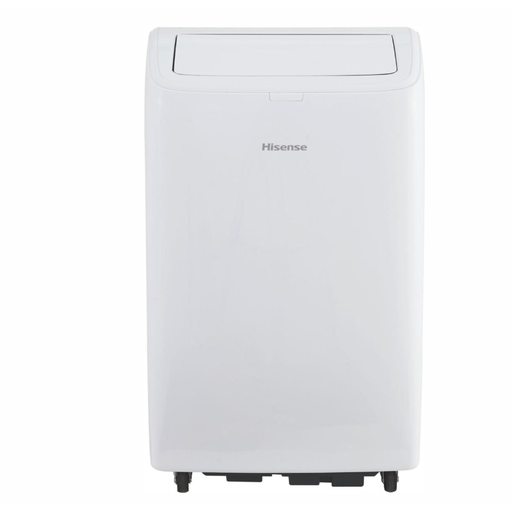
Why it stands out: The Hisense APC09QC is a compact and easy-to-use portable AC unit that focuses on its core function: efficient cooling. The integrated Wi-Fi feature offers modern convenience.
Features:
Who is it for? Ideal for users seeking a straightforward and efficient cooling solution for small to medium-sized rooms like bedrooms or home offices (up to approx. 25 m? / 270 sq ft) who appreciate the convenience of app control.
The models presented here already cover a wide range of needs. However, if you are looking for different performance levels, designs, or specific functions, other alternatives are available.
? Discover our entire selection of Room Coolers and find the perfect unit for your needs.
Yes, an air conditioner without an outdoor unit (monobloc design) always requires an exhaust hose. This hose directs the warm air extracted from the room outside, typically through a tilted window or a special wall vent. Without this hose, the heat would remain in the room, and the unit could not cool effectively. An exception is split units like the Midea PortaSplit-E, where an external unit handles heat dissipation.
The noise level is an important factor, especially in a bedroom or office. The noise emission is indicated in decibels (dB) and is listed on the energy label. Most portable air conditioners operate at a volume between 50 and 65 dB. Models with a special sleep mode reduce the fan speed and thus the noise level during the night.
Power consumption depends on the cooling capacity (BTU), the energy efficiency class, and the duration of use. A unit with 9,000 BTU and an energy efficiency class of A consumes about 1 kilowatt-hour (kWh) per hour at full power. Check the EU energy label, which provides the estimated hourly consumption in cooling mode, to better estimate potential operating costs.