
Lieferung heute & morgen

Qualitätsgarantie

Willkommens-Angebote freischalten: KOSTENLOSE Lieferung | Bis zu 80 % RABATT | Kostenlose 30-Tage-JoyPlus-Testphase
App herunterladen
The market for true wireless earbuds is saturated. Manufacturers tout impressive specs and features, but not every promise holds up in daily use. As a Joybuy Product Recommendation Officer, I'm here to help you distinguish essential features from the non-essential and make an informed decision. This guide will walk you through the most common pitfalls and what to look for when making your choice.
Many buyers are disappointed shortly after their purchase because the advertised features don't deliver in practice. Pay close attention to these three points to avoid falling into the same trap:
To avoid buyer's remorse, you should focus on objective, verifiable criteria. These three technical specifications reveal the true performance of a pair of earbuds.
Pay attention to two values: the runtime of the earbuds themselves and the total runtime with the charging case. For long workdays or travel, an earbud runtime of at least 6 hours per charge is recommended. A fast-charging feature, which provides 1-2 hours of playback after just 10-15 minutes of charging, is a practical advantage for daily use.
For good call quality, multiple microphones per earbud and noise-filtering software are essential. Look for terms like ENC (Environmental Noise Cancellation) or AI-powered noise reduction for calls. These technologies use algorithms to isolate your voice from ambient sounds, resulting in significantly clearer conversations.
The IP rating indicates how well a device is protected against the ingress of foreign objects (first digit) and water (second digit). For water-resistant sport earbuds, this is a critical criterion.
Instead of making a blanket recommendation, we've selected models tailored to specific use cases.

Why This Fits Their Persona: Offers a solid set of essential features, including modern Bluetooth 5.4 technology, good total battery life, and IP54 protection. Ideal for the daily commute to work or university without requiring a large investment.
Addresses the battery life issue with a clear spec of up to 7 hours per charge. The AI-enhanced call improvement is a realistic solution for better voice quality compared to models without this technology.
Long total battery life of up to 26 hours (according to the manufacturer) and an IP54 certification, which provides protection during light rain and workouts.

Why This Fits Their Persona: Designed for users who work in noisy environments like trains, planes, or cafés and value uninterrupted listening and clear calls. The very long battery life is ideal for long workdays and travel.
Instead of a vague ANC promise, this model offers adaptive noise cancellation up to -50dB with specific scene modes, according to the manufacturer. The 6-mic array with AI support directly addresses the problem of poor call quality in noisy surroundings.
Adaptive hybrid noise cancellation, a very long total battery life of up to 55 hours (according to the manufacturer), and a smart charging case with a touchscreen for controls.
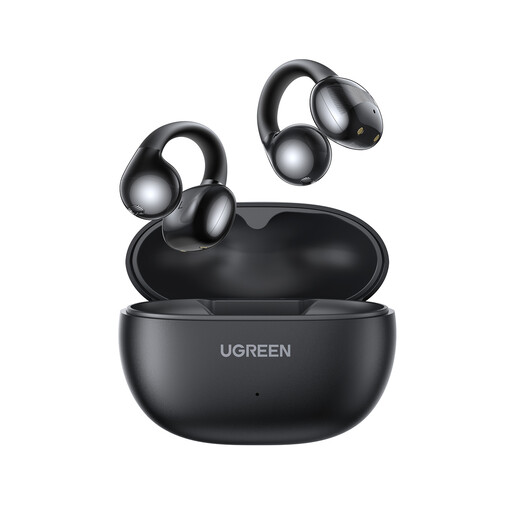
Why This Fits Their Persona: The open-ear design is a key safety feature for runners or cyclists in urban traffic, as important ambient sounds like traffic or warning signals remain audible. The IPX5 rating makes them resistant to sweat and rain.
This model doesn't promise total acoustic isolation; instead, it focuses on the specific use case where situational awareness is crucial. It sidesteps the exaggerated ANC trap by intentionally omitting the feature.
The open-ear design enhances safety during outdoor activities. The IPX5 water resistance provides reliable protection from the elements.
We have compiled a complete, up-to-date list of products that fully meet these strict selection criteria and UK/EU safety regulations.
The IP (Ingress Protection) rating classifies the degree of protection for an electronic device. The first digit (e.g., "5" in IP54) describes protection against solid foreign objects like dust. The second digit (e.g., "4" in IP54) describes protection against water. For sports, IPX4 (protection against splashing water) or higher is recommended.
The lifespan heavily depends on usage intensity and care. The limiting factor is typically the built-in battery, whose capacity can noticeably decrease after 2-3 years of daily use. Proper storage and avoiding deep discharges can extend their lifespan.
Yes, most modern true wireless earbuds support a "mono mode." You can choose to use just the left or the right earbud while the other remains in the charging case. This is practical for phone calls or when you want to keep one ear open to your surroundings. Check the product specifications to see if this feature is supported.