Truffle detail photographers
You want to show the coating, cocoa or cross-section of a single truffle in close-up. Focus on the lens’s magnification ratio, the distance from the front of the lens to your subject, and the depth of field.


For close-up details of individual truffles, a mirrorless camera with a suitable macro lens is the more targeted choice. For plates and arrangements, a compact camera with a zoom may be enough. What matters is the magnification ratio of the specific lens, the distance from your subject to allow side window light in, and whether you’d prefer to change lenses or have less flexibility for close-ups.
You want to show the coating, cocoa or cross-section of a single truffle in close-up. Focus on the lens’s magnification ratio, the distance from the front of the lens to your subject, and the depth of field.
You regularly take photos in changing daylight and want to control exposure, shadows and colours, rather than choosing a camera based on pixel count alone.
You want to photograph plates, packaging or several truffles from different angles. The right angle of view and a straightforward set-up may matter more than extreme close-ups.
A good fit if: You want to capture individual truffles and surface details in close-up, or plan to photograph a range of subjects in future.
The trade-off: A macro lens is not automatically included in a camera kit. A very short working distance can block side window light, and the depth of field becomes shallow at high magnifications.
A good fit if: You mainly want to photograph plates, several truffles and the occasional close-up without changing lenses.
The trade-off: Canon quotes a minimum focusing distance of around 5 cm at the wide-angle end and around 40 cm at the telephoto end for the Canon PowerShot G7 X Mark III. Both distances are measured from the front of the lens.
A good fit if: You want to see whether close-ups from your current device are good enough for the image sizes you have in mind.
The trade-off: Apple says that supported iPhones use the ultra-wide camera in macro mode. Check the framing and shadows on your own device, but don’t assume this makes it generally equivalent to a mirrorless camera.
| What you want to do | What to look for when buying | Who is this important to? |
|---|---|---|
| Show small details in close-up | Check the lens mount, magnification ratio and distance from the front of the lens. | If I want the coating, cocoa or cross-section to fill the frame, the lens’s close-up capability matters. Around 36% of consumers put details first. |
| Control light and colours | Check the specific camera’s exposure and white balance controls; consider your window position and whether you might need a reflector. | In changing daylight, I want to assess shadows and chocolate colours deliberately. Around 29% of consumers prioritise control over light and colour. |
| Find the right framing | Think about whether you’ll mostly take overhead shots, side views or close-ups; check the zoom’s close-up capability at the zoom setting you’ll use. | If I want to switch between a shot of a plate and a close-up of a single truffle, I need suitable angles of view. Around 21% of consumers prioritise flexibility in how they frame a shot. |
| Keep your overall kit manageable | Compare the camera body, lens and what’s included with the specific version; for close-ups, consider a stable set-up too. | If I want to set up and use as few components as possible, what’s actually included is key. Around 14% of consumers prioritise a simple overall set-up. |
A standard zoom can offer considerably less magnification for close-ups than a dedicated macro lens. According to Canon, the Canon RF-S 18–45mm has a maximum magnification of 0.16x at 45 mm with autofocus.
Compare the framing you need with the magnification ratio, and check exactly which lens is included in the offer.
For greater magnification, you may need an additional compatible lens.
With a zoom lens, the minimum focusing distance can change depending on the focal length. Also, the focusing distance is not the same as the clear space between the front of the lens and your subject.
Check the figures for the zoom setting you need, as well as the space in front of the lens, before positioning your camera and truffle by the window.
At close range, the area in focus becomes smaller. One shot may not always be enough to keep an entire stationary truffle sharp.
Decide which part you want in focus. If you plan to combine several focus planes, allow time for a stable set-up and the extra shooting and editing.
You may need a tripod or another stable surface to take multiple shots.
A voluntary warranty is not the same as your statutory consumer rights. The right to cancel a distance purchase is a separate right.
Check the warranty terms, the seller’s status and the information about possible returns separately.
Canon offers both EOS mirrorless cameras with interchangeable RF lenses and compact cameras with a built-in zoom lens.
The Z50II is a mirrorless camera. You can choose a compatible Z macro lens separately for close-up photography.
The α6400 is an APS-C camera with an E-mount; the SEL30M35 is a separate macro option for APS-C E-mount cameras.
The X-S20 is an APS-C mirrorless camera; the XF30mmF2.8 R LM WR Macro is a separate lens option for close-ups.
The OM-5 Mark II is a Micro Four Thirds mirrorless camera; the M.Zuiko Digital ED 60mm F2.8 Macro is a separate macro lens option.
The Joybuy products below are relevant to cameras for photographing truffles. Check the product listing to make sure the model, framing and what’s included are right for your plans.
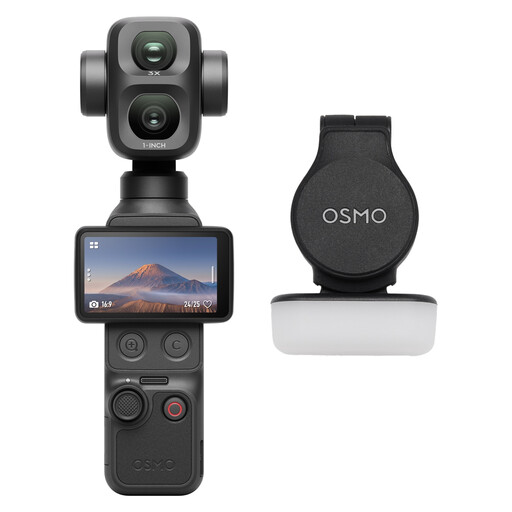 Image unavailable
If you’re considering this model for truffle photography, check that the framing and distance from the subject suit the close-ups or arrangement shots you have in mind.
 Image unavailable
The 16–50 mm power zoom named in the product title lets you change the framing for different views of plates and truffles. For small details, also check its close-up capability.
Product version: 16–50 mm power zoom and tilting screen.
No, not for every subject. A standard zoom or compact camera may be enough for plates and several truffles. If you want small details to fill the frame, compare the magnification ratio of the specific lens. The examples considered here range from 0.16x magnification with a standard zoom to dedicated 1:1 macro lenses.
For food photography, Nikon recommends daylight coming in from the side and suggests using white card opposite the window as a reflector. Take a test shot and check whether the camera or lens is casting a shadow on your subject. In changing daylight, you should also check the white balance.
The depth of field is shallow at close range. If your subject is still, you can set the camera on a stable surface, take several shots focused at different distances and combine them afterwards. Canon Academy describes focus stacking as an additional shooting and editing step.
Check whether you’re choosing a camera body, a zoom kit or an additional compatible macro lens. Nikon offers the Z50II as a body-only option and with a standard zoom; the NIKKOR Z MC 50 mm 1:2,8 is a separate lens. A voluntary manufacturer’s warranty is also separate from your statutory consumer rights.
For eligible online purchases from a professional trader, you generally have 14 days from delivery to cancel; exceptions and any return costs should be checked, as explained by the European Union’s Your Europe service. Under EU consumer protection rules, new goods bought from a professional trader generally come with at least two years of legal protection against faulty goods. Verbraucherzentrale distinguishes this statutory protection from a voluntary warranty; the rules for purchases from traders do not apply in the same way to private sales.