
Lieferung heute & morgen

Qualitätsgarantie

Willkommens-Angebote freischalten: KOSTENLOSE Lieferung | Bis zu 80 % RABATT | Kostenlose 30-Tage-JoyPlus-Testphase
App herunterladen
Precision is the cornerstone of high-quality results in professional trades and demanding DIY projects. A try square set is a fundamental part of the toolkit for carpenters, joiners, and anyone who needs to work with exact measurements and angles. Choosing the right set depends on specific requirements for material, accuracy, and functionality. This article breaks down the technical criteria for selection and presents a curated range of tools suitable for various applications.
The decision to purchase a woodworking measurement tool set should be based on a rational evaluation of its technical features. The following parameters are crucial for making an informed choice.
The material influences the durability, weight, and accuracy of a square.
The markings are critical to the tool's functionality.
A set often offers more than just a simple square.
Based on the technical criteria mentioned above, we present a selection of tools that are distinguished by their specific features for different use cases.
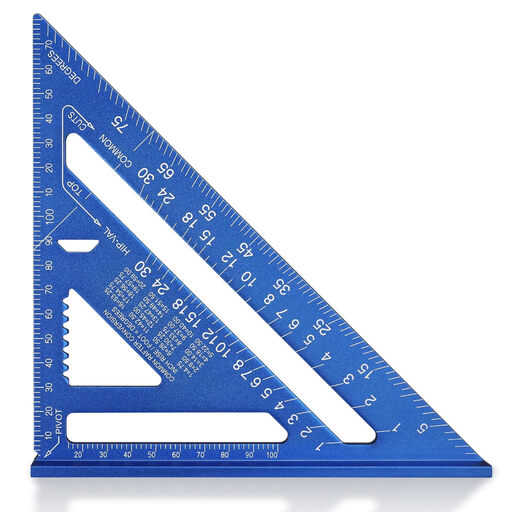
Why We Recommend This Product: The WORKPRO Speed Square is a multifunctional tool that combines the functions of a protractor, mitre square, saw guide, framing square, and ruler into one compact design. Its construction from an aluminium alloy with a matte, non-glare finish ensures durability and excellent legibility.
Advantages:
Who It's For: This tool is an excellent choice for carpenters, roofers, and DIY enthusiasts who need a versatile and robust marking and measuring tool for on-site work or for projects involving variable angle cuts.
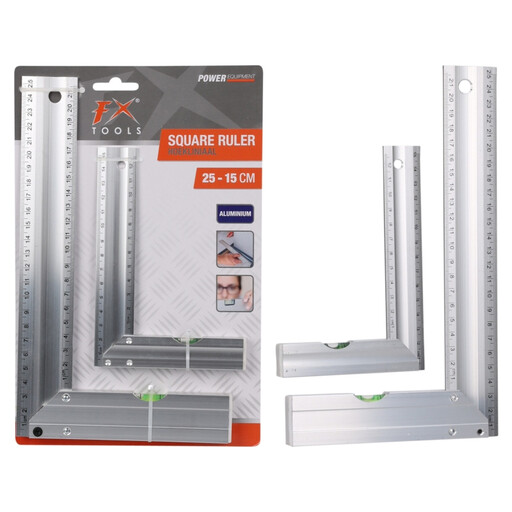
Why We Recommend This Product: This set provides two try squares in the practical sizes of 15 cm and 25 cm. The integration of a spirit level into the aluminium stock enhances functionality, allowing angles and alignment to be checked in a single step. The robust construction is designed for use on construction sites and in workshops.
Advantages:
Who It's For: Ideal for joiners, cabinet makers, and ambitious DIY enthusiasts who need a reliable carpenter's square set for precise 90-degree angles and alignment tasks. The two sizes offer flexibility for different project scales.
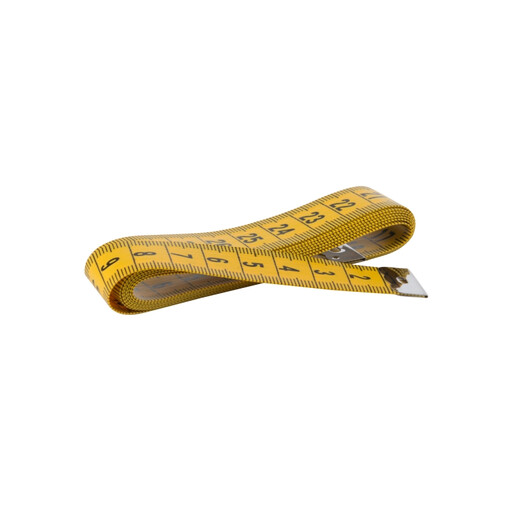
Why We Recommend This Product: A tape measure is an indispensable addition to any square set. The H165 model from BAKAJI, with its 150 cm length, flexible PVC material, and double-sided printing, is a practical tool for length measurements. The striking yellow colour ensures high visibility in any work environment.
Advantages:
Who It's For: This tape measure is a universal addition for any tradesperson or DIY enthusiast. It is particularly useful for tailoring, crafts, and any DIY projects that require flexible length measurements.
The products featured here represent a selection tailored to specific use cases. For a more comprehensive range of specialised tools, including digital angle finders, additional square sizes, and other precision instruments, you can visit our main category for Measuring Tools.
1. What is the difference between a framing square and a try square? A try square (or carpenter's square) typically consists of a fixed 90-degree angle with a thicker stock and a thinner blade. It is primarily used for checking and marking 90-degree angles. A framing square (often designed as a Speed Square) is a triangular ruler that, in addition to the 90-degree angle, also features scales for measuring and marking any angle (typically 0-90 degrees) and often includes special markings for roof construction.
2. Why is aluminium a common material for try squares? Aluminium offers an optimal strength-to-weight ratio. It is light enough for comfortable handling over extended periods, yet rigid enough to maintain its precision. Furthermore, it is naturally corrosion-resistant, which increases the tool's longevity, especially when used on construction sites with changing weather conditions.
3. How do I maintain my squares to preserve their accuracy? To ensure the accuracy of your measuring tools, they should be protected from drops and heavy impacts. Clean the surfaces with a dry cloth after use to remove dirt and moisture. Store the squares either hanging or lying on a flat surface to prevent warping. Regularly check the accuracy of the 90-degree angle by scribing a line, flipping the square over, and drawing a second line right next to it—the two lines must be perfectly parallel.