Households with lots of bedding
If you regularly dry large bedding items that are suitable for tumble drying according to their care labels, compare the size of your actual loads with the dryer’s capacity and suitable programmes.


Choose a tumble dryer based on the size of your usual bedding loads and whether its programmes are suitable for the fabrics you need to dry. The stated capacity alone doesn’t guarantee that your items will dry properly. Muddy outdoor clothing must first be cleaned in a way that’s suitable for the material, and should only go in the dryer if the care label and programme instructions allow it. Compare energy use using the same current EU energy label, and check the dimensions and maintenance requirements against the space where you plan to put the dryer.
If you regularly dry large bedding items that are suitable for tumble drying according to their care labels, compare the size of your actual loads with the dryer’s capacity and suitable programmes.
If you often have muddy technical clothing to deal with after trips out, you’ll need a process that includes cleaning it appropriately for the material and drying it according to the care label.
If you dry clothes regularly, it’s worth looking at the energy use on the label, whether the capacity suits your loads and how much maintenance the appliance needs.
First compare the programmes and load limits for your fabrics, then look at capacity and energy use. Since 1 July 2025, the European Commission has required household tumble dryers sold in shops and online to display the EU energy label, with its A to G scale. The energy-use figure is based on 100 Eco cycles.
| What matters | What to check before buying | Who should pay particular attention? |
|---|---|---|
| Large bedding | Check the capacity, drum opening and programme guidance for bedding against the size of your usual loads. | If I regularly dry large bedding, I want to know whether the load and the appliance are a good match. Around 33% of consumers focus on whether a dryer can handle large bedding items. |
| Outdoor fabrics | Check the care label and programme instructions; clean muddy items in a way that’s suitable for the material before drying. | If I want to dry muddy technical clothing, I first need to know how it can be cleaned and whether it’s suitable for machine drying. Around 27% of consumers prioritise caring for outdoor fabrics. |
| Energy use | Compare kWh per 100 Eco cycles on the same energy label and take your expected usage into account. | If I have laundry to dry regularly, I want to be able to estimate energy use over many drying cycles. Around 20% of consumers pay particular attention to running costs. |
| Installation and maintenance | Check the appliance dimensions and required clearance, the water tank or drain connection, and the cleaning instructions. | If space or access to a drain is limited, I want to check in advance whether the appliance will be practical to install and maintain there. Around 20% of consumers put installation and maintenance first. |
The stated capacity alone doesn’t tell you whether a particular item will fit in the drum or can be dried using the programme you’ve chosen. According to the German Environment Agency, a large dryer that’s often only half full can use more energy per kilogram of laundry than one that’s loaded to suit its capacity.
Compare your usual loads with the capacity and programme instructions, and check the guidance for large individual items separately.
Whether an item can be tumble dried depends on its care label. GORE-TEX highlights the importance of following the care instructions for each garment; these instructions don’t automatically apply to other materials. A programme won’t remove mud, either.
Clean muddy items in a way that’s suitable for the material first, then check the care label and the instructions for the programme you plan to use.
Since 1 July 2025, the European Commission has required household tumble dryers sold in shops and online to display the energy label with its A to G scale. The stated energy use is based on 100 cycles using the Eco programme.
Compare models using the current label and the kWh figure on the same basis.
The legal take-back of an old appliance and services such as disconnection or installation are separate things. Section 17 of the German Electrical and Electronic Equipment Act (ElektroG) sets out the take-back requirements under certain conditions.
Before placing your order, check how the old appliance will be taken back and whether disconnection or installation needs to be arranged separately.
For the TR9W80799, AEG lists a 9 kg capacity and Bedding XL and Outdoor/Impregnation programmes. This could be worth considering for households that regularly dry both types of fabric.
According to Bosch, the Bosch Serie 8 WRB247C40 is a heat-pump tumble dryer with a 9 kg capacity, a reversing drum and a self-cleaning condenser.
According to Beko, the Beko B5T69219 is a heat-pump tumble dryer with a 9 kg capacity, moisture sensors and an energy efficiency rating of B.
According to Miele, the Miele TE310I WP is a heat-pump tumble dryer with a 9 kg capacity and DryCare 40 and HygieneDry programmes.
This selection of heat-pump tumble dryers is aimed mainly at households that dry bedding; some models also list programmes for suitable outdoor fabrics. Always follow the care label and programme instructions, and clean muddy clothing before drying.
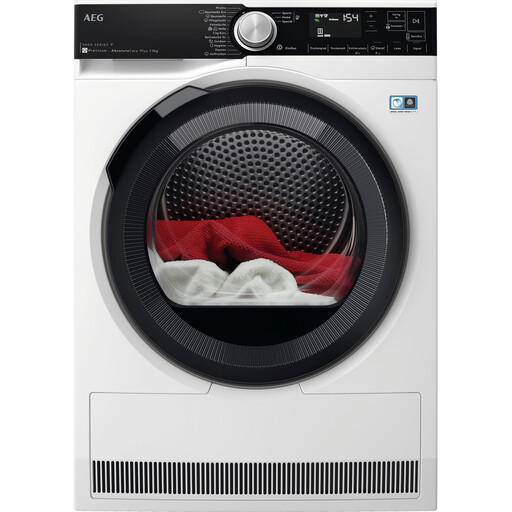 No image available
For large items of bedding that are suitable for tumble drying, the stated capacity and listed Bed Linen XL programme are worth noting. A programme for suitable outdoor fabrics is also listed. Check the care labels and programme instructions before use.
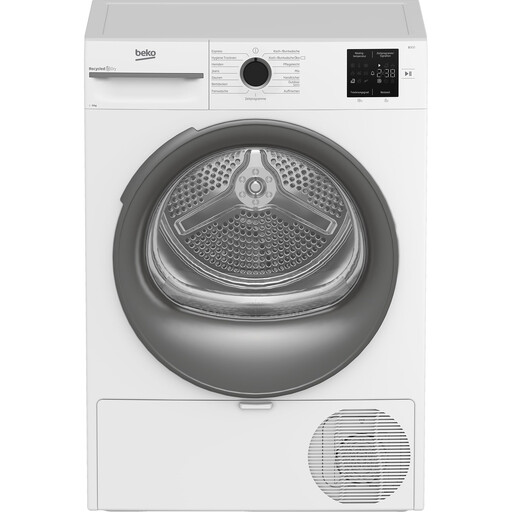 No image available
The capacity and programmes listed in the product name may be useful for larger bedding loads. Check the programme instructions against the care labels on your fabrics.
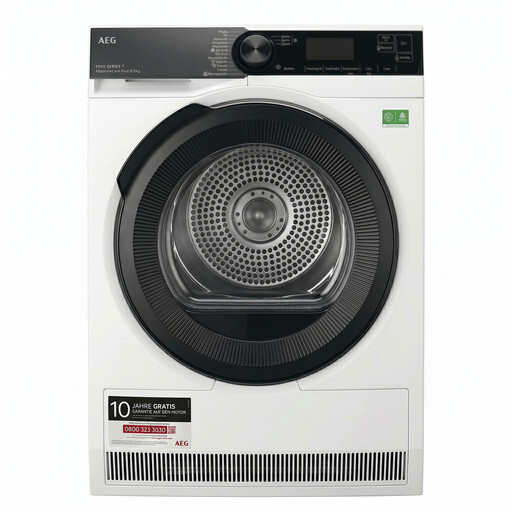 No image available
Programmes are listed for bedding suitable for tumble drying and suitable outdoor clothing. For each item, check that the care label and programme instructions allow machine drying.
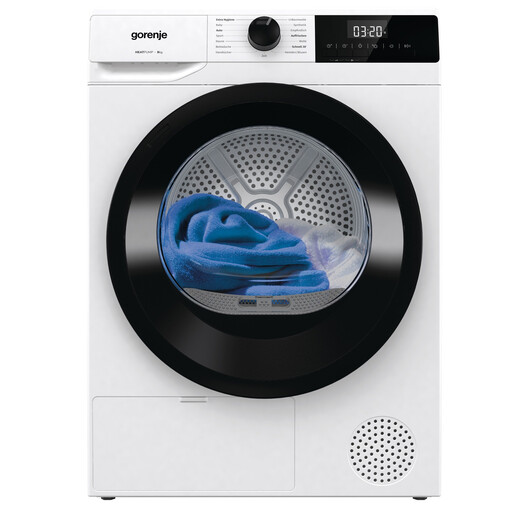 No image available
The stated capacity and the Bedding XL programme listed in the product specifications may help you choose a dryer for large items of bedding that are suitable for tumble drying. Check the appliance dimensions and the care instructions for your fabrics.
 No image available
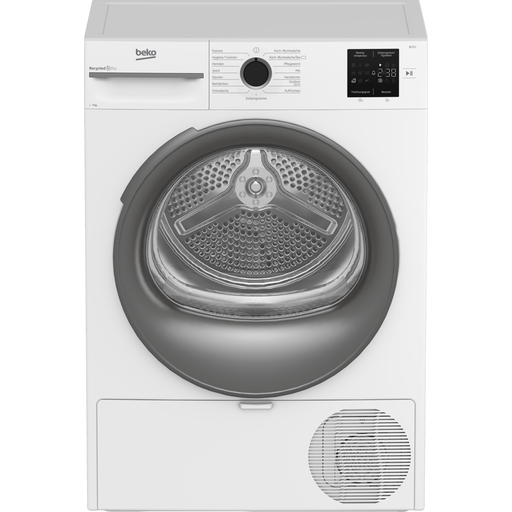
Programmes are listed for suitable outdoor clothing and bedding. The capacity is 7 kg, so compare it with your usual loads and follow the care labels.
No. Clean it first, following the care instructions for the garment. GORE-TEX recommends checking the relevant care label; whether you can then tumble dry the item depends on the specific garment.
It shows the energy used for 100 drying cycles with the Eco programme. To estimate your own costs, multiply the label figure by your expected number of drying cycles divided by 100, then multiply that by your electricity price per kWh. Other programmes may use different amounts of energy.
No. A condenser dryer doesn’t need an exhaust outlet to the outside. Depending on the model, condensate is collected in a tank or drained away; check the appliance’s installation instructions for details.
According to the European Commission, the EU energy label with its A to G scale must be displayed in shops and online from 1 July 2025. Older ratings on a different scale aren’t directly comparable with the current classes.
Under Section 17 of the German Electrical and Electronic Equipment Act (ElektroG), when you buy a similar new appliance from a retailer that is required to accept returns, you’re entitled to free take-back under certain legal conditions. If the new appliance is delivered to your home, the legislation also provides for free collection of the old appliance under certain conditions. Disconnection and installation are separate services.