What should a shared household look for?
First, compare your most common bedding loads with the appliance’s programme limits. Then check the energy consumption and installation details to understand what day-to-day shared use will involve.
| Buying consideration |
What to look for |
Who will find this particularly important? |
| Large bedding loads |
Check the rated capacity, whether there’s a bedding programme or reversing drum action, and the load limit for the specific programme. |
If I often dry large duvet covers, I want to avoid them tangling together or staying damp inside. Roughly 28 % of consumers who prioritise suitability for bedding do so. |
| Energy consumption |
Compare kWh per 100 Eco cycles and Eco cycle duration on the current label. |
If we use the tumble dryer often, I want to compare the energy needs of different models on the same basis. Around 22 % of consumers put running costs first. |
| Noise and room climate |
Check the noise level in dB(A), condensation efficiency and ventilation options at the intended location. |
If the appliance is near shared living areas, I want to take noise and moisture in the utility room into account. Roughly 22 % of consumers prioritise peace and the room climate. |
| Available space |
Check the appliance dimensions, door clearance and installation requirements. If stacking, check that the appliances and stacking kit are compatible too. |
If space is limited, I want to know whether the appliance will fit with the door open and can be installed safely. Around 17 % of consumers first consider whether it will fit in the intended space. |
| Maintenance for shared use |
Check how easy it is to access the filters, the cleaning instructions and whether the specific model can drain condensation water directly. |
If we share the appliance, I want to be able to organise cleaning and emptying clearly. Roughly 11 % of consumers put ease of maintenance first. |
Joybuy products for bedding
These heat pump tumble dryers include details of bedding programmes or corresponding drum movements. Compare their capacity and other model features with your loads and the installation location.
 No image available
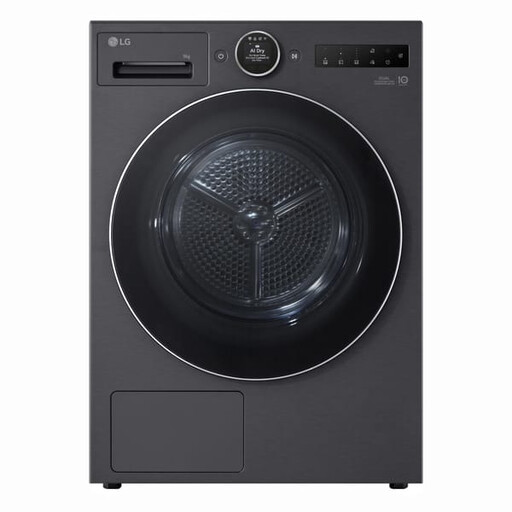
LG RT90X9B heat pump tumble dryer, 9 kg
A bedding programme is listed for large bedding loads; also check its permitted load limit.
9 kg; 79 kWh per 100 cycles; 60 dB; 91 % condensation efficiency; self-cleaning condenser unit.
Joybuy
 No image available
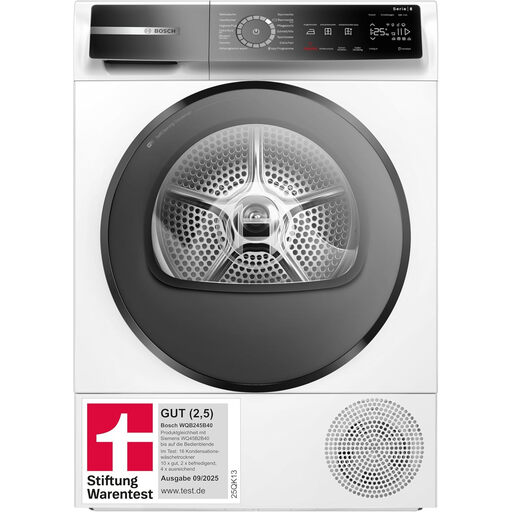
Bosch WQB245B40 Series 8 heat pump tumble dryer, 9 kg
This model has a bedding programme and reversing drum action; check the programme’s load limit for your duvet covers.
9 kg; 110 kWh per 100 cycles; 61 dB(A); 88 % condensation efficiency; half-load option; self-cleaning condenser.
Joybuy
 No image available
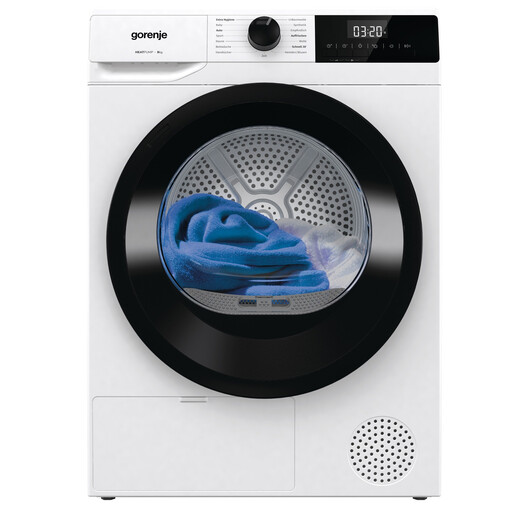
Gorenje DHNE82 heat pump tumble dryer, 8 kg
A Bedding XL programme and reversing drum action are listed for bedding.
8 kg; 119 kWh per 100 cycles; 85 % condensation efficiency; 64 dB; automatic water drainage.
Joybuy
 No image available
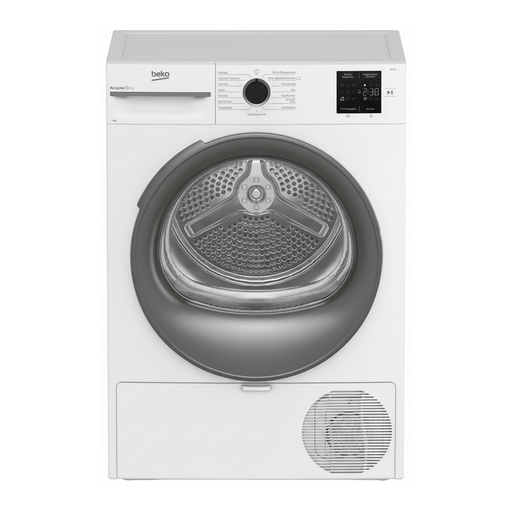
Beko BM3T38210W1 heat pump tumble dryer, 8 kg
The programme list includes Bedding and Down; check which load limits apply to your fabrics.
8 kg; 15 programmes; delay start up to 24 hours; filter cleaning and water tank emptying indicators.
Joybuy
 No image available
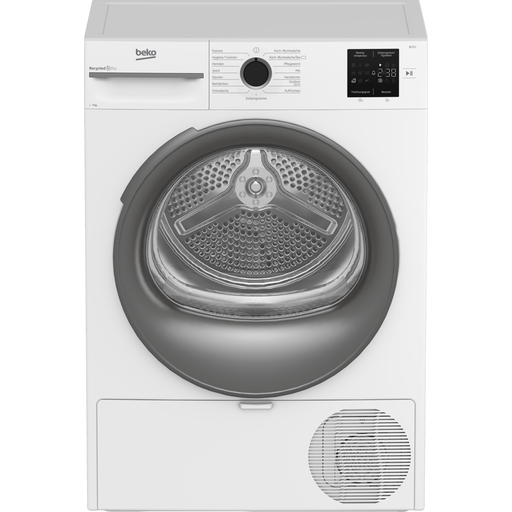
Beko BM3T37210W1 heat pump tumble dryer, 7 kg
This model has a Bedding programme and reversing drum action; make sure its 7 kg capacity suits your actual loads.
7 kg; energy class E; 82 % condensation efficiency; combined filter mechanism.
Joybuy
Frequently asked questions
Can every duvet cover that’s suitable for tumble drying be dried using the same setting?
No. The care label on each item tells you how it can be treated; the dots in the tumble-drying symbol indicate the permitted drying conditions. Also check the load limit for the programme you select.
What can I do if duvet covers are still damp inside?
Check the programme and load limit, empty the condensation water container and clean the filters as instructed in the appliance manual. Depending on the model, a bedding programme may be a suitable option for items of different thicknesses; AEG Customer Service also recommends using a timed programme for extra drying.
Can I put the tumble dryer on top of our shared washing machine?
Only if both appliances are suitable for stacking and you use a compatible stacking kit. Follow the installation instructions for the specific appliance combination; if you’re unsure, Bosch recommends contacting a qualified service technician.
Which energy label must be displayed when buying in Germany?
Since 1 July 2025, household tumble dryers sold in the EU have used the A–G scale; according to the European Commission, the label must also be displayed online. An older A+++ rating isn’t directly comparable with the current scale. The rules for separate household tumble dryers don’t apply in the same way to washer-dryers.
Where should I take an old tumble dryer?
Don’t put an old appliance in your household rubbish. The German Federal Government lists local recycling centres as a place to drop it off; if a retailer offers a take-back service, the terms of that offer apply.


