Households with large bedding loads
If you dry large covers, the permitted load for the programme you choose matters – not just the drum’s rated capacity.


Choose a dryer that fits the available space and door clearance in your shared utility room, and whose selected programme can handle your usual bedding load. A dedicated bedding programme with drum reversal can be a useful feature for large covers, but Bosch says it does not guarantee a particular drying result. Also compare energy consumption, condensation efficiency and noise figures on the same label basis.
If you dry large covers, the permitted load for the programme you choose matters – not just the drum’s rated capacity.
The space available, door clearance, moisture released and noise all need to work for everyone sharing the room.
If you dry clothes frequently, comparable label figures and a suitable load size can help you assess what you need from an appliance.
First check programme capacity and the space you have available. Then compare energy consumption, moisture released and noise using figures for the specific appliance.
| Consideration | What to check when buying | Who is this important to? |
|---|---|---|
| Bedding and programme capacity | Check your usual dry load, the programme table and, where available, a bedding programme with drum reversal. | If I dry large covers, I want to know whether my usual bedding load will fit the selected programme. Around 31% of consumers prioritise a suitable load and programme. |
| Fitting the appliance in a shared laundry room | Check the appliance dimensions, route into the room, door clearance and rules for using the space. | If several people use the room, I need enough space to install and use the appliance without blocking access. Around 25% of consumers say installation is their main concern. |
| Energy use if you dry clothes frequently | Compare kWh per 100 Eco cycles on the current energy label and take your typical load size into account. | If I have laundry to dry regularly, I want to compare standardised energy use and make sure the appliance is suitably loaded. Around 25% of consumers put running costs first. |
| Moisture and noise in the room | Compare condensation efficiency and the noise level in dB(A) on the label; follow the installation and ventilation guidance. | If I share the utility room with others, I consider how much moisture the appliance releases into the room and how noisy it is. Around 19% of consumers prioritise these factors. |
The rated capacity may differ from the permitted load for the bedding programme. According to the manufacturer’s instructions, overloading the drum can affect drying results.
Check the programme table against your usual dry load. Treat a bedding programme or drum reversal as a potential help, not a guarantee of results.
An unsuitable programme load may mean extra cycles and keep the shared appliance occupied for longer.
Since 1 July 2025, household tumble dryers have used the EU scale from A to G. This means an older A+++ label cannot be directly compared as a class rating.
Compare the figures on the current label, particularly consumption in kWh per 100 Eco cycles. The Verbraucherzentrale recommends using this figure as the basis for comparing energy use.
The appliance dimensions alone won’t tell you whether the door can open or whether other users will have enough access. If you plan to stack appliances, the dryer, washing machine and connecting parts must also be compatible.
Measure the space, route into the room and door clearance, and check the rules for using the room. Consult the instructions for the specific model and, for a stack, check that the accessories are compatible.
An unsuitable installation may mean extra work or expense to change the layout or buy compatible stacking accessories.
The WQG233DR91 is an example of a model with a 9 kg rated capacity and a dedicated bedding programme.
The TWC640WP is an 8 kg model with integrated condensate drainage and a reversible door.
The TR8BW80690 is a heat pump model with a 9 kg rated capacity and programmes for mixed loads.
The DV90F09F4SU2 is a heat pump tumble dryer with a 9 kg rated capacity.
The B3T42249S is a documented 8 kg heat pump model with sensor drying.
This selection features heat pump tumble dryers. For each model, check that the permitted load for the programme you want to use suits your bedding, and that there is enough room to install the appliance in your shared laundry room.
 No image available
Check the programme table to see whether the permitted load for the programme you want to use suits your dry bedding load.
 No image available
The stated capacity is a useful starting point, but check it against the programme table for the bedding you want to dry.
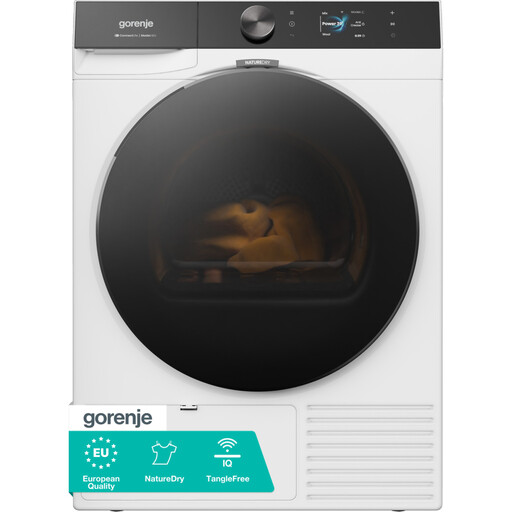 No image available
If you dry bedding, check the programme table and permitted load; the rated capacity alone won’t answer this question.
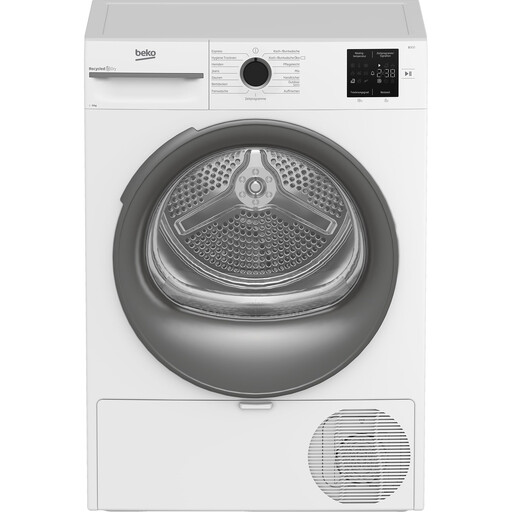 No image available
Check whether the model’s programme table covers bedding and what load is permitted for the programme you want to use.
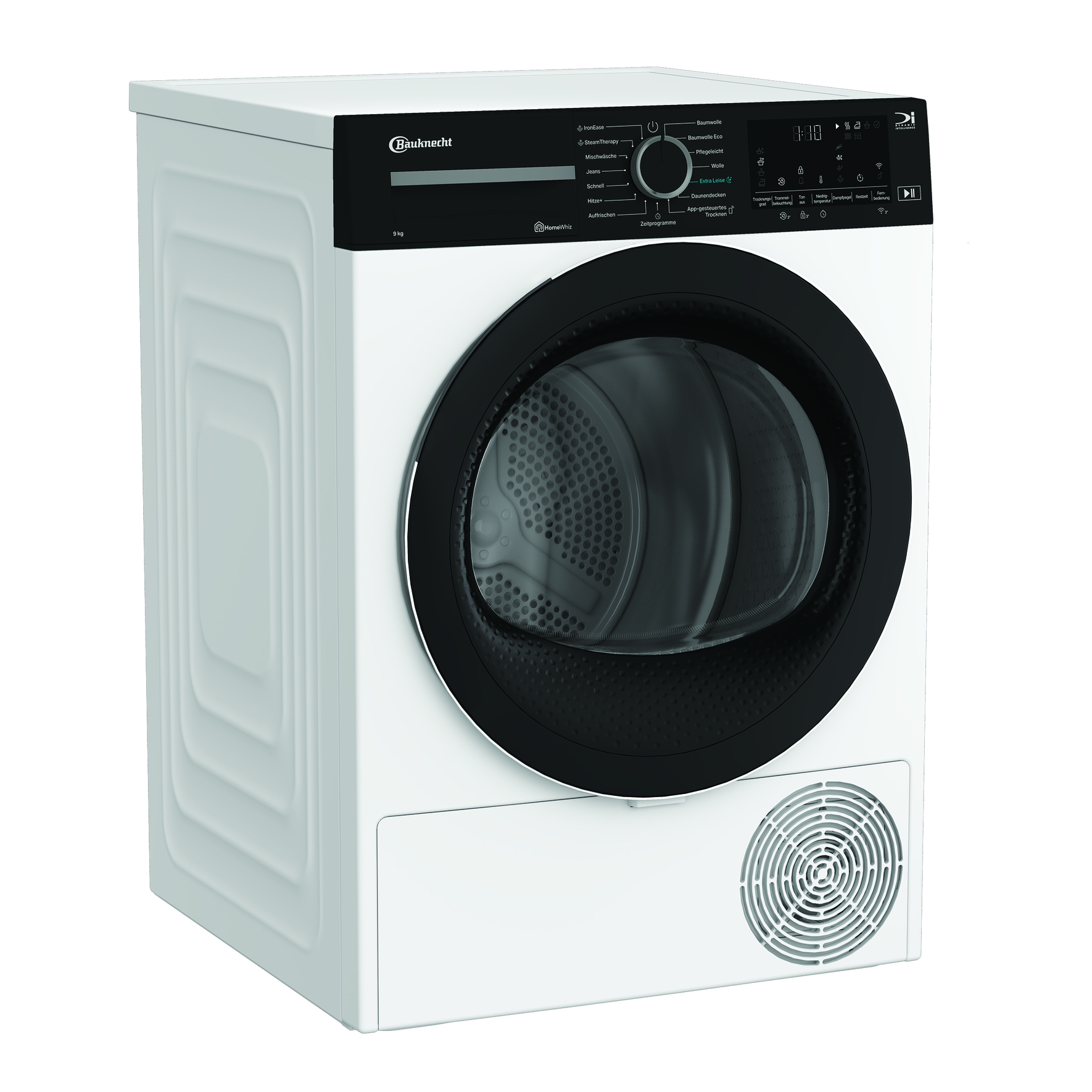 No image available
Compare the permitted load for the bedding programme with your usual load; the rated capacity alone doesn’t confirm that the programme can handle it.
Not necessarily. The rated capacity and the permitted load for the programme you choose may differ. Check the programme table against your dry load and follow the care labels.
Clean the fluff filter and condenser according to the instructions for the specific appliance. In a shared laundry room, also agree who is responsible for cleaning and emptying the condensate container.
Not for every model. You can empty a condensate container, while some appliances can use a hose to drain water directly. Before deciding where to install the appliance, check the model’s connection options, the available drain and the manufacturer’s instructions.
Compare standardised energy use in kWh per 100 Eco cycles on the same label basis. Also check whether your plans involve delivery or installation costs and, for a stacked setup, the cost of a compatible stacking kit.
Since 1 July 2025, the EU label has used classes A to G, as explained by the Federal Institute for Materials Research and Testing. A repairability class will only become a mandatory part of the label from 1 January 2027; an older A+++ label is not directly comparable with a current class rating.