For tumble-dryer-safe bedding in a small laundry area, start by checking the available space and the size of your largest typical load. Then look for a suitable bedding programme, check the current EU energy label and make sure the appliance can be installed safely. A separate heat pump tumble dryer may be an option if you have space for two appliances or can safely stack compatible models. A washer-dryer takes up just one appliance space, but, according to the consumer advice centre, it cannot dry a full washing load in one go and uses more electricity and water than separate appliances.
Who should consider this buying decision?
Households with large bedding
If you regularly dry duvet covers or sheets that are suitable for tumble drying, check your usual load size and how the items move around in the drum. GINETEX Germany explains the care symbols on textiles, while Bosch lists a bedding programme with reverse drum action for the WQG233DR91.
Households with a small laundry area
If space is limited, check the appliance depth, room to open and operate it, and whether it can be safely stacked with your washing machine. Beko gives a depth of 54,5 cm for the BM3T38210W1; Bosch notes that stacking requires a compatible stacking kit.
Households that tumble dry frequently
If you use a tumble dryer regularly, compare consumption figures on a like-for-like basis and check what’s involved in managing condensation and cleaning the appliance. The consumer advice centre recommends checking electricity consumption and comparing appliance specifications on a consistent basis.
What should you look for when buying?
A separate tumble dryer next to the washing machine
Suitable if: you have space for two appliances and regularly dry larger bedding loads.
Consider: the tumble dryer needs additional floor space. Capacity alone does not tell you whether large items will have enough room to move around in the drum.
A washer-dryer stack
Suitable if: floor space is limited and both appliances are compatible with the stacking kit you intend to use.
Consider: stacking saves floor space, but you’ll need enough height, room to operate both appliances and a secure installation. Bosch advises placing the tumble dryer on top.
A washer-dryer
Suitable if: you can’t fit a second appliance or a suitable stack, and the drying capacity is enough for your usual amount of bedding.
Consider: the consumer advice centre notes that washer-dryers use more electricity and water than separate appliances. They also cannot dry a full washing load in one go.
| Priority |
What to check when buying |
Who it matters most to |
| Bedding load |
Check the care label and compare your largest usual load with the stated capacity; check whether the specific model has a bedding programme and reverse drum action. |
If I want to dry large duvet covers and sheets without overloading the appliance, the programme and load size need to work together. Around 34 % of consumers would put suitability for bedding first. |
| Space and installation |
Measure the appliance, door swing and operating space; if stacking, check that both appliances are compatible with the stacking kit. |
If my laundry area has little floor space, I want to know whether one appliance will fit or a safe stack is possible. Around 33 % of consumers would prioritise suitable dimensions and installation. |
| Energy use and moisture |
Compare kWh per 100 Eco drying cycles and condensation efficiency on the EU label; don’t assume Eco figures apply to every bedding programme. |
If I tumble dry frequently, I want to compare energy use on a like-for-like basis and consider moisture in a small room. Around 20 % of consumers would make running costs their main priority. |
| Noise |
Check the noise level in dB(A) and the noise emission class for the specific model; don’t assume an optional quiet mode matches the label measurement. |
If the laundry area is close to living spaces, I want to take the noise level into account when deciding where to place the appliance. Around 13 % of consumers would prioritise an installation that causes as little disturbance as possible. |
According to the European Commission, the EU energy label for tumble dryers has used an A to G scale since 1 July 2025. The consumer advice centre recommends comparing electricity use in kWh per 100 Eco drying cycles; this figure is not a promise of consumption for every other programme.
Avoid common misconceptions
-
Assuming a capacity of 8 or 9 kg guarantees suitable drying for bedding
The stated capacity is no substitute for checking the care label and making sure the programme is suitable for the load you’re drying.
Compare your largest items that are suitable for tumble drying with the programme guidance for the specific model. GINETEX Germany explains which textiles can be tumble dried.
-
Measuring only the appliance depth or stacking appliances without a suitable kit
A shallow appliance doesn’t necessarily leave enough room to open and operate it, or guarantee that it can be installed safely.
Measure the available space and check that both appliances are compatible with the stacking kit you intend to use. Bosch recommends using a suitable stacking kit and placing the tumble dryer on top.
-
Comparing washer-dryers and separate tumble dryers by space alone
The consumer advice centre notes that a washer-dryer cannot dry a full washing load in one go and uses more electricity and water than separate appliances.
Compare the drying capacity with the amount of bedding you usually wash, and check the relevant energy figures on the label.
-
Comparing old A+++ ratings directly with the current scale
According to the European Commission, the current EU label has used an A to G scale since 1 July 2025.
Compare current product information using the same label basis, and also check the energy use in kWh per 100 Eco drying cycles.
Key brands at a glance
Bosch
The WQG233DR91 heat pump tumble dryer combines a stated capacity of 9 kg with a bedding programme and reverse drum action.
- Bosch lists a half-load option and moisture control for this model.
- The external dimensions are 842 × 598 × 613 mm. Check whether this specific appliance fits your laundry area; these features don’t necessarily apply to other Bosch tumble dryers.
Beko
The BM3T38210W1 is an 8 kg heat pump tumble dryer, and its stated depth may be useful if space is tight.
- Beko gives a depth of 54,5 cm and an efficiency class of E for this model.
- The dimensions alone don’t confirm that the tumble dryer will fit in your available space. Check the manual to make sure the programmes and capacity are suitable for your bedding.
AEG
The TR8SWEX is an 8 kg option with stated condensation efficiency figures and a quiet mode.
- AEG states that this model has 86 % condensation efficiency and a noise level of 64 dB(A); it is 66 cm deep. AEG also says it can be stacked using an intermediate stacking kit.
- The manufacturer’s claim about gentle fabric care is not independent proof that the appliance is suitable for drying bedding. Check that the installation and programme meet your needs.
Miele
The TWC640WP is an 8 kg heat pump tumble dryer with app controls that you can weigh up against your own needs.
- Miele lists Miele@home and DryProtect as features of this model.
- App features don’t prove that a tumble dryer is especially suitable for bedding, and they won’t be essential for every household.
Joybuy products: separate tumble dryers
The products below are separate heat pump tumble dryers for households looking to compare their available space and bedding loads with the specifications of each model.
 No image available
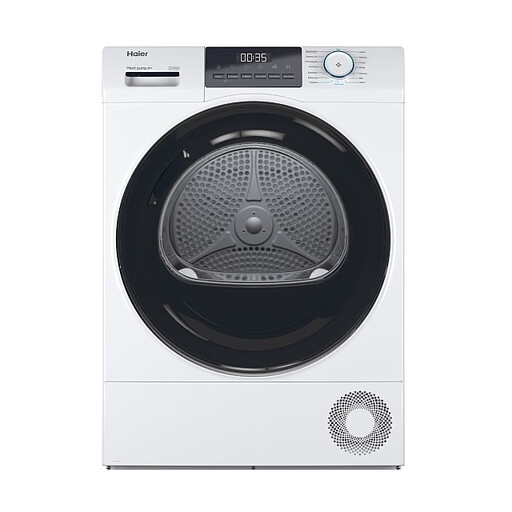
Haier I-Pro 1 HD80-E929E-DE, 8 kg heat pump tumble dryer
This separate 8 kg heat pump tumble dryer may suit you if its stated capacity matches your usual bedding load.
Heat pump technology; stated capacity: 8 kg.
View at Joybuy
 No image available
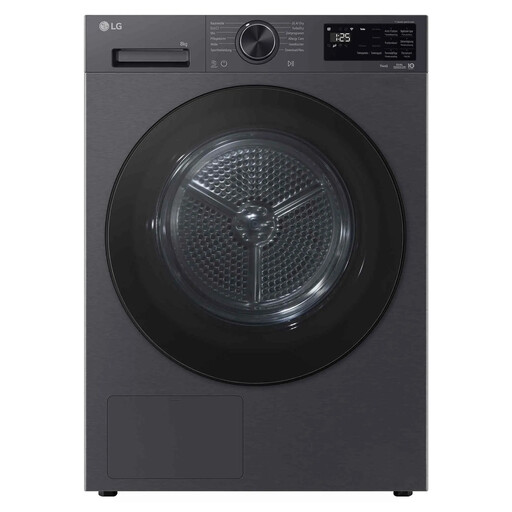
LG RT80X7B, 8 kg
This freestanding heat pump tumble dryer has a stated capacity of 8 kg. Compare it with your bedding load and the space available.
Heat pump technology; stated consumption: 85 kWh per 100 cycles; appliance depth: 66 cm.
View at Joybuy
 No image available
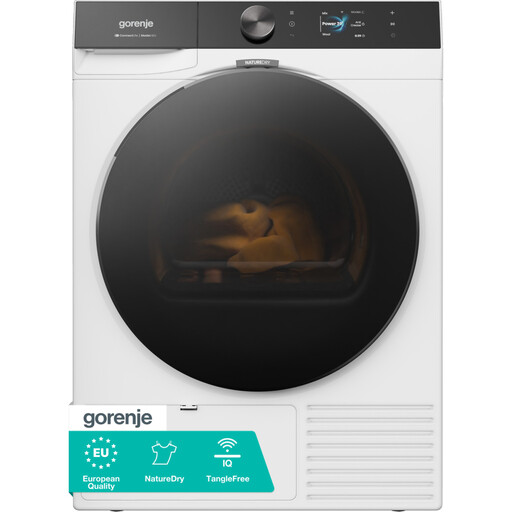
Gorenje DG89BP, 9 kg
For bedding, you can compare the specifically listed Bedding XL programme with your own load and the care labels.
Heat pump technology; stated capacity: 9 kg; Bedding XL programme; reverse drum action; stated consumption: 119 kWh per 100 cycles; condensation efficiency: 85 %; appliance depth: 550 mm.
View at Joybuy
 No image available
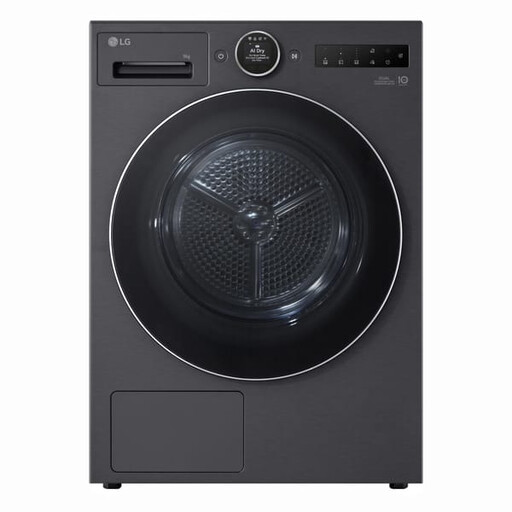
LG RT90X9B, 9 kg
This model lists a bedding programme. Before choosing it, check that the programme guidance suits your bedding.
Heat pump technology; stated capacity: 9 kg; stated consumption: 79 kWh per 100 cycles; condensation efficiency: 91 %; appliance depth: 660 mm.
View at Joybuy
 No image available
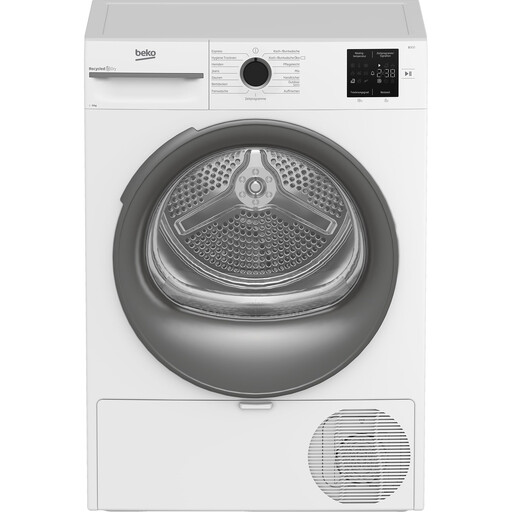
Beko BM3T39210W1, 9 kg
Compare the listed bedding programme and 9 kg stated capacity with the amount of bedding you usually dry.
Heat pump technology; 15 programmes; door opening: 34 cm; appliance depth: 60,7 cm; efficiency class E.
View at Joybuy
Frequently asked questions
Can all bedding go in the tumble dryer?
No. Check the care label on every duvet cover and sheet. The tumble-drying symbol tells you whether it can go in the drum and whether a lower temperature is needed; a crossed-out symbol means it must not be tumble dried. GINETEX Germany explains textile care symbols.
Can I simply put the tumble dryer on top of the washing machine?
Not without checking that the appliances and installation are suitable. Bosch recommends placing the tumble dryer on top and using a compatible stacking kit. Check that your specific appliances are compatible and follow the installation instructions in their manuals.
What regular maintenance does a tumble dryer need?
Clean the lint filter and condenser in line with the instructions for your appliance. The consumer advice centre warns that lint and dust building up inside the appliance can create a fire risk.
Does the A+++ label still apply to new tumble dryers?
The current EU energy label has used an A to G scale since 1 July 2025. According to the European Commission, it shows information including energy use per 100 Eco drying cycles, capacity, condensation efficiency and noise emissions. Older A+++ ratings are not directly comparable with the new scale.
Is a washer-dryer a space-saving alternative?
A washer-dryer takes up just one appliance space, but, according to the consumer advice centre, it cannot dry a full washing load in one go and uses more electricity and water than separate appliances. Check whether its drying capacity is enough for your bedding and whether the space saved is worth those compromises.


