What should you look for when buying?
First, match your usual tumble-dryer-safe loads to the drum size. Then compare Eco energy consumption and programme duration, and finally check the programmes and installation requirements.
| What matters |
What to look for |
Who should pay particular attention |
| Different fabrics |
Check the mixed-load and delicate programmes, along with their load limits. Care labels and fabric thickness still matter. |
If I want to dry suitable cotton and other fabrics as effectively as possible, I look at the programmes and sorting options. Consumers who particularly value being able to dry mixed loads are estimated to make up around 26%. |
| Energy consumption |
Compare kWh per 100 Eco cycles using the same label basis and a capacity that suits your needs. This figure doesn’t automatically reflect the consumption of every mixed-load programme. |
Anyone who dries laundry frequently will want to estimate ongoing energy use using comparable Eco figures. Consumers for whom energy consumption is the top priority are estimated to make up around 26%. |
| Capacity for cotton |
Match the stated capacity to your usual tumble-dryer-safe loads and check whether individual programmes have different load limits. |
If I regularly dry larger cotton items or towels, I want a drum that suits my typical load. Consumers who focus mainly on the size of their cotton loads are estimated to make up around 21%. |
| Installation location |
Measure the available space and delivery route. Check the installation instructions, air supply and room requirements for the specific appliance. |
If space is limited or the dryer will be in a cold location over winter, I want to check that the dimensions and ambient conditions are suitable before buying. Consumers for whom the installation location is the top priority are estimated to make up around 16%. |
| Drying time |
Compare the Eco programme duration and check what size of load a quick programme is designed for. |
If my laundry needs to be dry by a certain time, I look at the programme duration and the load limit for any quick programme. Consumers who particularly value the time available for drying are estimated to make up around 11%. |
Joybuy products for regular laundry
The following Joybuy products are freestanding heat pump dryers with stated capacities of 8 to 10 kg. Check the current EU energy label against the A-to-G scale on the individual product listing. The European Commission has required this label for tumble dryers offered for sale since 1 July 2025.
 No image available
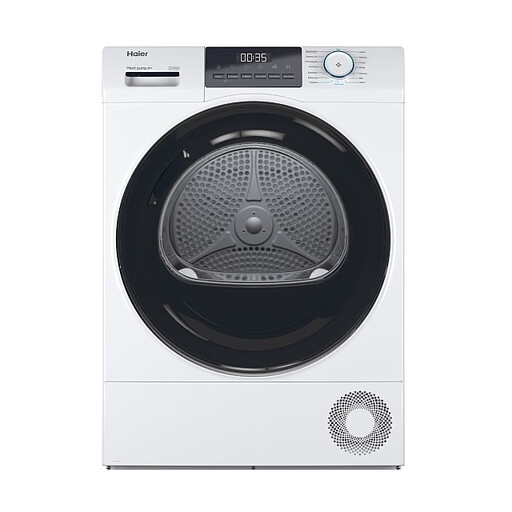
Haier I-Pro 1 HD80-E929E-DE, 8 kg
This heat pump dryer has an 8 kg capacity and sensor drying, making it worth considering if that size suits your usual loads.
8 kg capacity; sensor drying.
View at Joybuy
 No image available
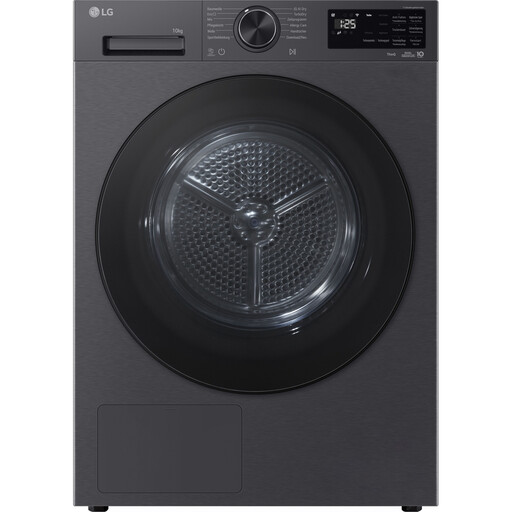
LG RT10X7B, 10 kg
The stated capacity may suit larger weekly loads, if it matches the amount of laundry you actually wash.
10 kg capacity; listed programmes: Cotton, Mix and Towels; moisture sensor.
View at Joybuy
 No image available
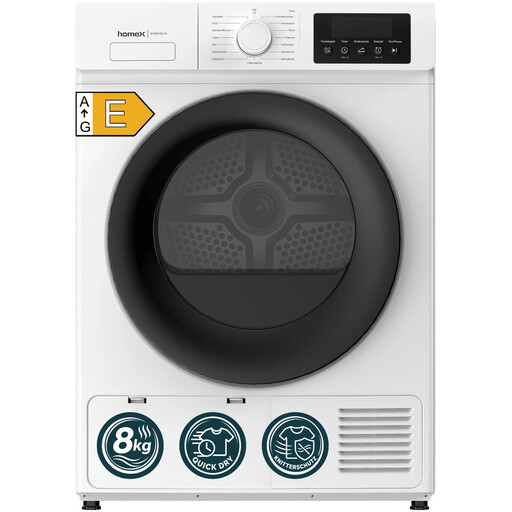
homeX WT8W1E-W, 8 kg
This freestanding 8 kg model is one to compare if its drum size and programme selection suit your loads.
15 programmes; listed as using 130 kWh per 100 cycles, with a noise level of 68 dB(A). The older A++ rating isn’t directly comparable with the current A-to-G scale.
View at Joybuy
 No image available
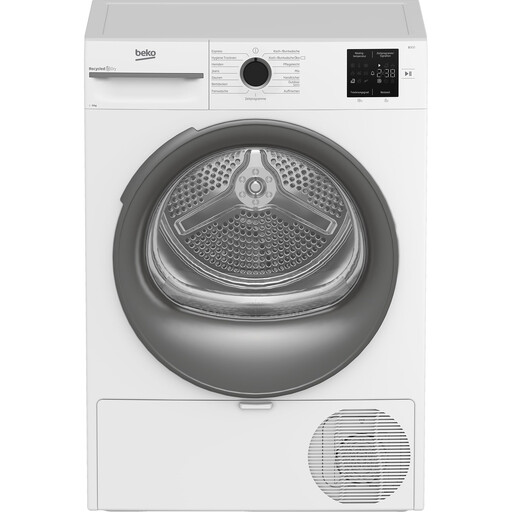
Beko BM3T39210W1, 9 kg
The stated capacity gives you a point of comparison for larger loads. Check that it matches the amount of laundry you usually wash.
9 kg capacity; heat pump technology; 15 programmes.
View at Joybuy
 No image available
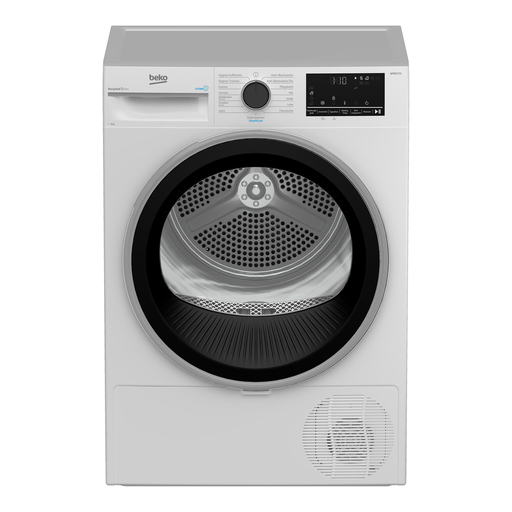
Beko B5TD6821B, 8 kg
This model may be a good fit if 8 kg suits your usual loads and the listed programmes meet your needs.
15 programmes; sensor drying; Jeans and Silent programmes.
View at Joybuy
Frequently asked questions
Can I dry cotton and other fabrics together?
Only if the care labels confirm that every item is suitable for tumble drying, and the programme and load size are right. Siemens recommends sorting laundry by fabric type and texture for an even result. A mixed-load programme listed by the manufacturer doesn’t mean unsuitable or very different fabrics can be dried together.
What should I check before installing a dryer in a cool cellar?
Check the installation instructions for your specific appliance, as well as the air vents and ventilation. AEG specifies an acceptable temperature range of 5 °C to 35 °C for the dryers covered by its installation guide. Don’t assume this applies to other appliances without checking.
What maintenance is needed for regular use?
Clean the filters and any accessible condenser or heat exchanger as instructed in the manual. The Umweltbundesamt notes that neglected filters can lead to longer running times and higher energy consumption, while the Verbraucherzentrale highlights the build-up of fluff and dust on electrical components.
Which energy label applies when buying in Germany?
Since 1 July 2025, the A-to-G label has applied to household tumble dryers sold in shops. Earlier ratings aren’t directly comparable with the current scale. Check the current label for kWh per 100 Eco cycles, capacity, programme duration, noise and condensation efficiency. The European Commission specifies this label for dryers offered for sale.
What should I do with an old tumble dryer in Germany?
Return old electrical appliances separately, for example to a local collection point. Under the conditions set out in section 17 of the ElektroG, retailers required to do so must accept an equivalent old appliance free of charge when you buy a new one. If you’re arranging delivery, check in good time whether collection is available for your order.


