If you regularly tumble-dry cotton laundry in winter, compare heat pump dryers by their energy use per 100 Eco cycles, condensation efficiency and capacity for the amount of laundry you usually wash. Also check that the temperature, ventilation and space in your utility room meet the requirements for the model you choose. A washing line or airer uses no electricity, but takes up space and may not dry your laundry quickly enough. The Verbraucherzentrale and the Federal Environment Agency identify energy use and choosing the right load size as important points to compare.
Who should consider their options?
Households with a utility room where moisture is a concern
If you dry laundry indoors in winter, consider condensation efficiency, room temperature and the ventilation requirements for the specific appliance together. The Verbraucherzentrale and AEG’s installation guidance cover these points.
Households with frequent cotton loads
If you tumble-dry regularly, look at energy use per Eco cycle and choose a capacity that suits the amount of laundry you usually wash. The Verbraucherzentrale and the Federal Environment Agency highlight both points.
Households with large cotton loads
If you often dry towels or bedding, check the drum capacity and the cotton programmes available on the specific model. The Federal Environment Agency advises against regularly running a large drum only half full.
What should you look for when buying?
Heat pump dryer
A good fit if: you regularly tumble-dry cotton laundry in winter and can meet the installation requirements for the specific model.
Trade-off: cycle times, maintenance and the required room temperature vary by model.
Airer or washing line
A good fit if: you have enough space and suitable drying conditions, and want to avoid using electricity for a tumble dryer.
Trade-off: laundry takes up space and may not dry quickly enough.
Existing dryer without a heat pump
A good fit if: you already have a working appliance and its running costs and installation requirements are acceptable for your household.
Trade-off: check energy use and installation requirements before considering a replacement solely because it is winter.
For a utility room in winter, check the room temperature and how much moisture is released before weighing up energy use and drum size.
| What matters |
What to look for |
Who is this especially important for? |
| Room humidity and installation location |
Check the condensation efficiency on the energy label, along with the temperature and ventilation requirements in the model’s manual. AEG specifies 5–35 °C for the dryers covered by its guidance. |
If the room is chilly in winter or moisture is a concern, I want to check the temperature limits, ventilation and condensation rating together. Around 33% of consumers put room humidity and installation location first. |
| Energy use |
Compare kWh per 100 Eco cycles, and factor in your electricity tariff and expected usage to estimate your own costs. The Verbraucherzentrale explains the label figure. |
If I tumble-dry frequently, I want to keep an eye on energy use per cycle rather than focusing on individual programmes alone. Around 27% of consumers prioritise ongoing electricity costs. |
| Capacity for cotton laundry |
Compare the amount of laundry you usually wash with the maximum load and the details of the cotton programmes. According to the Federal Environment Agency, a large drum that is often only half full may use more energy per kilogram of laundry. |
If towels or bedding regularly need drying together, I want to know whether my usual load will fit in the drum. Around 20% of consumers prioritise choosing a suitable load size. |
| Maintenance and ease of use |
Check the care instructions and filter access, and find out whether the model has a condensate container or a suitable drainage option. |
If the appliance runs often, I want to be able to manage filter maintenance and condensate as part of my routine, without unnecessary extra steps. Around 20% of consumers prioritise easy maintenance. |
Common buying misconceptions
-
Comparing old and current energy labels as if they were the same
Since 1 July 2025, household tumble dryers have used the EU A to G scale. The former A+++ to D scale is not an equivalent basis for comparing current models, as the European Commission explains.
Compare current appliances using the same scale, and also check their energy use in kWh per 100 Eco cycles.
-
Assuming heat pump technology keeps the room completely dry
Condensation efficiency indicates what proportion of the moisture removed from laundry is collected; installation and ventilation also matter. The Verbraucherzentrale explains this rating, while AEG specifies 5–35 °C and adequate ventilation for the dryers covered by its guidance.
Check the condensation rating and the manual for your chosen model, especially if the room is chilly or space is limited.
-
Choosing the largest drum without considering your usual loads
A large stated capacity does not automatically save energy. According to the Federal Environment Agency, a dryer that is often only half full may use more energy per kilogram of laundry.
Choose a capacity that suits the cotton, towel and bedding loads you usually dry.
Brands to consider
Bosch
The Bosch heat pump dryers mentioned here differ in capacity, efficiency ratings and condenser features.
- Bosch lists an 8 kg capacity, energy class A and a self-cleaning condenser for the WRB237C40. For the WQN245B91, the manufacturer lists a 9 kg capacity and energy class C.
- These figures apply to the specific models and do not replace checking how well their capacity and dimensions suit your needs.
AEG
According to AEG, the TR8TEP-ECO is a heat pump dryer with an 8 kg capacity.
- AEG lists 85 kWh per 100 cycles and 91% condensation efficiency for the TR8TEP-ECO.
- The dryers covered by AEG’s installation guidance require a temperature of 5–35 °C and adequate ventilation. These requirements do not automatically apply to models from other manufacturers.
Siemens
According to Siemens, the WQ33G2D176 is a heat pump dryer with a 9 kg capacity and cotton programmes.
- Siemens lists a half-load option and a condensate drain hose for this model.
- According to Siemens, the WQ33G2D176 does not have a self-cleaning condenser; maintenance features may differ on other models.
Miele
According to Miele, the German model TWC640WP is a T1 heat pump dryer with an 8 kg capacity.
- Miele lists DirectSensor and Miele@home for this model.
- App features are only worth considering if they suit the way you like to use your appliance. The model details do not demonstrate an advantage for drying cotton compared with the other appliances mentioned.
Joybuy products
The Joybuy appliances below are heat pump dryers for regular cotton laundry. Compare their capacity, energy use, condensation ratings and maintenance features with what you need from your utility room.
 No image available
LG RT80X7B heat pump dryer, 8 kg
An 8 kg capacity and a cotton programme are listed for regular cotton loads.
85 kWh per 100 cycles; 91% condensation efficiency; self-cleaning condenser and moisture sensor.
View at Joybuy
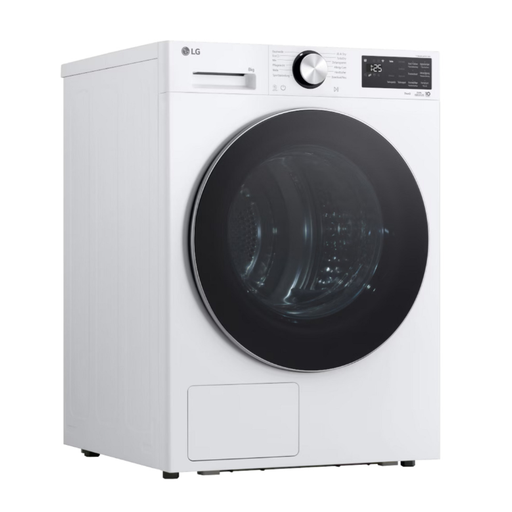 No image available
LG RT80X72W heat pump dryer, 8 kg, energy class B
An 8 kg capacity and a cotton programme are listed for regular cotton laundry.
Energy class B; 85 kWh per 100 cycles; 91% condensation efficiency; self-cleaning condenser.
View at Joybuy
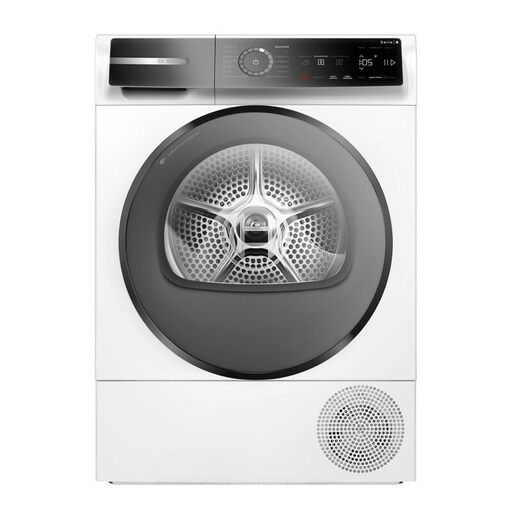 No image available
Bosch WQB246D41 heat pump dryer, 9 kg, energy class B
The 9 kg capacity may suit larger cotton loads; check whether it matches the amounts you usually dry.
Energy class B; condensation efficiency class B; self-cleaning condenser. Product information says to install in a frost-free location and keep the ventilation openings clear.
View at Joybuy
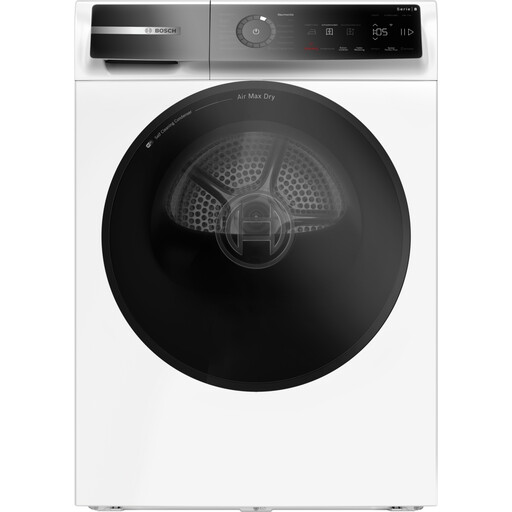 No image available
Bosch WRB247C40 heat pump dryer, 9 kg, energy class A
A 9 kg capacity, plus cotton and Cotton Eco programmes, are listed for larger cotton loads.
Condensation efficiency class A; self-cleaning condenser and moisture sensor. Product information says to ensure adequate ventilation and avoid damp or wet installation environments.
View at Joybuy
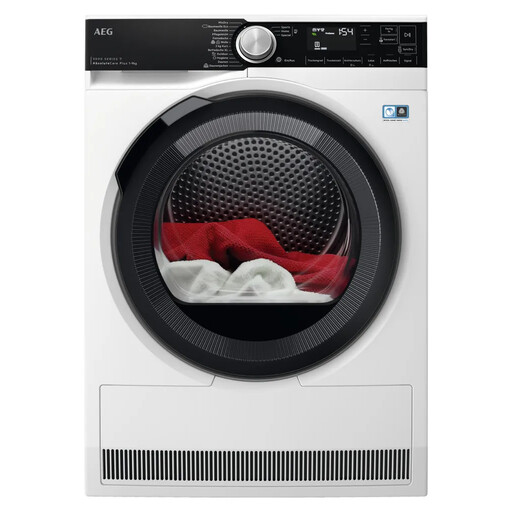 No image available
AEG 9000 AbsoluteCare Plus TR9W80690, 9 kg
The 9 kg capacity and cotton programme may suit larger cotton and bedding loads.
Condensation efficiency class B. Product information says adequate ventilation is required and ventilation openings must be kept clear.
View at Joybuy
Frequently asked questions
Can a heat pump dryer be installed in a chilly utility room in winter?
Only if the installation location meets the requirements in the manual for your chosen model. AEG specifies 5–35 °C and adequate ventilation for the dryers covered by its guidance. This is manufacturer guidance, not a general limit for all tumble dryers.
What does the energy figure on the label mean for my cotton laundry?
The figure shows kWh per 100 drying cycles using the Eco programme. The Verbraucherzentrale explains this label figure; your actual costs also depend on how often you use the dryer and your electricity tariff.
What should I check for maintenance and condensate?
Follow the care instructions in the appliance manual and check whether a condensate container or a drainage option designed for the model would work better in your room. A self-cleaning condenser does not replace the other maintenance instructions.
Which energy label applies when buying in Germany?
Since 1 July 2025, household tumble dryers have used the EU A to G scale; the former A+++ to D scale is not an equivalent basis for comparing current models. The European Commission requires the label to be displayed in shops and online.
What should I do with an old tumble dryer?
Take it to a local collection point or an authorised take-back point, not to your household rubbish. The Federal Ministry for the Environment provides information about take-back schemes for old electrical appliances. If you’re buying a new appliance, check whether collection of your old one is available before placing your order.


