What should you look for when buying?
First, check which bulky items and load sizes you regularly need to dry. Then compare quick programmes, fabric care, energy consumption and the space required against your day-to-day needs.
| What matters when buying |
What to check |
Who is it most relevant to? |
| Bulky laundry |
Check the stated capacity, bedding or Sheets programme and drum movement. Also check the programme’s load limits. |
If I regularly dry bedding or large items suitable for tumble drying, I want programmes that suit them rather than relying solely on a high capacity in kilograms. Around 29% of consumers are likely to prioritise bulky laundry. |
| Drying individual items quickly |
Check the fabric type and permitted load for the specific quick programme; don’t assume it can handle heavy or full loads just because of its short duration. |
If I need a suitable school item back quickly, I want to know whether it is actually intended for the quick programme. Around 24% of consumers are likely to prioritise drying individual items at short notice. |
| Energy consumption |
Compare the current A to G efficiency rating and consumption per 100 cycles on the same basis; take your own frequency of use into account. |
If I use a tumble dryer frequently, I want to consider its stated consumption alongside my usual load. Around 18% of consumers are likely to prioritise running costs. |
| Fabric care |
Check the care labels and compare them with the mixed-load and delicate programmes listed for the specific model. |
If my school clothes have different care symbols, I want to be able to dry each item appropriately rather than relying solely on a mixed-load programme. Around 17% of consumers are likely to prioritise fabric care. |
| Space and drainage |
Measure the appliance and door opening at the installation site; check how the model handles condensation water. |
If space is limited, I want to know before buying whether the appliance and its open door will fit in the space available. Around 12% of consumers are likely to prioritise the space available. |
Joybuy products
The following models are separate heat pump tumble dryers with programmes or specifications for different types of load. Check the programme instructions and care labels before planning to dry bulky items or school clothes you need at short notice.
 No image available
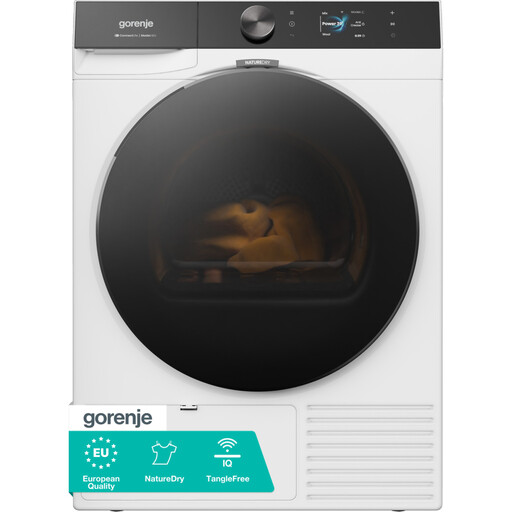
Gorenje DG89BP heat pump tumble dryer, 9 kg, white
Gorenje lists a 9 kg capacity, a Bedding XL programme and a drum that rotates in both directions for this model.
A moisture sensor, TwinAir and AutoDrain are also listed.
Joybuy
 No image available
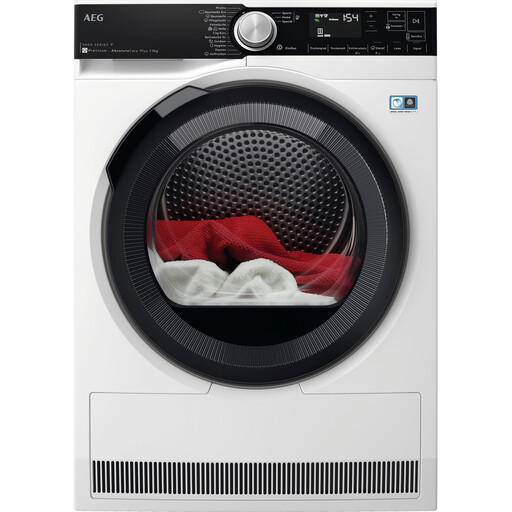
AEG TR9DW80690 9000 Series heat pump tumble dryer, 9 kg
AEG lists a 9 kg capacity and programmes for Bedding XL and down for this model.
MixDry and a quick programme for 3 kg are also listed; suitability depends on the fabric type and load.
Joybuy
 No image available
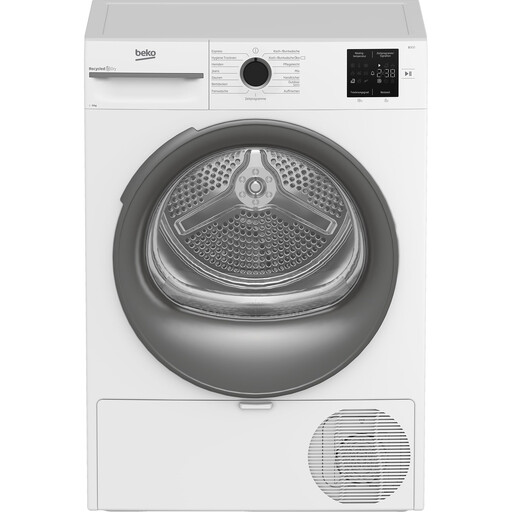
Beko BM3T39210W1 heat pump tumble dryer, 9 kg
Beko lists a 9 kg capacity and programmes for bedding and down for this model.
The product information gives it an E energy rating and 15 programmes.
Joybuy
 No image available
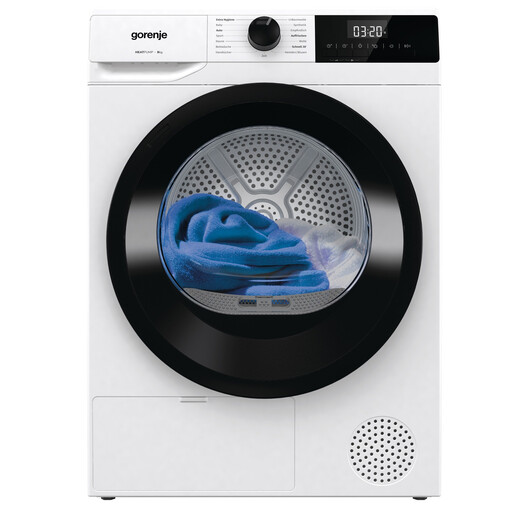
Gorenje DHNE82 heat pump tumble dryer, 8 kg
The model is listed with an 8 kg capacity, Bedding XL and a drum that rotates in both directions.
Quick Pro, Speed 30’ and a moisture sensor are also listed; check the limits for each programme.
Joybuy
 No image available
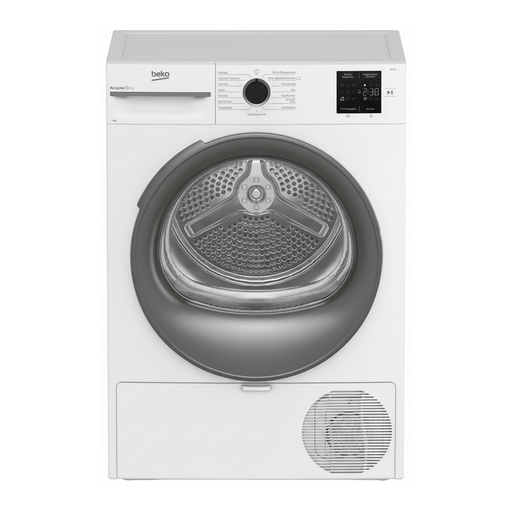
Beko BM3T38210W1 heat pump tumble dryer, 8 kg
Beko lists an 8 kg capacity and programmes for bedding and down for this model.
The product information gives it an E energy rating and lists programmes such as Mix, Outdoor/Sports and Easy Care.
Joybuy
Frequently asked questions
Can all school clothes and duvets go in the tumble dryer?
No. The care label on each item is what matters. GINETEX Germany, as presented by the Verbraucherzentrale, distinguishes between temperature settings in tumble-drying symbols and also identifies textiles that should not go in a tumble dryer. A delicate or specialist programme doesn’t override the care label.
Is a 40-minute programme long enough for a thick school jacket?
You can’t tell from the programme duration alone. Bosch describes the WQG235D00’s 40-minute option as suitable for small loads of lightweight synthetics. For a specific jacket, the care label and programme instructions are what matter.
Which energy figures should I compare?
Compare the efficiency ratings on the EU’s A to G scale, which has applied since 1 July 2025, and, where provided, energy consumption per 100 cycles. The European Commission uses this scale for the current EU energy label; actual costs also depend on how often you use the appliance and your electricity price.
What should I check before installation and when maintaining the dryer?
Before buying, check the appliance’s dimensions, the space needed for the open door and, where applicable, how the specific model drains condensation water. Clean the filters as described in the instructions; the German Environment Agency notes that failing to clean them can increase drying times and energy consumption.
How should I dispose of an old tumble dryer in Germany?
Old electrical appliances must be handed in at an authorised collection point or to an authorised take-back provider. They must not be put in general waste. The German Federal Ministry for the Environment explains that online retailers also have take-back obligations; home collection is subject to the relevant conditions and the arrangements made when you buy.


